 Sophie Robinson
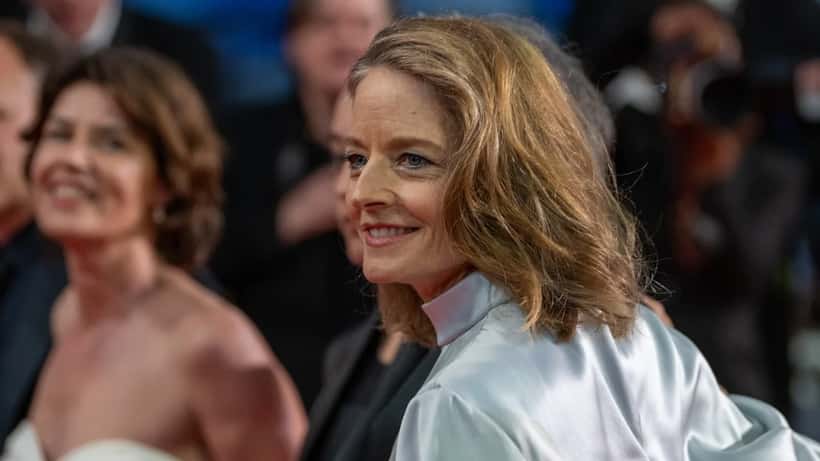
When Jodie Foster told an audience at the Aspen Ideas Festival in July 2026 that Brad Pitt's blockbuster F1 "was made by AI — wasn't it?", she wasn't just trolling Hollywood. She was naming a fear that writers, actors, and directors across the UK entertainment industry have been quietly carrying for two years: that the line between human storytelling and machine output has become so blurred that even award-winning films can pass as algorithmic.
Foster's comment — made during a panel titled Who Owns the Future of Hollywood with former Sony Pictures CEO Michael Lynton — sent shockwaves through the industry. F1 went on to gross over £500 million at the global box office and win the Academy Award for Best Sound. And yet a two-time Oscar winner looked at it and said: a computer could have written this. Whether or not she was literally correct, the question she raised is now a legal one with very real consequences for UK creatives.
Why Foster's Comment Matters Beyond the Gossip
Foster's remark was not a casual swipe. It was a pointed observation about creative homogeneity — that big-budget films have begun to follow a template so precisely calibrated to audience expectations that the output feels generated rather than authored. This is the hallmark of generative AI in its current form: technically flawless, structurally predictable, emotionally serviceable.
For UK actors, writers, and directors working under contracts negotiated before 2023, that observation has a legal sting in its tail. Most entertainment contracts signed in the UK before the AI surge contain no explicit provisions about AI-generated content, synthetic dialogue, or digital likenesses — a gap that legal experts have been flagging since at least the Top Gun 3 production negotiations highlighted IP ownership questions in franchise filmmaking. That gap is now a vulnerability.
The UK government published its formal Report on Copyright and Artificial Intelligence in early 2026, acknowledging that creators are already losing meaningful control over how their works and identities are used. The report confirmed what many in the industry had long suspected: AI-generated content can enter the market and undercut human-made work without triggering any existing compensation mechanism.
What UK Law Actually Says — and Doesn't
The UK has an unusual position on AI-generated works. Under the Copyright, Designs and Patents Act 1988, copyright in a computer-generated work lasts only 50 years — not the standard 70 years granted to human authors — and crucially, there are no moral rights attached to such works. This means an AI-generated film cannot be attributed to, or claimed by, a human author in the same way.
But here is where it gets complicated for actors and writers: the law does not yet clearly define what happens when human creative input is used to train an AI that then produces content that earns revenue. If a studio uses 20 years of an actor's recorded performances to train a synthetic voice or likeness model, and that model generates new dialogue or scenes, does the actor have any claim to the output?
As of mid-2026, the answer under UK law is: probably not, unless the contract says otherwise.
Equity, the UK trade union for actors, has been pushing for digital replication clauses in contracts since 2023. According to guidance issued by the organisation, performers must now negotiate explicitly whether their voice or likeness can be digitally altered, how long those rights last, and whether they extend to future projects or promotional uses. Without those clauses, studios retain wide latitude.
Writers face an analogous problem under WGGB (Writers' Guild of Great Britain) guidance: AI can be used in script development, dialogue generation, and story structuring — but unless a writer's contract prohibits it, there is no obligation to disclose. Foster's intuition about F1 may or may not be correct in that specific case, but the legal architecture that would allow it to happen with zero disclosure does exist.
A Concrete Case: The Freelance Actor's Dilemma
Take the case of a freelance actor who signed a three-film deal with a mid-sized UK production company in 2022. The contract grants the studio rights to all recorded performances for promotional use. In 2025, the studio uses those recordings — captured during normal production — to train an internal AI model. In 2026, that AI model generates synthetic dialogue for an additional scene inserted into a streaming cut of the film, using the actor's voice.
Under the 2022 contract, this is almost certainly permitted: promotional use clauses are broad, and the concept of AI-synthesised content was not carved out. The actor receives no additional fee for the synthetic scene. If the streaming platform reports 4 million views on that specific episode, the actor's contribution — their voice, their cadence, their years of training — generates revenue they see nothing of.
If the same contract were signed today, a properly advised actor would insist on:
- An AI exclusion clause prohibiting use of recordings to train synthetic models
- A digital replication consent provision requiring written approval for any AI-generated use of their voice or likeness
- A residual payment structure for AI-generated content that generates streaming revenue above a defined threshold (commonly negotiated at £50,000+)
The difference in legal protection between a 2022 contract and a 2026 contract — for the same role, the same studio, the same actor — can amount to tens of thousands of pounds and the fundamental question of who owns your artistic identity.
What Should UK Creatives Do Now?
The Jodie Foster moment is useful precisely because it made this abstract debate visceral. If a film as polished and commercially successful as F1 can trigger the question "was this made by AI?", the threshold for what counts as human creative output is in genuine dispute. UK actors, writers, and directors operating without updated contracts are exposed.
Legal specialists in entertainment contracts recommend three immediate steps for any UK creative professional:
1. Audit your existing contracts. If you have signed any recording, performance, or writing contract in the past five years, review it for AI clauses. Many pre-2024 agreements are silent on this point — silence favours the studio, not the performer.
2. Request AI exclusion provisions on new work. When negotiating any new contract, explicitly ask for language that prohibits the use of your recorded performances or written work to train AI models. Studios may push back, but the existence of Equity and WGGB guidance gives you a recognised framework to negotiate from.
3. Understand what "promotional use" means in your contract. This is the clause most commonly exploited to justify AI-related uses. It was written before synthetic media existed. A good entertainment lawyer can assess whether your existing promotional use clause is narrow enough to exclude AI training — or whether it requires renegotiation.
The UK government's 2026 copyright review is still ongoing, and legislative protections for creative professionals in the AI context are likely at least 18 months away from reaching statute. In the interim, contract law is the only reliable protection — and contracts only protect you if they anticipate the risk.
The Bigger Picture
Jodie Foster did not accuse F1 of being bad. She accused it of feeling algorithmic — of exhibiting the kind of precise structural competence that suggests optimisation rather than authorship. Whether or not she was right about that film, the industry she was describing is real: one in which AI tools are increasingly embedded in script development, casting decisions, dialogue polishing, and post-production.
The UK is home to one of the world's most significant creative industries, contributing over £116 billion to the economy annually according to the Department for Culture, Media and Sport. Protecting the humans at the centre of that industry — the writers, actors, directors, and voice performers who provide the raw material that AI systems learn from — requires legal frameworks that keep pace with the technology.
For now, the most powerful thing a UK creative professional can do is take their contracts seriously. The next Jodie Foster moment — the next time an audience watches something and wonders "was this made by a person?" — could be the one that triggers the legal dispute that shapes the industry for a generation.
If you are a UK actor, writer, or creative professional concerned about AI clauses in your current or upcoming contracts, a specialist entertainment lawyer can review your agreements and advise on renegotiation. ExpertZoom connects you with qualified legal experts across the UK entertainment industry.
This article is for general information only and does not constitute legal advice.
