 Amelia Ward
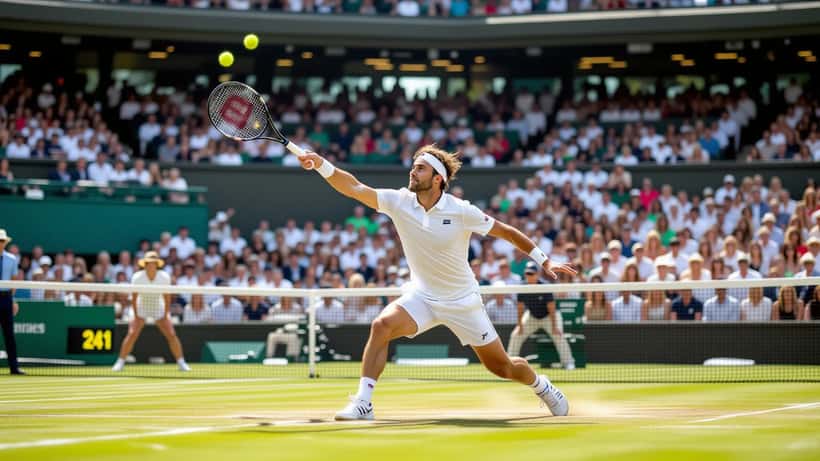
Cambridge-born Harry Wendelken steps onto the Wimbledon grass on 30 June 2026 for his first Grand Slam appearance, having earned a wildcard for The Championships at world ranking No. 202. The 24-year-old faces France's Valentin Royer in what marks the biggest match of his career — and a moment that has captivated British tennis fans from Cambridge to SW19.
From Cricket to Challenger: Wendelken's Physical Foundation
Harry Wendelken's route to Wimbledon is anything but conventional. He spent his early years playing cricket for Essex between the ages of 7 and 12 before committing fully to tennis. His development took him to Culford School in Suffolk, then further afield to the Good to Great Academy near Stockholm, Sweden — a programme that places strong emphasis on athletic conditioning alongside technical development.
In October 2025, Wendelken secured his first ATP Challenger singles title at the Crete Challenger VI, defeating Maxim Mrva in a career milestone moment. Just weeks before Wimbledon, he defeated two top-100 ranked opponents — Adam Walton and Aleksandar Vukic — at the HSBC Queen's Club Championships to earn his place in that main draw. These wins demonstrated not just tactical intelligence but a level of physical endurance capable of sustaining match-winning intensity against higher-ranked professionals, as Harriet Dart showed in her own Queen's Club match fitness journey this summer.
The Physical Demands of Wimbledon's Grass
Grass-court tennis at Wimbledon is uniquely taxing on the body. The surface rewards explosive serves and rapid net approaches, requiring players to generate powerful hip rotation and shoulder loading across hundreds of points per match. In a potential five-set men's singles contest, players can cover upwards of 4 to 5 kilometres of lateral sprint work, with fast direction changes placing significant strain on ankles, knees, and hip flexors.
For a player of Wendelken's size — 1.78 m, right-handed with a two-handed backhand — generating a competitive first serve consistently through five sets tests rotator cuff endurance and core stability. Data from an ATP Player Health survey found that 62% of male professionals report chronic fatigue during the grass-court swing, which typically follows a compressed clay and hardcourt season with minimal recovery time.
Grass also carries specific injury risks. The surface is firmer than clay and less forgiving on joints. Lower limb strains — particularly hamstrings and adductor muscles — are among the most frequently reported injuries during Wimbledon, driven by the short explosive sprints and rapid pivots the fast surface demands.
The Mental Weight of a Grand Slam Debut
Beyond the physical, Wendelken faces what no conditioning programme can fully replicate: the psychological weight of a Grand Slam debut. Wimbledon, broadcast live to millions across the UK, is one of the highest-pressure sporting environments on earth.
A 2024 WTA Mental Health Initiative found a 35% increase in players seeking psychological support following back-to-back Grand Slam periods — reflecting how much professional tennis has come to recognise mental wellbeing as a performance-critical factor. Analysis of over 650,000 Grand Slam match points has shown a compounding effect of pressure: unforced errors in one game significantly increase the likelihood of further errors in subsequent games, a pattern sports psychologists call the anxiety spiral.
Wendelken is a close friend of Jack Draper, the British No. 1 who has spoken publicly about managing the mental demands of professional tennis. That shared experience of building towards the sport's biggest stages is a journey other British professionals have navigated in their own way. At Queen's Club, Wendelken held his nerve against world No. 56 Botic van de Zandschulp — and though he lost, the LTA noted he "gave a positive account of himself", a signal of composure that matters at Grand Slam level.
What Recreational Players Can Take From This
Wendelken's story resonates beyond SW19. Around 5 million people play tennis recreationally in the UK, and the Wimbledon fortnight triggers a reliable surge in club memberships, court bookings, and racket sales. Many players returning to the court this summer will push their bodies harder than they have in months.
The most common recreational tennis injuries mirror those seen at elite level: lateral epicondylitis (tennis elbow), rotator cuff strains from serving, ankle sprains from lateral pivots, and knee pain from sudden deceleration. Unlike professional players who have physiotherapists trackside, club and park players often push through discomfort — sometimes turning a minor strain into a long-term problem.
The NHS advises that anyone experiencing persistent joint or muscle pain during or after sport — lasting more than 72 hours — should seek a professional assessment rather than self-managing. For tennis players specifically, this means consulting a sports physiotherapist or GP who understands the biomechanics of the game. Early intervention consistently delivers better long-term outcomes than delayed treatment.
This article is for informational purposes only and does not constitute medical advice. Always consult a qualified health professional for diagnosis and treatment.
How a Health Expert Can Help You Play Longer
Whether Harry Wendelken's Wimbledon debut inspires you to pick up a racket for the first time or you are a seasoned club player heading into a busy summer season, the right health guidance can separate a productive year from an enforced break.
A sports health specialist can assess your physical readiness, identify the muscular imbalances that tennis can exacerbate over time, and design a warm-up and recovery protocol suited to your playing frequency and fitness level. For players returning after a break, a structured re-entry plan — progressing gradually from short social hits to competitive match play over several weeks — significantly reduces the risk of overuse injury.
ExpertZoom connects you with health professionals across the UK who specialise in sports medicine, physiotherapy, and musculoskeletal health. As Wendelken prepares to serve for the first time on Wimbledon's iconic grass, his journey from Cambridge cricket pitches to a Grand Slam court is a reminder that at every level, investment in your physical health is what makes sustained performance possible.
