 Harriet Price
Every summer, tens of thousands of anglers across England and Wales quietly break the law — not out of malice, but ignorance. In 2026, Environment Agency enforcement officers are conducting 24/7 patrols at riverbanks, reservoirs, and canals, checking that every rod-holder aged 13 and over carries a valid licence. The penalty for not having one can reach £2,500 per offence, and bailiffs have the power to seize your tackle on the spot. What most people do not realise is that once a prosecution is started, it is treated as a criminal matter — and that is the moment you may need a solicitor.
What the Environment Agency is enforcing in 2026
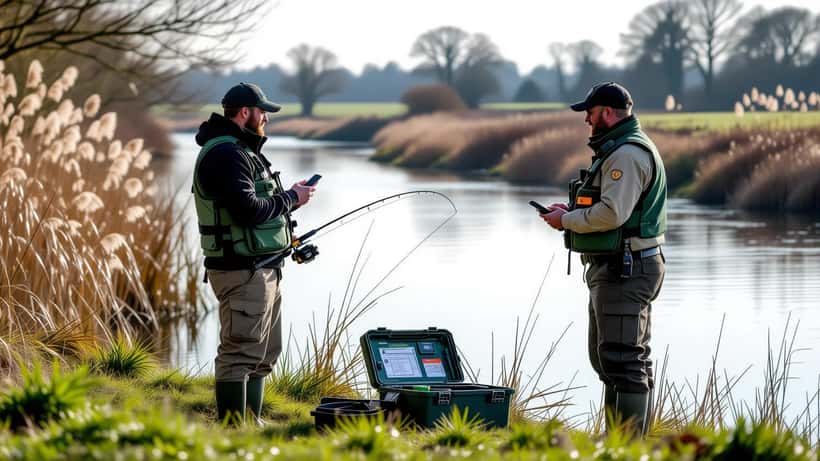
Rod licence checks in England and Wales have intensified this season. Officers now patrol all days of the week, including public holidays, and have the authority to demand proof of a valid licence from any angler over the age of 13 fishing for salmon, trout, freshwater fish, smelt, or eels with rod and line in inland or tidal waters.
Under the current regime, anglers must carry proof of their licence — either a printed copy or digital confirmation accessible on their phone — and produce it immediately when asked by an authorised Environment Agency officer or a private fishery bailiff acting under statutory powers. Refusing or failing to produce proof is itself an offence.
The agency publishes annual prosecution statistics, and unlicensed fishing consistently accounts for thousands of cases per year. While many are resolved with fixed penalty notices, the Environment Agency does pursue formal prosecution in magistrates' courts when officers deem the offence serious — particularly for repeat offenders or those caught with multiple rods.
The legal framework: Section 27 and what it means for you
The governing legislation is Section 27(1)(a) of the Salmon and Freshwater Fisheries Act 1975, which makes it a summary offence to use an unlicensed rod or line to fish in waters requiring a licence. Conviction in a magistrates' court can carry a fine of up to £2,500.
In practice, most first-time offenders who cooperate with enforcement officers receive a fixed penalty notice of between £250 and £500. However, the critical word is "can": there is no statutory cap preventing a magistrate from imposing the full £2,500 fine, and additional court costs can add hundreds of pounds more. Equipment — rods, reels, nets, keep-nets, landing nets — can be seized as part of the enforcement action, regardless of its value.
What makes this more consequential than a simple fine is the route it travels. A magistrates' court conviction creates a criminal record entry in the UK's police national computer. For most people this is minor, but for those working in regulated professions — teaching, healthcare, finance, law, security — any undisclosed conviction can become a compliance issue when completing DBS checks or regulatory declarations.
A concrete case: the angler who didn't check the rules
Consider this realistic scenario. A 38-year-old project manager from Birmingham drives to a reservoir in Worcestershire on a Saturday morning in July 2026 for a day's coarse fishing. He bought an annual rod licence two years ago and assumes it has rolled over automatically. It has not — Environment Agency licences issued since the system changed do not auto-renew; they expire exactly 12 months from the date of purchase.
An enforcement officer checks his licence at 9:15 am. His licence expired 14 days earlier. The officer issues a fixed penalty notice for £250 on the spot and records his details. His tackle — worth approximately £400 — is not seized, because it is a first offence and he cooperates fully.
He pays the penalty online and the matter is closed administratively — no court appearance, no criminal record.
Now change one detail: he disputes the officer's authority, refuses to give his name, and walks away. Under Section 35 of the Environment Act 1995, authorised officers have the power to require a name and address. Refusing is a separate offence. The case is now escalated to formal prosecution. At the magistrates' court, the original unlicensed fishing charge carries a maximum £2,500 fine, the failure-to-comply charge is a further summary offence, and his legal representation costs him £600 in solicitor's fees even for a straightforward guilty plea.
If you receive a fixed penalty notice → pay it within 28 days. The moment you dispute or ignore it, the matter becomes a formal prosecution with court costs, legal fees, and a potential criminal record.
A legal adviser specialising in regulatory and environmental law can help if you believe the officer's identification of the relevant water was incorrect, if there is a dispute about whether the water is designated under the legislation, or if a prosecution has already commenced. These are technical defences that require professional analysis — not arguments to run yourself in the car park.
Who needs a licence in 2026, and what it costs
The rules are straightforward in most cases, though there are exemptions that trip people up.
You need a licence if you are aged 13 or over and fishing with a rod and line for salmon, trout, freshwater fish, smelt, or eels in any waters in England and Wales that require a licence.
You do not need a licence if you are under 13, if you are fishing in exempt waters (some private still-waters stocked only for put-and-take fishing), or if you are fishing in Scotland or Northern Ireland, which operate separate licensing systems.
Current 2026 licence prices, set by the Environment Agency and reviewed each April:
- 2-rod trout and coarse (annual): £36.80
- 2-rod trout and coarse (day): £7.30
- 2-rod trout and coarse (8-day): £14.70
- 3-rod licence (annual): £55.30
- Salmon and sea trout (annual): £93.10
- Concession rate (age 66+, disabled — annual 2-rod): £24.50
- Junior licence (age 13–16): Free — but must be obtained
The junior licence catches many families out. A 14-year-old fishing beside a parent needs their own registered licence even though it costs nothing. An officer encountering an unlicensed 15-year-old will typically advise and warn on a first encounter, but the liability technically rests with the licence-holder responsible for the juvenile.
Licences can be bought instantly on GOV.UK and are valid from the moment of purchase. There is no grace period if you forget to renew.
Your rights during a licence check
Environment Agency officers and authorised water bailiffs have defined statutory powers. They can ask for your name and address, require production of your licence, and inspect your tackle, catch, and equipment. They can seize items used in the commission of an offence.
They cannot enter private property without a warrant except in specific circumstances, and they must identify themselves if asked. If an officer fails to produce proper identification and you have a reasonable doubt about their authority, you are entitled to ask for their name and authorisation number before providing personal details — but do so calmly and do not refuse outright.
If you believe a seizure of tackle was disproportionate or unlawful, this is something a solicitor can challenge under the relevant provisions of the Police and Criminal Evidence Act and Environment Agency enforcement guidance. Fishing equipment, particularly high-end fly rods or specialist carp setups, can be worth thousands of pounds — disproportionate seizure of valuable property in a minor first-offence case may be contestable.
Similarly, if the prosecution rests on whether a particular stretch of water is legally a "designated water" requiring a licence, that is a factual and legal question that merits professional scrutiny. According to Brighton's patrol boat and UK beach byelaw enforcement piece, the legal geography of water access rights in England and Wales is far more complex than most recreational users appreciate — and fishing law is no exception.
What to do if you receive a fine or face prosecution
- Do not ignore the notice. Fixed penalty notices have a 28-day payment window. Ignoring it escalates the matter to summons.
- Read the notice carefully. Check that the officer's name, the date, the location, and the described offence are accurate. Errors can be significant.
- Gather evidence. If you believe you did have a valid licence, locate your purchase confirmation immediately. Environment Agency licences are registered by name and National Insurance number — there is a record.
- Seek legal advice before contesting. If you believe the prosecution is incorrect, speak to a solicitor with regulatory or environmental law experience before responding formally. A poorly worded dispute can inadvertently waive defences.
- For prosecution, get representation. A specialist lawyer can assess whether the charge is technically sound, negotiate with the prosecution in straightforward cases, and ensure that any conviction — if unavoidable — carries the minimum possible penalty and cost impact.
The rod licence system funds fishery improvements, habitat management, and the very environment that makes fishing possible. Most anglers support it. But the intersection of enforcement powers, criminal procedure, and the practicalities of buying and renewing licences means the occasional dispute is almost inevitable — and that is where expert advice earns its cost. An ExpertZoom legal adviser can review your situation and explain your realistic options before you commit to a course of action.
This article is for general informational purposes only and does not constitute legal advice. If you are facing an Environment Agency prosecution or have received a formal notice, you should seek advice from a qualified solicitor before taking any action.
