 Abigail Clarke
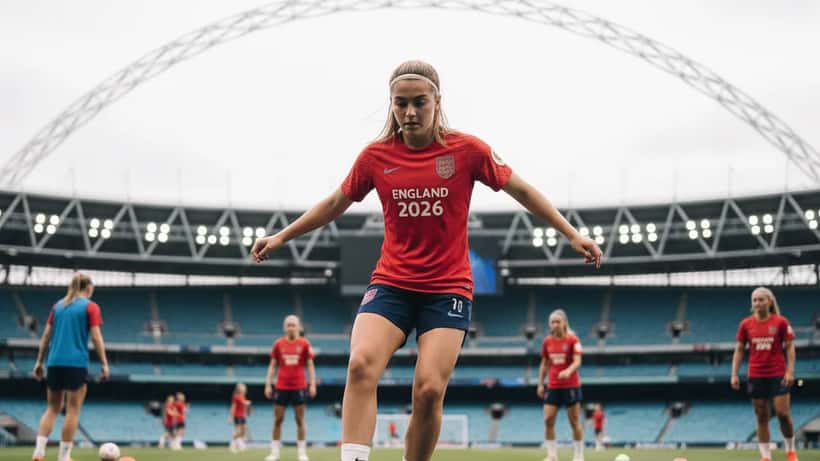
England manager Sarina Wiegman named 17-year-old Erica Meg Parkinson in her senior squad on 31 March 2026 for the Lionesses' World Cup qualifiers against Spain and Iceland — making her one of the youngest players ever called up to the senior women's team. Her selection has put a spotlight on what it takes to protect the health and development of young elite footballers.
Who Is Erica Meg Parkinson?
Born in Singapore to an English father and a Japanese mother, Parkinson is eligible for four countries — England, Japan, Portugal, and Singapore. She chose England, having progressed through the full age-group pathway. She speaks four languages fluently: English, Japanese, Portuguese, and French.
At 16, she signed her first professional contract and joined Valadares Gaia in the Portuguese top flight, where she was voted the best young player in the 2024-25 season by the Portuguese professional players' union. She is a midfielder with technical maturity well beyond her age.
Wiegman's 23-player squad will face Spain at Wembley on 14 April (England's 499th women's fixture, and the first meeting since the UEFA EURO 2025 final, which England won to claim back-to-back European titles) and Iceland in Reykjavik on 18 April — the 500th match in the Lionesses' history. Other returning names include Leah Williamson, back from a hamstring injury, and Beth Mead.
The Hidden Risk Behind Every Young Debut
Parkinson's call-up is a sporting triumph. It is also a reminder of how carefully young players need to be managed medically during their teenage years — especially female footballers, whose injury profile differs significantly from their male counterparts.
According to research published by the American Orthopaedic Society for Sports Medicine, ACL injuries occur up to eight times more often in female athletes than in males. The reasons are partly anatomical — female athletes are more prone to increased knee valgus (inward collapse of the knee on landing) and tend to rely more heavily on the quadriceps rather than the posterior chain when decelerating. These patterns, combined with rapid growth, create a specific window of vulnerability between the ages of 14 and 20.
Growth plates — the soft cartilage zones at the ends of developing bones — are the last part of the skeleton to fully harden. Until they do, they are more susceptible to stress fractures and overuse conditions. Common growth plate injuries in adolescent footballers include Osgood-Schlatter disease (knee), Sever's disease (heel), and traction apophysitis of the hip. When a teenager plays at professional intensity before these structures have fully developed, the risks compound significantly.
According to the NHS, half of all sports injuries in young people can be prevented with appropriate training management, load monitoring, and access to specialist care. In the UK, sports medicine services are available through GP referral or directly through private sports clinics.
When Should a Young Athlete See a Sports Medicine Specialist?
Teen athletes should not be treated as smaller versions of adults. Their physiological needs, growth status, and injury risks are distinct — which is why specialist input matters from an early stage, not just when something goes wrong.
If pain persists for more than two to three weeks — Adolescent footballers frequently experience knee pain around the tibial tubercle or heel pain near the Achilles insertion. These symptoms often signal Osgood-Schlatter or Sever's disease. Both respond well to early management but can worsen significantly if ignored.
After a rapid growth spurt — During periods of intense growth, muscle and tendon attachments are placed under increased strain. If a young player's coordination or balance deteriorates suddenly, or if they report new stiffness in the hips or knees, a sports medicine assessment can identify whether training load needs to be reduced.
Following a non-contact knee injury — A sudden give, pop, or swelling in the knee after cutting or landing should always be assessed urgently. ACL tears in young female footballers can occur at full professional training intensity — and prompt diagnosis significantly improves recovery outcomes.
Before increasing training volume — Transitioning from youth academy to senior professional training represents a sharp jump in mechanical load. A pre-season musculoskeletal screen can identify weaknesses in gluteal and hamstring strength before they lead to injury.
If the player is showing signs of fatigue or weight changes — Relative Energy Deficiency in Sport (RED-S) is a condition in which a female athlete's energy intake is insufficient for the training she is doing. It can cause stress fractures, hormonal disruption, and impaired performance. It is underdiagnosed in young footballers and requires specialist assessment.
A GP is the right starting point for most concerns and can refer to a sports medicine doctor or orthopaedic specialist. For young athletes under 18, accessing a doctor with specific experience in adolescent sports medicine produces significantly better outcomes. ExpertZoom health specialists can guide you to the right type of practitioner based on symptoms and age.
Important note: This article provides general health information and does not constitute medical advice. If a young athlete is experiencing pain or injury symptoms, consult a qualified healthcare professional promptly.
The Bigger Picture: Women's Football and Injury Prevention
The FA has invested significantly in injury surveillance for the Women's Super League, but the pipeline below senior level — where players like Parkinson begin their professional careers — receives less systematic monitoring. Prevention programmes focusing on posterior chain strength, plyometric technique, and training load management can reduce lower-body injury rates by up to 39%, according to sports medicine research.
As England prepares to celebrate 500 women's internationals, the story of a 17-year-old making her debut is a moment to champion. It is also a prompt: the players who become the next generation's stars are the ones who arrive at senior level healthy, not depleted.
