 Eleanor Stone
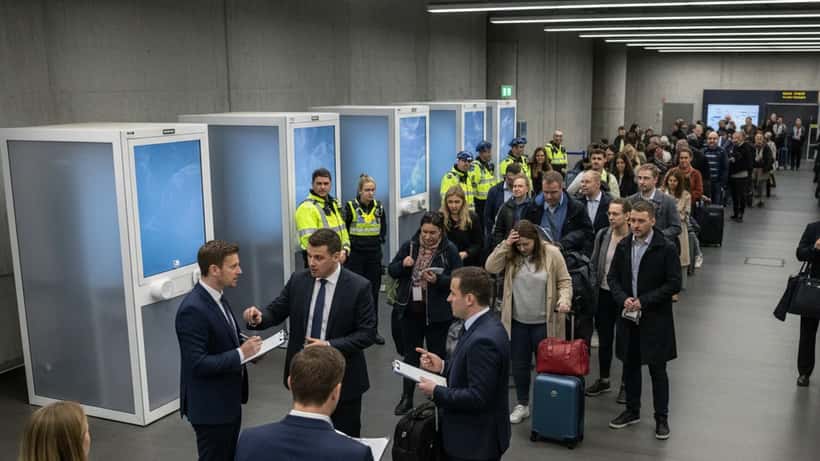
Two migrants died attempting to cross the English Channel near Gravelines, northern France, on 1 April 2026 — the first recorded deaths of the crossing season. Days later, on 10 April 2026, the EU's new Entry/Exit System (EES) biometric border control deadline arrived, revealing a stark technological failure: hundreds of millions of pounds worth of biometric booths at Folkestone and Coquelles remain sealed and unused. Whether you are a traveller frustrated by border delays or someone affected by the UK's shifting immigration landscape, your legal rights in these situations are clearer than you might think — and a specialist lawyer can help you exercise them.
What is happening at the English Channel right now
The English Channel is at the centre of two simultaneous crises in April 2026: a humanitarian emergency and a regulatory chaos.
On the migration side, 4,441 people crossed in small boats during the first three months of 2026 — a 33 per cent drop compared to the same period in 2025, according to UK government statistics published on 1 April 2026. Despite this relative decrease, two people died on 1 April and the UK and France signed an extension of their joint migration deal on the same day. French interception rates have fallen from 50 per cent in 2023 to approximately 33 per cent now.
On the traveller side, the EU's EES biometric registration system — which requires non-EU nationals entering the Schengen area to provide fingerprints and facial scans — officially came into effect on 10 April 2026. The problem: France has not deployed the technology to collect this data at Channel crossing points. Biometric booths at Folkestone and Eurostar's London St Pancras station were built but have never been activated. Travellers are reporting confusion, delays and contradictory information from border officials.
Your rights as a traveller if you are delayed at the border
Biometric border control failures do not suspend your legal rights. If you are a UK citizen or a non-EU national crossing into France or the wider Schengen area and you experience delays, rejections or mistreatment at the border, the following protections apply:
Right to clear information: Under EU Regulation 2016/399 (the Schengen Borders Code), border officials must provide clear and comprehensible information about the grounds for any refusal of entry. A verbal refusal without documentation is not legally sufficient — you are entitled to a written decision.
Right to appeal a border refusal: Any refusal of entry at an EU external border must be issued on a standard form (Annex V, Part B of the Schengen Borders Code). The form must be signed by the border authority and must indicate the right of appeal and the competent authority to which an appeal may be submitted.
Right to consular assistance: UK nationals refused entry to a Schengen country are entitled to contact the nearest British consulate or embassy. In France, the British Embassy in Paris (+33 1 44 51 31 00) or the consulate in Marseille can provide emergency consular services.
Eurostar passenger rights: If biometric chaos causes your Eurostar service to be delayed or cancelled, EU Regulation 1371/2007 on rail passenger rights applies. You are entitled to compensation of 25 per cent of the ticket price for delays over 60 minutes, and 50 per cent for delays over 120 minutes.
Rights related to small boat crossings and asylum
For those who have crossed or are considering crossing the Channel in a small boat, the legal picture is complex and has shifted significantly since 2024. Under current UK law:
- Anyone who enters the UK without leave after 7 March 2023 is considered to have arrived "illegally" under the Illegal Migration Act 2023, regardless of any asylum claim.
- However, the Act does not remove the right to claim asylum — it restricts when and how that claim is processed.
- The UK Home Office is the competent authority for all asylum applications in England, Scotland and Wales.
- Legal aid remains available for asylum cases in the UK. If you cannot afford a lawyer, you may be entitled to government-funded legal representation.
The legal landscape around Channel crossings is changing rapidly in 2026 as the UK and France renegotiate their bilateral migration deal. Anyone with an active asylum case, pending appeal, or who has been issued a removal notice should seek specialist immigration legal advice as a matter of urgency.
Why now is the time to seek legal advice
Whether you are a frequent traveller caught in the biometric chaos, a family member trying to understand a relative's asylum case, or a business with employees who commute via the Channel Tunnel, the legal framework governing English Channel crossings has rarely been more uncertain.
A specialist immigration lawyer or travel rights solicitor can advise you on:
- challenging a biometric border refusal;
- claiming compensation for travel disruption caused by the EES rollout failure;
- understanding your asylum rights or those of a family member;
- navigating the UK-France extradition or transfer arrangements if a removal order has been issued.
The Channel has always been more than a body of water — it is a legal boundary where the laws of two jurisdictions meet, and where your rights depend entirely on knowing which ones apply to you.
On ExpertZoom, you can find specialist immigration lawyers and travel rights solicitors who can guide you through the current Channel crossing legal landscape and help you protect your rights.
Disclaimer: This article provides general legal information only and does not constitute legal advice. For your specific situation, please consult a qualified solicitor or immigration lawyer.
