 Christopher Bell
As England and India lock horns again in 2026, millions of UK fans are hunting for a way to watch every ball — and cybercriminals are counting on it. Security analysts warn that the surge in searches for "free" England vs India streams during the series has become one of the most reliable phishing and malware lures of the summer, turning a routine hunt for live cricket into a direct threat to viewers' devices, identities and bank accounts.
The pattern is now well documented. Pirated sports sites in the UK are booming: the top ten alone recorded roughly 1.6 billion views in the first half of 2025, up around a third year on year, according to industry monitoring reported by TradingView. Cricket sits squarely in that traffic, bundled with football and boxing on the same illicit platforms. Where the audience goes, the scammers follow.
What actually happens when you click "watch free"
The danger is not theoretical. A study by cybersecurity firm OpenText found that 90% of illegal streaming sites contained some form of risk — malware, phishing pages, fake antivirus prompts or other scam mechanics. Separate testing found that nearly half of illicit streaming apps carried malware, and that visiting pirate streams raises your malware exposure by more than 65% compared with legitimate services.
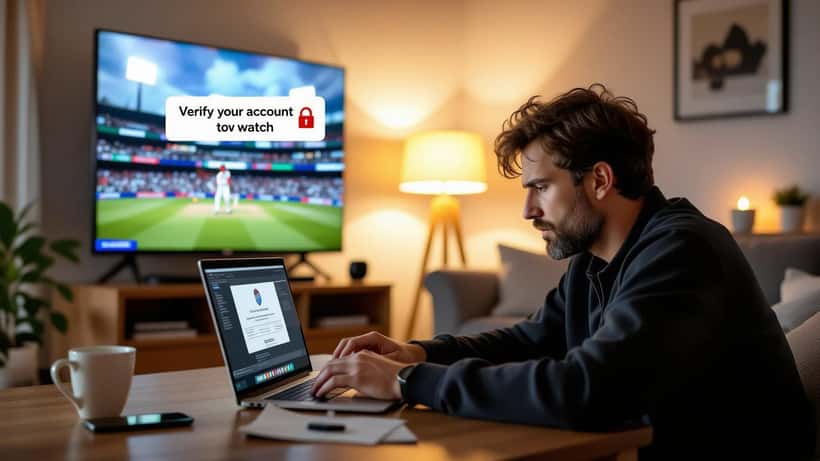
The mechanics are deliberately familiar. You search for the match, land on a slick-looking stream, and a pop-up tells you to "verify your account", install a "required player update", or confirm your details to "unlock HD". Each of those steps is a trap: the verification form harvests your email and password, the player update installs a remote-access trojan, and the "buffering fix" quietly enrols your browser in a click-fraud network. Because you reused that password elsewhere — as most people do — the attacker now has a key that fits several of your other accounts.
The cost is measured in pounds, not just annoyance
This is where a nuisance becomes a financial event. One analysis found that 32% of users who accessed illegal streams suffered direct financial losses through fraud, identity theft or compromised payment details, with average losses comfortably exceeding what a legitimate subscription would have cost. Fans chasing a free feed of England vs India are, statistically, one of the worst-value audiences online.
There is a second, quieter cost. Many pirate streams are wired into unlicensed gambling operators, funnelling cricket fans towards betting sites with no UK consumer protection, no verified odds and no route to a refund when a "winning" account is frozen. The stream is the bait; the data harvest and the rogue bookmaker are the business model.
An IT expert's playbook for a safe series
The good news is that the defences are simple and boring — which is exactly why they work. A cybersecurity or IT specialist advising a household ahead of the series would focus on four habits:
Assume every "free stream" is hostile. If a site asks you to install software, disable your antivirus, or "verify" your identity to watch sport, close the tab. No legitimate broadcaster needs any of that.
Use a password manager and turn on two-factor authentication. If a pirate site does capture one password, a unique password plus a second factor stops that single leak from cascading across your email, banking and shopping accounts.
Keep the device and browser patched. The trojans pushed by streaming pages overwhelmingly target out-of-date browsers and unpatched Fire Stick-style devices. An up-to-date system closes most of the doors before an attacker can knock.
Report, don't ignore. Suspicious streaming links and the phishing emails that promote them can be forwarded to the UK's official reporting service via gov.uk's report-a-scam page. Reporting takes seconds and feeds the takedown data that shrinks these networks.
If you have already entered a password or card detail on a dodgy stream, treat it as a live incident: change that password everywhere it was used, enable two-factor authentication, and contact your bank to watch for unusual transactions. An IT security consultant can help you audit exactly what was exposed and lock down the accounts most at risk — often the difference between a scare and a genuine loss.
Why this matters beyond one match
Major fixtures such as England vs India act as forcing events for cybercrime: a huge, time-pressured audience all searching for the same thing at the same moment. That predictability lets criminals pre-build fake stream pages, buy search adverts, and register lookalike domains days in advance. The same fans who read up on the injuries shaping the ODI squad or the legal and broadcasting rights around India's tour rarely spend a minute on the security side — and that gap is precisely what the scammers monetise.
The fix is not to love cricket less. It is to recognise that "free" streaming is a marketing word for a business built on your data. Paying for a legitimate feed, or watching the highlights you are entitled to, is almost always cheaper than the alternative once the fraud is priced in.
Every big series brings a fresh wave of these sites, tuned to whatever fixture is trending that week. Treating a suspicious stream with the same caution you would give an unexpected bank email is the single habit that keeps England vs India a contest on the pitch — and not a contest for your identity. If in doubt, a short consultation with an IT security expert before the next big match is a far smaller outlay than cleaning up after a compromised account.
