 Eleanor Stone
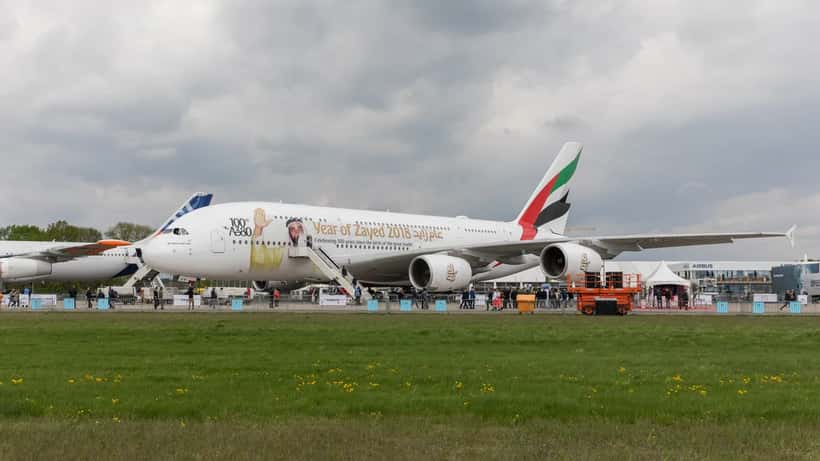
Emirates Airbus A380 flight EK31, carrying more than 500 passengers on the Dubai–London Heathrow route, squawked the international emergency code 7700 and diverted to Frankfurt Airport on 1 October 2026. The aircraft landed safely at Frankfurt's runway 25L at approximately 16:09 local time; Emirates later arranged a recovery departure at 17:30. But for hundreds of passengers who missed connections, paid for hotels in Frankfurt, or lost pre-booked ground transport in London, one question now dominates: who actually pays for this?
What Happened on Emirates EK31
The aircraft involved — an Airbus A380-800, registration A6-EDX — departed Dubai International Airport on schedule and completed roughly six hours of its planned seven-hour-twenty-minute journey before the flight deck transmitted squawk code 7700. That code is the universal aviation signal for a general emergency: it alerts air traffic control across the entire region and triggers an automatic priority clearance to the nearest suitable airport.
German controllers cleared Frankfurt airspace, and the A380 descended from cruising altitude before landing without incident. Emirates subsequently issued a brief statement citing "operational reasons" for the diversion, declining to specify whether the emergency was technical, medical, or security-related. The airline confirmed passengers would be moved to a recovery flight the same afternoon.
That short statement — "operational reasons" — carries far more legal weight than it might appear.
The Two Financial Routes Open to Diverted Passengers
When a flight diverts unplanned, UK-based passengers have two distinct financial claims available to them, and critically, these operate independently of one another.
Route 1: UK261 statutory compensation
UK261 — the post-Brexit domestic version of EU Regulation 261/2004 — gives passengers statutory rights when flights arrive more than three hours late. It applies to all flights departing a UK airport, and to flights arriving in the UK operated by UK-licensed carriers. The entitlement exists unless the airline proves an "extraordinary circumstance" caused the disruption.
For EK31, the key figures are:
- Flight distance (Dubai to London): approximately 5,500 km — placing it in the highest bracket
- Maximum statutory compensation: £520 per passenger
Whether those 500-plus passengers are entitled to that £520 hinges entirely on what caused the emergency. A mechanical or technical failure attributed to the airline's maintenance is not typically extraordinary; an unforeseeable medical emergency on board or a security threat raised by another passenger could qualify. Emirates has not (as of publication) disclosed the cause, which means most passengers should submit their claim and allow the process to determine eligibility.
Route 2: Your travel insurance policy
This is where many passengers leave money on the table. Travel insurance "travel disruption" sections cover expenses the airline is not legally obligated to reimburse — or does reimburse but only slowly and after documentation. A good policy typically covers:
- Additional hotel accommodation if the onward recovery flight falls the next day
- Food and refreshments beyond what the airline provides
- Alternative ground transport from Frankfurt to London (Eurostar, car hire)
- Non-refundable pre-booked services at the destination missed due to the diversion
Critically, travel insurance and UK261 are not mutually exclusive. You can claim under your travel insurance for immediate out-of-pocket expenses, then pursue UK261 compensation for the statutory amount. If both succeed, the insurance company may apply a "subrogation" clause — recovering from the airline on your behalf — but the passenger is made whole in full, typically faster than waiting for the airline to complete its investigation.
Concrete Case: A Passenger's £1,340 Diversion Bill
Consider the following realistic scenario grounded in the EK31 incident.
A passenger books EK31 as part of a Dubai–London–Edinburgh connecting trip. Their Heathrow-to-Edinburgh Caledonian Sleeper rail ticket, purchased non-refundably three weeks in advance, cost £94. They have a hotel in Edinburgh pre-booked (non-refundable, 1-night, £140). Their checked luggage is on the A380, leaving them with hand baggage only in Frankfurt.
Because Emirates' recovery flight departed at 17:30 local time but was then delayed by a further two hours, the passenger missed the last connecting rail service from Heathrow to Edinburgh on 1 October. They are now stuck at Heathrow overnight.
Here is what they spend and what they can recover:
| Expense | Amount | Who Pays? |
|---|---|---|
| Heathrow hotel (1 night, Travelodge) | £189 | Emirates duty of care (UK261 Art. 9) — airline must provide |
| Meals at Heathrow (dinner + breakfast) | £38 | Emirates duty of care |
| New Edinburgh rail ticket (next morning) | £76 | Travel insurance "missed connection" clause |
| Non-refundable Edinburgh hotel (wasted night) | £140 | Travel insurance "travel disruption" clause |
| Non-refundable Caledonian Sleeper (missed) | £94 | Travel insurance |
| UK261 statutory compensation | £520 | Emirates (if cause not extraordinary) |
| Total recoverable | £1,057 | Airline + insurer |
The if/then logic here is precise: if Emirates discloses a technical/mechanical cause, then the £520 UK261 payment is likely due in addition to duty-of-care costs; if the cause is deemed extraordinary, the £520 drops out but the duty-of-care obligations (hotel, meals, transport) remain — and the travel insurance claim for missed connections still stands regardless.
A passenger without travel insurance in this scenario recovers approximately £803 (duty-of-care + UK261) and absorbs the remaining £254 personally. A passenger with comprehensive travel disruption cover recovers the full £1,057. The gap is £254 — but on a more expensive trip (business class, premium non-refundable hotels), that gap can exceed £1,500.
Why "Operational Reasons" Is the Critical Phrase
Emirates' use of "operational reasons" is intentional and legally significant. Airlines routinely issue non-specific initial statements following diversions for several reasons: investigations take time, liability exposure increases with precise public admissions, and aviation safety investigations (overseen by the UK Air Accidents Investigation Branch or its German equivalent, the BFU, for incidents in German airspace) prohibit premature public disclosure of findings.
For passengers, this creates a window of uncertainty. Airlines facing similar situations — from EasyJet diversions to Ryanair emergency landings — follow the same pattern: an initial vague statement, then a formal cause determination weeks or months later. Our guide to EasyJet's U27938 emergency diversion and UK passenger rights explains how that process typically unfolds.
UK261 claims submitted now will be acknowledged but not decided until the investigation provides a cause determination. This is normal and legal under the regulation, but airlines have a statutory 14-day period to respond to initial claims before escalation to the Civil Aviation Authority is available.
The recommended approach: submit your UK261 claim immediately (today, via Emirates' website or a regulated claims handler), and simultaneously open your travel insurance claim citing "travel disruption: unplanned flight diversion." You do not need to know the cause to open either claim.
According to the UK Civil Aviation Authority, passengers have six years from the date of the disruption to file a UK261 claim — but acting promptly improves the documentary trail.
What to Do Right Now
If you were on EK31 or are monitoring a similar situation, these are the steps legal and insurance experts recommend:
1. Document everything within 48 hours. Receipts for hotel, food, transport, taxis, and any services missed due to the delay. Screenshots of Emirates app notifications, departure board photos, and written confirmation of the recovery flight time are all valuable evidence.
2. Submit your UK261 claim directly to Emirates. The Dubai-to-London route is covered under UK261 because it arrives in the UK. Emirates has offices in the UK and is subject to CAA enforcement. Use the written claim form on Emirates' website and retain a copy.
3. Contact your travel insurer immediately. Most "travel disruption" clauses have a 24–72-hour notification window. Failure to notify promptly can void a claim. Quote the flight number (EK31), date (1 October 2026), and the nature of the disruption (unplanned diversion to alternate airport).
4. Keep the recovery flight boarding pass. The recovery flight is the legal record of when you actually arrived. Your "arrival time" for UK261 purposes is when the aircraft door opens at your final destination — not when you land at Frankfurt.
5. Seek legal advice if Emirates rejects the claim. An airline's first response to a UK261 claim is frequently a rejection citing extraordinary circumstances. This rejection can be challenged — either through the CAA's enforcement process or through the courts. A consumer law solicitor or aviation rights specialist can assess the strength of your claim based on the final incident report.
Incidents like EK31 are rare, but diversions happen on all carriers multiple times per year. If you are travelling on any long-haul route to or from the UK, reviewing your travel insurance policy's "travel disruption" section before departure — and confirming the UK261 compensation brackets apply to your route — takes under ten minutes and can make a four-figure difference if the unexpected happens.
For tailored advice on pursuing your specific claim — whether a UK261 statutory compensation dispute or a complex travel insurance rejection — a qualified legal specialist can assess your documentation and advise on the fastest route to recovery. ExpertZoom connects you with experienced consumer law solicitors and insurance advisers in the UK, available for consultation at a time that suits you.
Disclaimer: This article is for general informational purposes. It does not constitute legal advice. Consult a qualified solicitor for advice specific to your circumstances.
