 Eleanor Stone
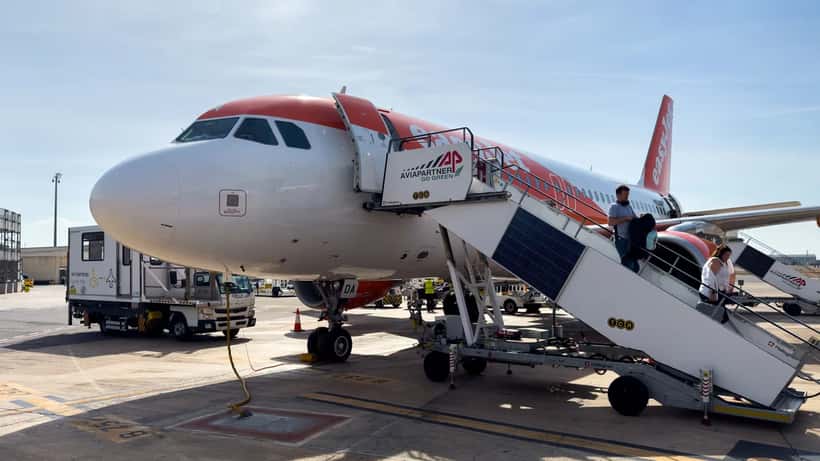
On Monday 6 July 2026, EasyJet flight U27938 — an Airbus A319-111 registered OE-LQP — declared a mid-air emergency over German airspace and diverted to Hamburg Airport, cutting short what should have been a routine two-hour hop from Copenhagen to Amsterdam Schiphol. The aircraft had just reached its cruising altitude of 34,000 feet when the crew activated Squawk 7700, the international transponder code that signals an in-flight emergency, and initiated a rapid, unplanned descent. Emergency services at Hamburg Airport were placed on standby. The jet touched down safely on runway 23 at 13:53 CEST — roughly 53 minutes after departing Copenhagen.
EasyJet subsequently described the disruption as being caused by "factors outside the airline's control" and classified it as an "extraordinary circumstance." The airline indicated the aircraft would undergo safety checks and refuel at Hamburg before continuing to Amsterdam Schiphol. For the passengers left stranded, facing missed connections, or self-funding meals and taxis in Hamburg, the pressing question was immediate: what exactly are you entitled to claim?
What UK261 Covers on a Diverted Flight
The UK Air Passenger Rights Regulation — UK261, the post-Brexit successor to EU Regulation 261/2004 — protects passengers on flights departing UK airports and on flights into the UK operated by UK-based carriers. One of the most commonly misunderstood rules concerns diversions specifically: compensation is not calculated from where the plane unexpectedly lands, but from your arrival time at your original intended destination.
For U27938, that means Amsterdam Schiphol. If passengers arrived there more than three hours late as a direct result of the diversion, they may be entitled to fixed compensation of £220 — the statutory amount for short-haul routes under 1,500 km. Copenhagen to Amsterdam is approximately 620 km, comfortably within that band.
The Extraordinary Circumstances Defence — and Why It Is Not Always Valid
EasyJet's framing of the incident matters significantly in legal terms. Under UK261, an airline that can prove a disruption was caused by extraordinary circumstances is exempt from paying the fixed compensation. The definition covers situations genuinely outside the carrier's control: sudden in-flight medical emergencies, security threats, air traffic control restrictions, or unforeseen technical faults that could not have been detected during normal maintenance.
However, the legal threshold is deliberately strict. In the landmark UK case Lipton v BA CityFlyer, the Court of Appeal confirmed three principles that apply directly to cases like U27938:
- The airline bears the entire burden of proof — passengers do not need to disprove anything.
- Technical defects are only extraordinary when they arise from hidden manufacturing defects or events entirely outside the carrier's control. Routine maintenance failures do not qualify.
- The carrier must also demonstrate it took all reasonable measures to avoid the resulting delay, even after the triggering event.
At the time of publication, EasyJet has not publicly disclosed the specific cause of the U27938 emergency. Until detailed technical or safety documentation is provided, the extraordinary-circumstances defence remains legally challengeable.
Five Rights Passengers Hold Right Now
Whether or not compensation ultimately applies, UK261 grants several immediate entitlements that the extraordinary-circumstances exemption cannot touch:
1. Right to care and assistance. EasyJet must provide meals, refreshments, and at least two free communications (phone calls, emails) proportionate to the length of the delay — at Hamburg and at any onward point. This obligation applies from the moment of diversion, regardless of cause.
2. Right to rebooking or a full refund. If you no longer wish to travel because of the disruption, you may request a full refund of the unused portion of your ticket within seven days. If you do wish to continue, the airline must rebook you on the next available service to Amsterdam at no extra charge.
3. Right to hotel accommodation. If the delay forced an overnight stay in Hamburg — or if connecting passengers missed a subsequent service and faced a night away — EasyJet is required to arrange and pay for hotel accommodation and transport between the hotel and airport.
4. Right to fixed compensation (if the extraordinary-circumstances claim fails). Should EasyJet's grounds not survive legal scrutiny, passengers can pursue £220 through the Civil Aviation Authority's Passenger Advice and Complaints Team (PACT), or through an approved Alternative Dispute Resolution (ADR) scheme. Both routes are free to use before court action becomes necessary.
5. Right to a written notice of rights. Under Article 14 of UK261, EasyJet is required to hand passengers a written statement of their rights at the airport. If no such notice was provided, document that omission — it is relevant if you later escalate a claim.
How to Protect Your Claim
Documentation gathered immediately after the incident is decisive in UK261 disputes. Passengers should preserve: screenshots or printouts of all EasyJet flight status updates and messages, receipts for any food, transport or accommodation they self-funded at Hamburg, and a record of their actual arrival time in Amsterdam Schiphol — not the Hamburg landing time. The three-hour compensation threshold is measured from the scheduled Amsterdam arrival, and a difference of even a few minutes can determine eligibility.
Aviation law specialists consistently warn passengers not to accept an airline's initial extraordinary-circumstances response as the final word. Airlines routinely raise this defence as a first step; a qualified solicitor can request the technical or safety records filed by the crew and assess whether the legal grounds are genuinely sustainable.
When to Consult a Legal Expert
UK261 disputes can stall at the airline's internal complaints stage for months. If EasyJet does not resolve your claim within eight weeks, you are entitled to refer the matter to an approved ADR scheme or take independent legal advice. For a diversion in which the cause has not yet been publicly explained, a solicitor can make a formal disclosure request for the aircraft's technical log and operational safety report — the documents that determine whether extraordinary circumstances genuinely applied.
For detailed guidance on your rights following U27938, the Civil Aviation Authority's disrupted flights page sets out the formal complaint pathway. You can also find previous analysis of EasyJet disruptions and passenger protections in this EasyJet UK passenger rights guide.
An ExpertZoom legal specialist with experience in UK261 aviation claims can assess your specific situation, draft a formal letter of claim, and represent you through ADR or County Court proceedings — typically on a no-win, no-fee basis.
YMYL notice: This article provides general legal information about UK Air Passenger Rights legislation and does not constitute legal advice. For advice specific to your personal circumstances, consult a qualified aviation solicitor.
