 Eleanor Stone
England brought the Democratic Republic of Congo's remarkable World Cup debut to an end with a 2-0 victory in Atlanta on 1 July 2026, goals from Jude Bellingham and Harry Kane cutting short the Leopards' historic first knockout-stage appearance in 52 years. But the story behind this particular team carries a lesson that goes far beyond the final score — one that every professional athlete navigating international eligibility should take seriously.
DR Congo's Historic Return to the World Stage
The Democratic Republic of Congo last appeared at a World Cup in 1974, playing under the name Zaire. Half a century later, a new generation of Leopards arrived in North America ranked 46th by FIFA, with a squad built largely on diaspora talent based across Europe.
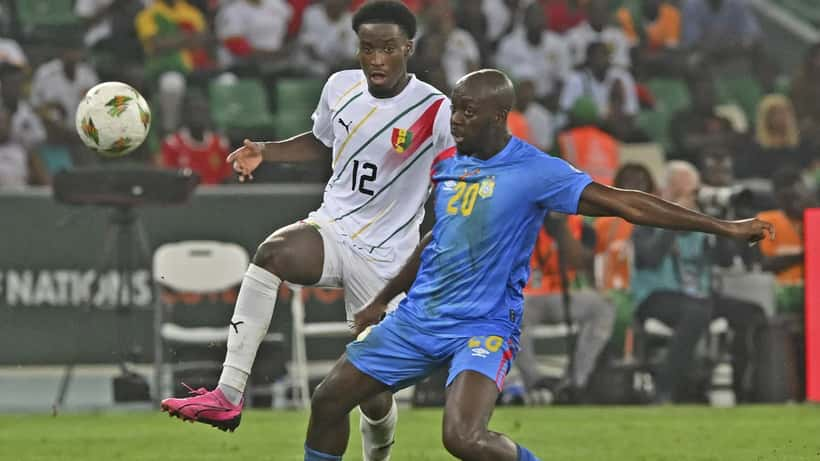
In Group K, they drew 1-1 with Portugal in Houston — Yoane Wissa scoring the country's first ever World Cup goal — before beating Uzbekistan 3-1 to qualify for the knockout stages for the first time in their history. Against England at Mercedes-Benz Stadium in Atlanta, goals from Bellingham and Kane proved too much to overcome. It was a 2-0 defeat that ended the tournament, but not before the Leopards had written a new chapter in African football history.
Yet what made this team remarkable was not simply the results. It was the stories behind the jerseys.
A Squad Built on the Diaspora
Aaron Wan-Bissaka was born in Croydon, South London. He came through Crystal Palace's academy, earned senior recognition across English club football, and could realistically have represented England. Instead, he chose the Democratic Republic of Congo — the home country of his parents — a decision shared by several teammates.
Yoane Wissa, one of the Premier League's most clinical forwards across five seasons at Brentford, grew up between Gabon, France, and England before committing to the Leopards. Captain Chancel Mbemba built his career at Porto and Marseille while flying the DRC flag. Together, they formed one of the World Cup's most internationally scattered squads — players born in Europe representing the country their families came from.
These are not unusual stories. At every World Cup, dozens of players from France, England, Belgium, and the Netherlands represent African, South American, or Asian nations. FIFA's eligibility rules permit this — but the process involves legal complexity that many athletes overlook, particularly when they are young and at the start of their professional careers.
What FIFA's Eligibility Rules Actually Mean
FIFA's Regulations on the Status and Transfer of Players allow a player to switch national association under specific conditions. In simplified terms: if a player has not appeared for a senior national team in a competitive official match, they may be eligible to represent another country, provided they meet one of several criteria — including being born there, having a parent or grandparent born there, or having lived there for at least five consecutive years.
Applications are submitted to FIFA's Players' Status and Governance Department. Approval is not automatic. The process can take months, requires documentary evidence, and any errors or delays can have significant consequences for both the player and the association waiting to select them. As guidance from the UK Government on British citizenship and nationality makes clear, holding British citizenship does not determine which national football team a player is eligible for — FIFA eligibility is an entirely separate legal matter, governed by its own regulations.
For a 22-year-old Premier League winger deciding whether to represent England or DR Congo, this is not simply a question of identity. It is a legal and financial decision with long-term consequences that cannot be reversed once a competitive appearance has been made.
Further detail on how FIFA's mandatory release rules interact with club contracts is explored in England's FIFA player release obligations for World Cup 2026, which examines the obligations clubs and federations have to one another during tournament periods.
The Legal Advice Athletes Need — But Rarely Seek
Sports law is a specialist field. Contract interpretation, eligibility applications, FIFA dispute resolution, and cross-border employment rights all fall within its scope. Yet many athletes at the early stages of their careers do not have dedicated legal support covering international eligibility decisions.
In the UK, professional footballers above certain salary thresholds have access to PFA-recommended legal services, but eligibility decisions — particularly those involving dual nationality — often fall outside standard player representation arrangements. These decisions carry permanent consequences: once a player has appeared competitively for a senior national team, the door to switching closes.
A player who inadvertently appears in a competitive friendly, or who submits an incomplete eligibility application during a transfer window, can find themselves permanently locked out of options they assumed were available. Clubs, for their part, may also apply informal pressure during eligibility processes — particularly if they believe a player representing a lower-ranked nation carries higher injury risk during competitive international windows. For all parties, legal advice from a qualified sports law specialist is not a luxury — it is essential.
The dual nationality rules at play in this year's tournament, including the FIFA eligibility processes used by Ivory Coast, Ecuador, and other diaspora-heavy squads, are examined in more detail in FIFA dual-nationality eligibility rules for World Cup 2026.
This article is for information purposes only and does not constitute legal advice. For guidance specific to your circumstances, consult a qualified legal professional.
The Financial Dimension After Elimination
DR Congo's World Cup run also raised the profile — and therefore the market value — of several players in the squad. Wan-Bissaka enters the summer transfer window with fresh international visibility. Wissa, already one of Brentford's most valuable assets before the tournament, leaves North America with his profile elevated significantly across European markets.
FIFA distributes prize money to national associations for each stage reached, not directly to players. How that money is distributed within a federation — and how tournament-related bonuses are treated for tax purposes in a player's country of residence — is not always straightforward. For a DR Congo player who lives and pays tax in England, receiving a performance bonus paid by a foreign national association requires careful financial and legal planning. These are conversations that should happen before the tournament, not after.
What Comes Next for the Leopards
DR Congo leave this World Cup with something more valuable than a trophy: recognition. Their draw with Portugal, their first-ever knockout qualification, and their appearance in a tournament watched by billions have permanently raised the profile of Congolese football.
For the young players in this squad — many under 28, most at the peak or ascending phase of their careers — the decisions ahead will require both legal and financial guidance. Transfer offers will arrive. Eligibility questions may resurface for the next generation of Congolese diaspora players considering who to represent.
ExpertZoom connects athletes, families, and sports professionals across the UK with qualified legal and financial experts. Whether the question involves eligibility applications, contract review, or financial planning around tournament earnings, the right advice makes a difference at every stage of a professional career.
