 Imogen Bennett
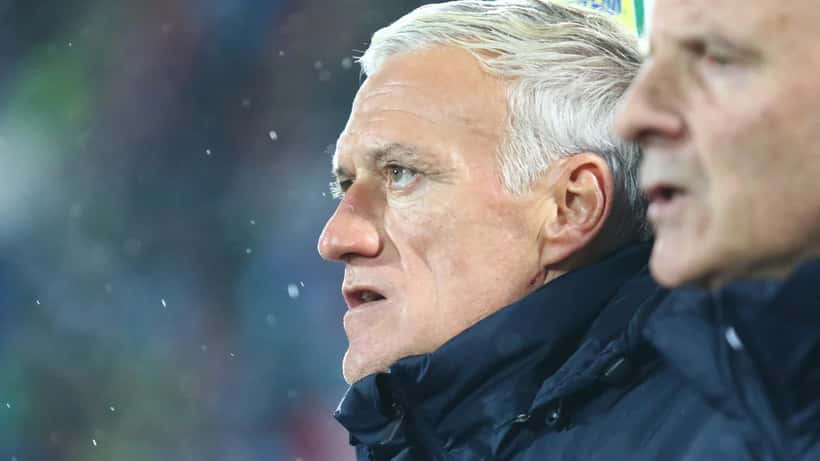
Didier Deschamps stood in the Philadelphia Stadium technical area on 4 July 2026, fully aware that this round-of-16 tie against Paraguay could be among his final acts as France head coach — the culmination of a 14-year career at the pinnacle of international football. With his contract expiring after the 2026 World Cup, the 57-year-old has confirmed he will step down, prompting questions not just about who will succeed him at the Fédération Française de Football, but about how one of football's highest-earning coaches plans the financial transition into life after the dugout.
The Numbers Behind 14 Years at the Top
Since taking charge of France in July 2012, Deschamps has reportedly earned between €4 million and €6 million per year as national team manager — placing him consistently among the world's five highest-paid international coaches. Over 14 years, that conservatively represents pre-tax earnings exceeding £50 million, to say nothing of commercial endorsements, published memoirs, and high-value speaking engagements accumulated during one of European football's most celebrated managerial careers.
The trophy haul has been extraordinary: a 2018 World Cup triumph in Russia, a runner-up finish at the 2022 World Cup in Qatar, a UEFA Nations League title in 2021, and now a shot at glory on North American soil. But trophies do not automatically translate into financial security without rigorous planning — a lesson elite sports professionals learn too late more often than the public realises. According to the Financial Conduct Authority, high-value individuals approaching career-end transitions are among the groups most exposed to both inadequate planning and financial fraud, making regulated wealth advice essential rather than optional.
Why Retirement Hits High-Earners Harder Than Expected
The shift from elite sport management into post-career life carries financial pitfalls that even the wealthiest individuals can mishandle. Three patterns recur consistently among sports professionals navigating this transition.
Income cliff edges represent the most acute immediate problem. Deschamps moves from a fixed, multi-million-euro annual salary to zero employment income at contract end. Without robust passive income streams — from diversified investments, income-generating property, or business equity stakes — the financial and psychological shock can be severe regardless of accumulated net worth. Many high earners discover that their lifestyle costs, set during peak-income years, are simply unsustainable on investment returns alone without restructuring.
Tax residency complexity looms equally large. Deschamps has lived across France, Monaco, and various tournament host nations over the course of his career. French residents face wealth tax obligations on global assets above defined thresholds, and internationally mobile coaches frequently hold assets across multiple jurisdictions, each with different inheritance and capital gains rules. Restructuring residency and asset ownership ahead of retirement — rather than scrambling during it — can save substantial sums, but demands planning years in advance, not weeks.
Pension gaps routinely surprise high earners who assumed their investment portfolios were sufficient. Elite sports professionals often rely almost entirely on direct equity and property holdings rather than pension products, missing decades of tax-efficient compounding. For someone earning €5 million annually, state pension contributions represent a negligible fraction of retirement income — meaning private structure, not public entitlement, determines comfort in later life.
Four Principles Elite Coaches Apply to Retirement Planning
Deschamps' career arc offers a template for any high-earning professional approaching a defined career endpoint. Wealth management specialists regularly highlight four principles that apply whether you're a World Cup-winning coach, a UK law firm partner stepping down, or an executive approaching a company sale.
Begin restructuring five years out, not one. The most effective transitions start not at retirement but well before it. At Deschamps' income level, this means gradually shifting from high-tax employment income into tax-efficient investment vehicles, trusts, and holding structures that preserve wealth across generations before the employment income disappears.
Diversify radically beyond cash and domestic property. High earners consistently hold too much in cash and direct residential property in their home country. A genuinely diversified portfolio — spanning global equities, alternative asset classes, infrastructure funds, and sovereign bonds — provides resilience against regional downturns that a property-heavy position cannot replicate.
Plan cross-border inheritance from the outset. For those with assets across multiple EU countries, the UK, and beyond, inheritance tax is a serious operational challenge. French succession law applies to France-situated assets regardless of owner residency, and UK domicile rules extend further than most expect. Appropriate trust structures, set in place before retirement, protect assets for the next generation without costly legal battles later.
Consider a family governance model. For individuals with net worth above £10 million, even a simplified family office structure — a formal framework for investment governance, charitable giving, and generational wealth transfer — creates the accountability and long-term strategy that an ad hoc approach cannot sustain. This is standard practice among elite athletes and coaches whose wealth spans decades and multiple asset classes.
What Comes After the Dugout
Retirement from elite coaching rarely means complete withdrawal. Deschamps — who lifted the 1998 World Cup as France captain before becoming the only man to win it as both player and manager — is likely to remain embedded in football governance, broadcast punditry, and ambassadorial roles for years to come. These activities generate income streams that must themselves be structured efficiently from day one.
For GB professionals in sport or any high-earning sector, Cody Gakpo's experience navigating multi-club contract wealth at elite level offers a parallel lesson in how individual circumstances demand tailored strategies rather than off-the-shelf products, as explored in our earlier piece on World Cup salaries and wealth planning.
The Deschamps moment — a fixed career endpoint in sight, substantial accumulated assets, and a complex international footprint — is precisely the scenario that specialist wealth advisers are built for. Whether you are a senior executive approaching redundancy, a business owner ahead of a trade sale, or a professional who has spent decades accumulating without a structured plan, the questions are the same.
This article is for general information only and does not constitute regulated financial advice. Individual circumstances vary — consult a qualified, FCA-authorised financial adviser before making decisions about your pension, investments, or retirement planning.
Questions to Bring to a Wealth Adviser in 2026
- How do I convert accumulated assets into sustainable retirement income without depleting capital?
- Which of my assets carry the greatest inheritance tax exposure in the UK?
- Am I over-concentrated in a single asset class or geography?
- When is the right point to begin drawing on pension versus investment portfolios?
Connecting with an independent, regulated specialist who understands complex, high-value transitions matters far more than the timing. For those inspired by Deschamps' considered exit from international football — or simply facing their own career milestone — ExpertZoom connects clients with vetted wealth management advisers who understand the full scope of what elite-level retirement planning actually requires.
