 Abigail Clarke
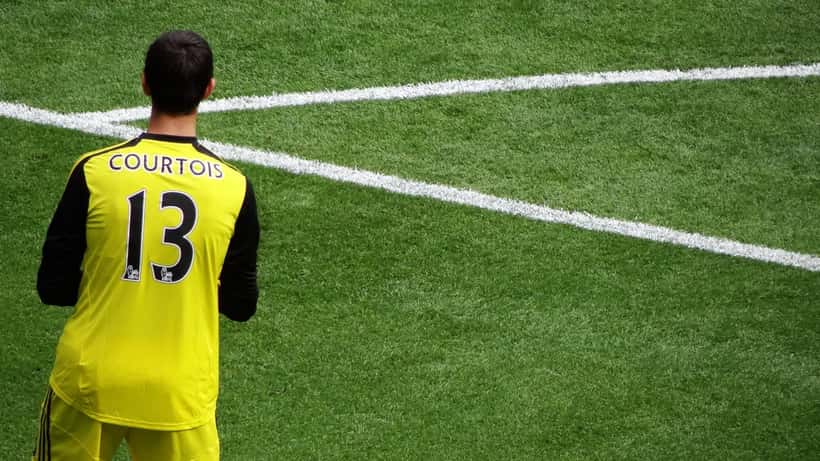
Thibaut Courtois is back between the posts for Belgium at the 2026 FIFA World Cup — but his road back from a serious quadriceps tear this spring is a reminder of how costly muscle injuries can be, even for the world's best athletes. For recreational players who suffer similar strains on a Sunday morning, the question of when to see a specialist can make the difference between a two-week setback and a career-altering complication.
Courtois's Injury: What Actually Happened
In mid-March 2026, Courtois pulled up in Real Madrid's Champions League last-16 clash with discomfort in his right thigh. Scans confirmed a rectus femoris tear — a deep muscle within the quadriceps group that is notoriously difficult to rehabilitate because it crosses both the hip and knee joints.
The initial prognosis was six weeks out. For a goalkeeper at the top end of his profession, that kind of timeline is not unusual: the rectus femoris takes significant force to tear at full speed, and the repair process requires careful load management to avoid a secondary rupture, which is statistically more serious than the first injury.
Courtois returned in late April, featured in each of Real Madrid's final four matches of the season, and was confirmed in Belgium's official 26-man FIFA World Cup 2026 squad on 3 June 2026 by Rudi Garcia. He arrives in North America as the Red Devils' undisputed first choice — and, by many accounts, playing at the peak of his powers.
Why Quadriceps Tears Are Different from Ordinary Strains
Most people are familiar with muscle strains: a twinge after sprinting too hard, stiffness after a heavy gym session. But a rectus femoris tear is a different beast, and it illustrates why self-diagnosis after a high-impact injury can go badly wrong.
The quadriceps is made up of four muscles. The rectus femoris is the only one that originates at the pelvis rather than the femur, which means it is under stretch in two directions simultaneously during explosive movements — exactly the kind Courtois performs dozens of times per match. When it tears, bruising may not appear for 24–48 hours, and the initial pain can subside enough that amateur athletes convince themselves it was "nothing serious."
According to the NHS guide on sprains and strains, most minor muscle injuries can be managed with rest, ice, compression, and elevation (RICE) in the first 72 hours. However, a tear that involves loss of function, a palpable gap in the muscle, immediate swelling, or inability to weight-bear should be assessed by a health professional — ideally a sports medicine doctor or physiotherapist with imaging access — as soon as possible.
Delaying assessment risks two things: first, continuing to train on a structurally compromised muscle, which dramatically increases the chance of a full rupture; second, missing a haematoma (blood pooling in the muscle) that, if untreated, can calcify into a painful bony deposit known as myositis ossificans.
The Amateur Athlete's Guide to Knowing When to See a Specialist
Courtois had an entire medical department at his disposal within hours of his injury. Most weekend footballers, cyclists, or gym-goers do not. Here is a practical framework for deciding when a GP visit is not enough:
Red flags that warrant specialist referral:
- You heard or felt a "pop" at the moment of injury
- You cannot contract the muscle against resistance without significant pain
- There is visible deformity or a "dent" in the muscle belly
- Bruising is spreading rapidly (a sign of significant bleeding)
- Symptoms are not improving after five to seven days of RICE
What a specialist can offer that a GP cannot:
A sports medicine physician or orthopaedic consultant can order an MRI to grade the tear precisely (Grade 1: minor, Grade 2: partial, Grade 3: complete). This grading determines whether you need physiotherapy alone, a structured rehabilitation programme, or in rare cases, surgical repair. Without imaging, recovery timelines are guesswork — and returning too early is the single biggest risk factor for re-injury.
A physiotherapist specialising in sport can then build a staged return-to-sport protocol. Courtois's team almost certainly followed a protocol similar to the one used by elite clubs: isometric exercises first, then isotonic loading, then progressive eccentric work, and finally sport-specific drills before full training resumed. This approach is not reserved for professionals — any qualified sports physio can tailor it to your level.
As documented in analyses of similar injuries — like Rodri's 18-month ACL recovery journey and Mateo Joseph's ACL tear at Mallorca — elite athletes who engage specialist guidance early consistently outperform those who manage injuries independently.
Returning Safely: Lessons from Elite Sport
One of the most instructive aspects of Courtois's recovery is the timeline. Six weeks for a significant quadriceps tear is aggressive — but it was possible because he had daily expert monitoring, physiotherapy twice a day, and no pressure to play until functional tests confirmed readiness.
For amateur athletes, a comparable Grade 2 tear might take eight to twelve weeks to heal safely. Research published in sports medicine literature consistently shows that amateur players return to sport on average four weeks earlier than is clinically advisable, leading to a re-injury rate that can exceed 30% in the first six months.
The key milestones to look for before returning to full activity are:
- Full pain-free range of motion in the affected joint
- Strength symmetry of at least 90% compared to the uninjured side (measured by a physiotherapist)
- Completion of sport-specific movements without compensatory patterns
None of these can be self-assessed reliably. They require professional testing.
The Financial Cost of Not Acting Early
There is also a practical argument for seeking help quickly: the cost of a single specialist consultation — typically £80–£200 at a private sports medicine clinic in the UK — is a fraction of the cost of a secondary rupture that requires surgical repair, which can run to several thousand pounds and involve weeks of formal physiotherapy.
For those whose livelihood depends on physical capacity — tradespeople, delivery workers, personal trainers — even a minor injury can affect income. A specialist consultation is an investment in functional longevity, not a luxury.
When to Consult a Health Expert
Thibaut Courtois's comeback illustrates two things simultaneously: how serious muscle injuries can derail even a top-level athlete, and how the right professional support makes rapid, safe recovery possible.
If you have suffered a muscle injury that is not following the expected path of improvement, or if you are wondering whether you need more than rest and over-the-counter painkillers, ExpertZoom connects you with qualified health professionals — including sports medicine doctors and physiotherapists — who can assess your injury, order appropriate investigations, and build a recovery plan matched to your goals.
Do not wait for the injury to force a decision. The earlier you get specialist eyes on a muscle tear, the better your chances of a full, fast recovery — whether you play in a Sunday league or a World Cup.
