 Alistair Finch
The China Open 2026 is in full swing in Beijing, with a combined prize pool of $13,505,110 and some of the world's best tennis players competing through 11 October — and British punters are betting on every match. But as betting volumes on the tournament peak, millions of UK fans are discovering that the sweeping gambling reforms that came into force in 2024 and 2025 have quietly changed the rules of the game. Account freezes, affordability checks, and new stake restrictions are leaving some bettors confused about their rights, and legal experts say now is the time to get informed.
The China Open 2026: A Betting Magnet
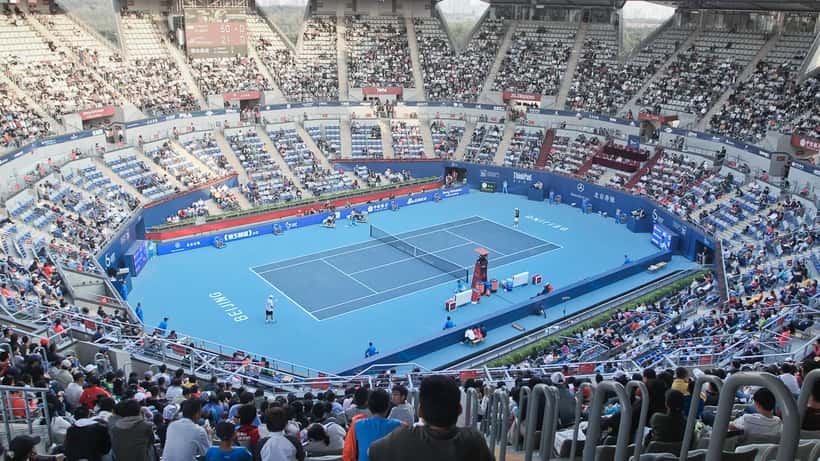
The China Open, held at the National Tennis Centre in Beijing, features two elite tournaments running simultaneously: the men's ATP 500 event (which concludes 6 October) and the women's WTA 1000 event (which runs through 11 October). The prize money on offer is substantial by any measure. According to the WTA and ATP tour websites, the men's singles champion will take home $764,750 — approximately £605,000 — while the women's singles winner is set to earn $1,151,380, or roughly £911,000.
The draw has already produced early drama. Novak Djokovic, competing at the China Open for the first time in years, opened his campaign on 30 September with a commanding 6-3 7-6(2) victory over Nuno Borges. On the same day, Karen Khachanov delivered one of the tournament's first significant upsets, defeating second seed Felix Auger-Aliassime 6-3 6-3. With Djokovic, Carlos Alcaraz, and other top seeds still in the competition on the women's side, British bookmakers are reporting elevated volumes of both pre-match and in-play live wagers. The China Open's evening start times align well with UK scheduling, making it particularly popular for live betting.
The UK remains one of the world's largest regulated gambling markets. According to the UK Gambling Commission, licensed operators generated £14.2 billion in gross gambling yield in 2024, with tennis consistently ranking among the fastest-growing sports for in-play wagering. The China Open draws outsized interest because of the high profile of the players, the live broadcast coverage available in the UK, and the concentration of match action across a single fortnight.
New Rules UK Bettors Must Understand
What many British fans placing wagers on the China Open may not realise is that the gambling landscape changed significantly in late 2024 and into 2025. The UK government's Gambling Act Review white paper, published in April 2023, triggered a rolling programme of reforms that operators have been implementing since.
Two changes are particularly relevant for sports bettors. First, online slots stake limits came into effect in 2024: £5 per spin for players aged 25 and over, and £2 per spin for those aged 18 to 24. While these apply specifically to slot games rather than sports betting, many UK punters hold multi-product accounts that bundle sports betting with casino play. Compliance actions triggered on the casino side of an account — including account reviews and temporary withdrawal freezes — can affect access across the entire account.
Second, and more directly relevant to sports bettors, a two-stage system of financial risk checks was introduced in 2024. From 30 August 2024, operators were required to carry out checks on customers who reach a net deposit threshold of £500 per month. From February 2025, that threshold tightened to £150 per month. When a customer hits this threshold, operators may request documentation including bank statements or proof of income before allowing further deposits or processing withdrawals. Accounts can be temporarily restricted while checks are completed.
The rationale behind these reforms is harm reduction. But the practical effect for thousands of British bettors placing moderate-value wagers on events like the China Open is that account restrictions can arrive unexpectedly, sometimes mid-tournament, and at the worst possible moment.
When Accounts Get Frozen: Your Legal Position
UK-licensed gambling operators have broad contractual powers to restrict accounts, void bets under certain conditions, and request additional information from customers. However, they operate under licensing conditions set by the Gambling Commission, and they must comply with consumer protection laws — including the Consumer Rights Act 2015, which requires contract terms to be fair, transparent, and not create a significant imbalance to the consumer's detriment.
The primary ADR body for UK sports betting disputes is the Independent Betting Adjudication Service (IBAS). When a formal complaint to the operator's internal team fails to resolve a dispute, customers can escalate to IBAS at no cost. IBAS adjudicators review the relevant terms and conditions, betting records, and operator conduct. However, the process typically takes four to six weeks — a significant delay when contested winnings are frozen — and the outcome is not always favourable for bettors where an operator's terms technically permitted the action taken.
Solicitors specialising in gaming and consumer law can often move faster. A formal letter before action, citing the Consumer Rights Act and the operator's own licensing obligations, frequently prompts an operator to resolve a dispute before proceedings are commenced. Many gaming solicitors offer fixed-fee consultations to assess whether a claim is viable.
Concrete Case: When the £150 Threshold Bites
Take the case of a Birmingham-based bettor who regularly wagers on tennis during the autumn swing. In September 2026, ahead of the China Open, he deposited £160 over 28 days across two different deposit sessions: £90 on 8 September for Wimbledon exhibition matches, and £70 on 29 September to fund China Open bets. Both deposits are with the same licensed operator.
Because his net deposit has crossed the £150 monthly threshold — the Stage 2 trigger that came into force in February 2025 — the operator's compliance system flags his account for an enhanced financial risk check. On 2 October, the day after Djokovic's first match, he attempts to add £50 to back Alcaraz in the quarter-finals at odds of 5/4. Instead, his deposit is blocked and he receives an automated message asking him to upload a bank statement to verify affordability.
He does not upload the documents. His existing account balance of £195 is held in the account. His pending bet on Djokovic, placed on 1 October at odds of 2/1 for a £100 stake, wins when Djokovic advances — but the £200 in winnings cannot be withdrawn until the affordability check is completed.
Under current Gambling Commission guidance, operators must process such checks "promptly," but there is no legislatively mandated deadline. If the check takes 10 days, his £395 in total account funds (existing balance plus winnings) remains inaccessible. If he then disputes the delay, the IBAS process could add another four to six weeks. Total time from bet placement to resolution: potentially 7–8 weeks.
Had he sought advice from a gaming solicitor at the point the account was first restricted, a letter citing the operator's obligations under its Gambling Commission licence and the Consumer Rights Act 2015 could plausibly have accelerated the review to 48–72 hours. Legal correspondence costs for a straightforward gambling account dispute typically begin at £250–£400. Against a potential recovery of £395, that calculation is marginal — but for disputes involving larger sums, or for customers whose accounts are closed entirely after a run of wins, the legal route is frequently cost-effective.
UK GDPR also provides a practical tool: under Article 15, any customer has the right to submit a Subject Access Request (SAR) to an operator, compelling disclosure of all personal data held — including the logic behind any automated decisions that led to account restriction. A SAR can reveal whether the operator followed its own documented procedures, which strengthens any subsequent dispute before IBAS or in court. Legal advisers can draft and interpret SARs effectively, particularly where operators delay or provide incomplete responses.
Steps to Protect Yourself Before and During China Open Betting
With the tournament entering its second week, there are practical measures UK bettors can take immediately:
- Track your net deposit total across the rolling 30-day window. The £150 threshold applies to net deposits (deposits minus withdrawals), not to total wagering. Staying below the threshold reduces the likelihood of a compliance review being triggered.
- Keep records of every bet placed, including the odds offered, the stake, and confirmation screenshots. These records are essential evidence in any dispute with an operator.
- Submit a formal written complaint to the operator first before escalating to IBAS — this step is a mandatory prerequisite for ADR consideration.
- Consult a legal expert if your dispute involves more than £500 or if you believe your account was closed or restricted following a winning sequence. Practitioners with experience in gaming consumer law can help you navigate IBAS proceedings, draft letters before action, and assess whether a County Court claim is viable. Our guide to Washington Open 2026 prize money also covers how sports prize structures interact with UK tax obligations — a related concern for bettors who win significant sums.
- Exercise your data rights. A Subject Access Request costs nothing and must be responded to within 30 calendar days under UK GDPR.
The China Open delivers some of the finest tennis of the autumn season, and this year's edition — with Djokovic back in the draw and record prize money on offer — is particularly compelling. For UK bettors, the tournament is also a timely reminder that understanding your rights under current gambling law is as important as researching the draw.
This article provides general information about UK gambling regulations and consumer rights. It does not constitute legal advice. If you have a specific dispute with a licensed gambling operator, consult a qualified solicitor who can assess your individual circumstances.
