 Isobel Fraser
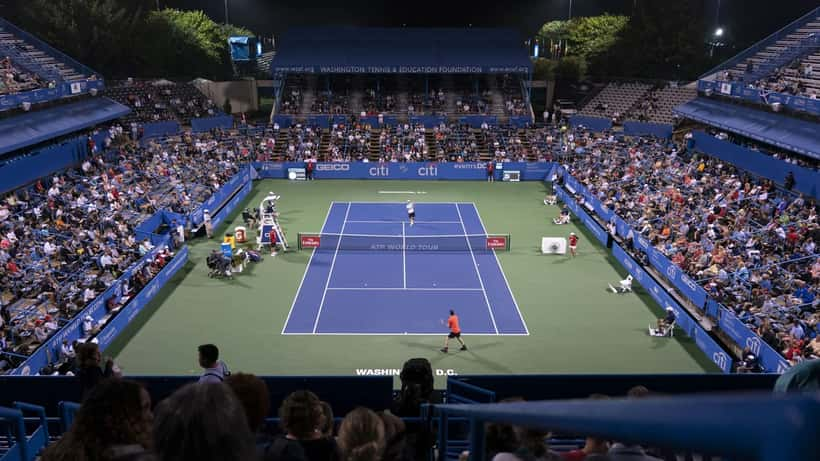
Washington, D.C., late July 2026. Under the blazing summer heat of Rock Creek Park, the world's best tennis players are competing for more than ranking points at the Mubadala Citi DC Open — they are chasing a total prize pool of $2,469,450. For the singles champion, that means a cheque worth $461,835 (approximately £344,409). For UK players like Jack Draper, who earned a wildcard into this year's main draw, the real financial story begins the moment the last ball is struck.
Prize money in professional tennis looks straightforward on paper. In practice, what players actually keep after agents' fees, travel costs, coaching expenses, and cross-border taxation is considerably less than the headline figure suggests. A wealth manager who works regularly with professional athletes put it plainly: "We often see young players earn six figures in a single summer and be left wondering where it went by October."
The Numbers Behind the 2026 Washington Open
The Mubadala Citi DC Open is the 57th edition of the ATP 500 tournament, held at the William H.G. FitzGerald Tennis Center from 27 July to 2 August 2026. The prize money structure breaks down as follows:
- Singles winner: $461,835 (£344,409)
- Runner-up: approximately $236,000 (£176,000)
- Semifinalists: $132,425 (£98,700)
- Quarter-finalists: approximately $72,000 (£53,700)
- First-round losers: $19,260 (£14,360)
A concurrent WTA 500 event runs alongside, offering a total prize pool of $1,637,982, with the women's singles champion earning $252,000. Even a first-round exit on either tour leaves players with nearly £14,000 in prize money — before anyone else takes their share.
That structure matters enormously across different career stages. A first-round exit at an ATP 500 event can represent several weeks of living costs for a player outside the top 50. A deep run — even a semifinal at $132,425 — can reshape a player's entire financial year. At the very top, the Washington champion earns in five days what a newly qualified solicitor might take seven years to accumulate.
What UK Players Actually Pay
The United States applies a withholding tax to prize money earned by foreign athletes on American soil. The standard rate is 30%, although this can be reduced under the US-UK double taxation treaty, which limits withholding to 15% for residents who provide the correct documentation — specifically, IRS Form W-8BEN, submitted before the tournament. According to HMRC's guidance on foreign income, UK residents must also declare overseas prize earnings on their self-assessment tax return, where any US withholding can be credited against UK income tax liability.
For a UK-resident player earning the Washington singles title at $461,835, the financial picture after tax and fees might look roughly like this:
| Item | Amount |
|---|---|
| Gross prize (USD converted) | £344,409 |
| US withholding tax at 15% treaty rate | –£51,661 |
| Coaching and support staff (weekly share of annual retainer) | –£30,000 |
| Agent's commission (15–20% of gross) | –£51,661 to £68,881 |
| Travel and accommodation (Washington DC in July) | –£5,000–£9,000 |
| Estimated net | £185,000–£206,000 |
That is roughly 54–60% of the trophy ceremony headline — and it does not yet account for UK income tax on the remaining sum, which for a player in the additional rate (45%) band adds a further layer of liability, partially offset by the US credit.
Why 2026 Raises the Stakes for British Players
The 2026 Washington Open arrives at a moment of meaningful change in the earnings landscape of professional tennis. Total prize money at ATP 500 events has risen by more than 40% over the past five years, according to ATP Tour data — Washington's pot alone has increased from under $1.8 million in 2021. But costs have grown in parallel. Elite coaching retainers now routinely reach £200,000–£400,000 per year, and performance support (physiotherapy, sports psychology, data analytics) adds further expense.
For British players specifically, HMRC's updated 2024 guidance on athlete image rights contracts and personal service companies changed the planning landscape significantly. Structures that many professionals used to shelter income from sponsorship and appearance fees are now under greater scrutiny, meaning that prize money — straightforwardly earned, transparently reported — is carrying more of the tax burden than it once did. That makes understanding the cross-border mechanics of US tournament income more important than ever.
UK players competing on the North American hardcourt swing, from Washington through the Canadian Open to the US Open, can accumulate substantial US-source income within a single six-week stretch. How those earnings are structured, reported, and managed has a compounding effect over a full career.
Other players who have navigated similar prize-money questions at major hardcourt events are explored in our coverage of Kecmanovic's Wimbledon 2026 prize money and Madison Keys' Roland Garros 2026 payday — both cases where the gap between headline prize and net take-home proved larger than expected.
Concrete Case: A Wildcard Reaches the Quarterfinals
Consider a specific scenario grounded in this week's tournament. A UK-based player — competing on a wildcard, ranked outside the top 30 — reaches the quarterfinals of the 2026 Washington Open and earns $72,000 (£53,700) in prize money.
Step 1 — US withholding tax: If the player submitted Form W-8BEN before the tournament, the withholding rate is 15%. The tournament organiser deducts $10,800 (£8,055) at source. The player receives $61,200 (£45,645).
Step 2 — UK income tax: Back in the UK, the full $72,000 (£53,700) must be declared as foreign income. The player's combined income for the year — domestic earnings, sponsorship, and now the Washington prize — places them in the 45% additional rate band. UK income tax on the £53,700: £24,165. The US credit of £8,055 offsets part of this, leaving an additional UK tax bill of £16,110.
Step 3 — Professional expenses: Agent commission at 18%: £9,666. A proportional share of the coaching retainer for tournament week: approximately £6,000. Travel and hotel in Washington DC in late July: £5,500.
Net result after all deductions: approximately £12,500 from a headline prize of £53,700 — about 23 pence retained per dollar of gross prize.
The if/then rule: if the player had failed to submit Form W-8BEN before the tournament — a common administrative oversight among players making their first appearances at US events — the withholding rate rises automatically to 30%, not 15%. On a $72,000 prize that is an additional £8,055 deducted at source. The overpayment can theoretically be reclaimed by filing a US Form 1040-NR, but professional fees and processing time typically make recovery uneconomical for amounts below $15,000. Tax advisers who work with British athletes report that W-8BEN non-submission remains one of the single most common and costly administrative errors made by players transitioning from junior to professional level.
What UK Players Competing in Washington Should Do
Prize money from international tournaments is not simply income — it is income earned in a foreign jurisdiction, subject to bilateral tax treaties, agent contracts, and HMRC reporting requirements. The steps a financial adviser would recommend to any UK-resident player competing on the North American hardcourt swing:
Before the tournament: Submit IRS Form W-8BEN to the tournament organiser to secure the 15% reduced withholding rate. Confirm that any existing agent or management fee structure remains compliant with current HMRC personal service company rules.
During the season: Keep detailed records of all travel and coaching costs. Both are deductible against prize income as genuine business expenses, and the difference between thorough and approximate record-keeping can amount to thousands of pounds at year end. Understand that prize money is lumpy and seasonal — cash flow planning matters as much as tax planning.
At year end: File a US non-resident return (Form 1040-NR) if total US earnings across the year exceeded the withholding threshold and excess tax was deducted. Declare all foreign income on the UK self-assessment return by 31 January. Consider whether a pension contribution in the same tax year can reduce the income tax charge on prize earnings.
For players at the early stages of a professional career — including those beginning to compete regularly at ATP or WTA 500 level — the structural decisions made in these first earning years compound over a decade. A well-planned approach to prize money, image rights, and retirement savings can meaningfully change the net outcome of a tennis career.
The Washington Open's £344,409 winner's prize is a remarkable achievement. Understanding what it actually buys — after Washington, HMRC, and a professional team all take their share — is where smart financial management begins.
Disclaimer: This article contains general financial information and does not constitute personalised tax or investment advice. UK residents should consult a qualified wealth management or tax adviser for guidance specific to their circumstances.
