 Abigail Clarke
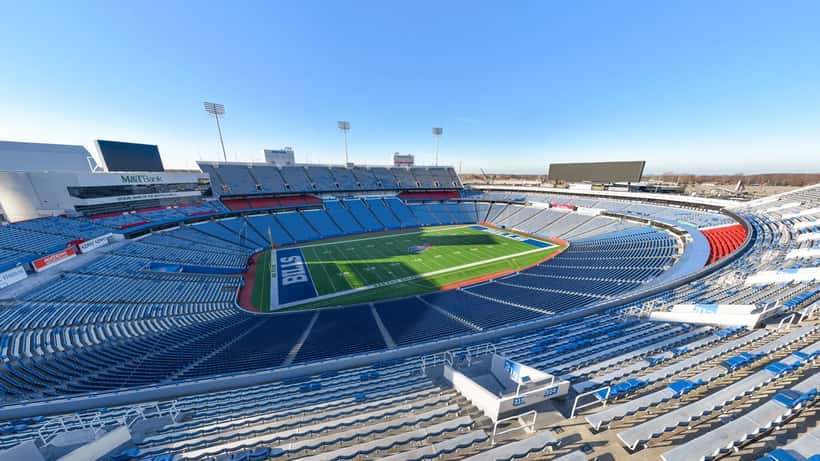
The Buffalo Bills unveiled their brand new $2.1 billion Highmark Stadium on Thursday night, 17 September 2026 — hosting the Detroit Lions in a primetime fixture that will be watched by hundreds of thousands of UK NFL fans staying up past midnight to follow the action live. But while the spectacle is unmissable, there is a question that sports medicine specialists have been raising for two decades: is watching your team in a high-stakes game actually dangerous for your heart?
The answer, according to peer-reviewed research, is: it can be. And with a stadium engineered to be the loudest in the NFL — plus tens of millions watching remotely around the world — the 2026 Bills season opener is the perfect moment to understand when passion for sport becomes a health concern worth discussing with a professional.
Why the New Highmark Stadium Changes the Fan Experience
The Bills' new home is more than a fresh facility. Replacing the original Highmark Stadium after 55 years, the new $2.1 billion arena seats approximately 62,000 fans, with state-of-the-art acoustic engineering specifically designed to trap and amplify crowd noise. According to reporting on the stadium's construction timeline, architects deliberately planned the bowl shape to create a noise advantage for the home team.
At peak excitement — a Josh Allen scramble, a fourth-down stop, a game-winning drive — crowd noise inside the new stadium is expected to top 130 decibels. That is louder than a jet engine at 100 metres. For fans with pre-existing cardiovascular conditions or hypertension, the combined effect of noise, excitement, alcohol, and physical exertion (standing, jumping, shouting) creates a physiological cocktail that clinicians are increasingly alert to.
The Bills kicked off their 2026 season with a 36-31 win over Houston on 11 September, with quarterback Josh Allen accounting for all four touchdowns and sealing his 26th career game-winning drive in the final minutes. Tonight's matchup against Detroit — the first ever regular-season game in the new Highmark Stadium — is set to be even more electric. First-game euphoria, a nationally televised primetime slot, and a Bills side with Super Bowl ambitions: the emotional intensity will be at its highest.
What Happens to Your Body During Intense NFL Moments
Researchers first began systematically studying the cardiac effects of sports viewing during the 2006 FIFA World Cup in Germany. A landmark study published in the New England Journal of Medicine (Wilbert-Lampen et al., 2008) found that the rate of cardiac emergencies in Munich was nearly three times higher on days when Germany played compared to non-match days. The effect was most pronounced during penalty shootouts — the most psychologically intense moments in football.
NFL football has its own version of this pattern. Every play is a mini-crisis: sudden tension, sudden release, sudden reversal. The Bills have built an identity on exactly this kind of drama, with Allen's record of late-game heroics making close defeats and last-minute wins the team's defining characteristic. For fans with underlying conditions — coronary artery disease, undiagnosed arrhythmias, or poorly controlled blood pressure — that emotional rollercoaster is not without clinical risk.
Here is what the body does during intense viewing moments:
- Adrenaline and cortisol spike within seconds of a high-stakes play, raising heart rate and blood pressure acutely
- Platelet aggregation increases, making blood more likely to clot in already narrowed arteries
- Coronary artery spasm — a temporary narrowing of the heart's arteries — has been documented during acute emotional stress even in people with no prior diagnosis
- Arrhythmias (irregular heart rhythms) can be triggered by sudden intense emotion, a phenomenon cardiologists refer to as emotionally triggered cardiac events
For the vast majority of healthy fans, these effects are brief and harmless. But for those with hidden or managed cardiovascular risk, they represent a genuine clinical window of elevated danger. As the NHS notes, stress is a recognised contributing factor in acute cardiac events — and the stress of a tense fourth quarter is physiologically comparable to other emotional triggers that clinicians routinely discuss with patients at risk.
UK-based fans watching the Bills face a specific additional stressor: the game kicks off at 1:15 AM BST on Friday morning. Sleep deprivation itself is an independent cardiovascular risk factor, compounding the emotional and physiological load of a close contest. A late-night Bills game in overtime is not simply exciting — it is, for some viewers, a genuine clinical exposure. For related guidance on sports-related head and cardiac risk, Expert Zoom's England vs Australia concussion article covers what athletes and fans should know about sports medicine thresholds.
A Concrete Case: What "Fan Stress" Looks Like With Real Numbers
Consider the following composite scenario — representative of a common demographic among UK NFL fans. A 53-year-old man based in Manchester has followed the Bills since the early 1990s. He has mild hypertension managed with a calcium channel blocker, a BMI of 27, and a paternal family history of coronary artery disease. He typically watches Bills games late at night, consuming two or three drinks over the course of the broadcast.
Here is what Thursday night looks like physiologically:
If the Bills take an early 14-0 lead: His resting blood pressure of 128/82 mmHg rises to approximately 145/92 mmHg during touchdown celebrations — temporarily crossing the threshold that clinical guidelines classify as Stage 2 hypertension.
If the Bills fall behind and mount a fourth-quarter comeback: Sustained emotional arousal drives his systolic pressure to 158-162 mmHg for a period of 15-20 minutes, with heart rate reaching 95-105 bpm. During this window, his platelet activity is elevated and his coronary arteries are under increased demand.
If the game goes to overtime: The Wilbert-Lampen research identified sustained high-emotion states of 45-60 minutes duration as the scenario most associated with triggered cardiac events in susceptible individuals. For this fan — with his specific risk profile of controlled hypertension, family history, late-night alcohol consumption, and sleep disruption — his absolute risk during an overtime game is meaningfully higher than his clinical baseline would suggest.
This does not mean he should stop watching. It means he should have spoken with his GP or a health specialist before the season started, received a clear picture of his current cardiovascular status, and understood the specific thresholds that would indicate a problem during a game.
When Should UK Fans Seek a Health Consultation?
The critical question is not "is watching dangerous?" but "where am I on the risk spectrum, and do I know it?" Sports medicine specialists and cardiologists identify four situations where a professional consultation is genuinely warranted before or during NFL season:
You have been diagnosed with any cardiovascular condition. If you have had a heart attack, been told you have angina, have a known arrhythmia, or take blood pressure medication, the start of a new NFL season — particularly one this emotionally charged — is an appropriate moment to revisit your management plan with a GP or cardiologist.
You have multiple risk factors but have never had a formal assessment. Risk factors include: male sex over 45 or female sex over 55, current or former smoking, diabetes, overweight (BMI above 25), family history of early heart disease, and consistently elevated blood pressure. If two or more apply to you, a preventive consultation before winter — when NFL season intensity peaks — is strongly advisable.
You experience symptoms during games. Palpitations, chest tightness, unusual shortness of breath, or dizziness during intense viewing moments should never be attributed to "just excitement." These symptoms warrant a medical opinion regardless of your baseline health status.
You plan to attend a live game. The Bills will feature in the NFL International Series at London venues in the coming seasons. Attending a live event adds crowd noise, cold weather, physical exertion, and sustained arousal to the mix — a more extreme version of the home-viewing scenario. If your cardiovascular status is unclear, attending in person is worth discussing with a specialist beforehand.
The Practical Checklist for UK Bills Fans This Season
Sports medicine practitioners recommend the following framework for fans watching through what promises to be an intense Bills campaign:
- Know your baseline blood pressure — measure it outside of game days, at rest, twice a week during season. A home monitor costs approximately £25-£35.
- Limit alcohol on late-night game nights — alcohol independently increases arrhythmia risk, separate from emotional stress. Two drinks is a threshold, not a target.
- Stay hydrated — dehydration increases the concentration of clotting factors in blood, compounding the platelet aggregation risk of emotional arousal.
- Plan for sleep disruption — a game ending at 4:30 AM BST creates meaningful sleep debt. Chronically poor sleep is an independent cardiovascular risk factor over a full season.
- Do not watch alone if you have known risk — having someone present who is aware of CPR basics and the location of the nearest public defibrillator is a zero-cost risk reduction measure.
This article is for informational purposes only and does not constitute medical advice. If you have concerns about your cardiovascular health, consult a registered GP or specialist.
For UK fans who want a professional health assessment ahead of the 2026 NFL season, ExpertZoom connects you with registered health specialists for online consultations — book in under two minutes and get a professional opinion tailored to your specific situation.
format_used: Expert reaction
