 Rebecca Taylor
On 19 June 2026, Brazil defeated Haiti in a commanding Group C match at Lincoln Financial Field in Philadelphia. For an estimated 110,000 Haitians living in the United Kingdom, the scoreline was almost beside the point.
For the UK Haitian diaspora, watching their national team take on the five-time world champions was a moment loaded with pride, grief, and something far more complicated than ordinary football anxiety. A growing body of research suggests that for diaspora fans, major international tournaments can trigger genuine health concerns — and knowing when to seek professional support matters.
Haiti's World Cup, Felt From Thousands of Miles Away
Haiti's appearance at the 2026 World Cup is only their second in history. The first was in 1974. For a nation that has endured earthquakes, political collapse, and years of gang violence that left tens of thousands internally displaced as recently as 2025, simply qualifying for the tournament in the United States was remarkable.
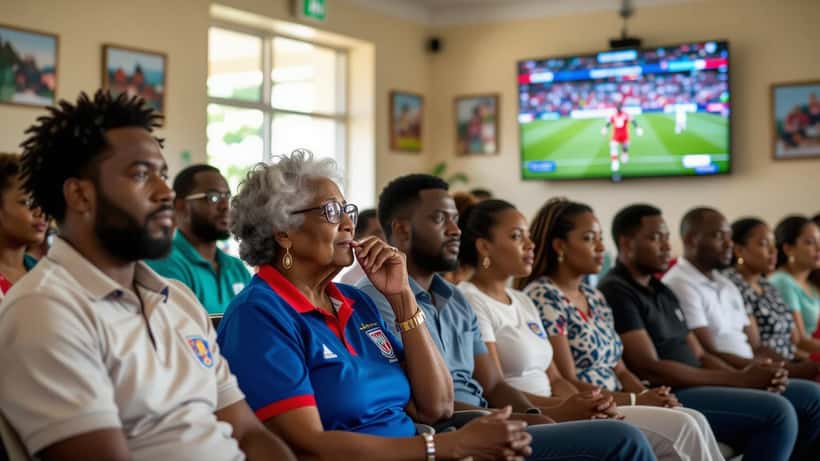
Of the 26 players in Haiti's squad for the 2026 tournament, 19 were born outside Haiti — many of them raised in France, Canada, the United States, and the United Kingdom. This is, in the truest sense, a diaspora team. For UK Haitians watching from Brixton community centres, London living rooms, and sports bars in Manchester and Birmingham, that reality added an extra layer of emotion to every minute of the match.
By half-time in Philadelphia, Matheus Cunha had scored twice and Vinicius Jr. had extended Brazil's lead. Many UK Haitians were already watching through tears — tears that had as much to do with identity and belonging as with the result.
What the Research Says About Fan Stress
A study published in medRxiv in January 2026 analysed supporter experiences during the 2022 FIFA World Cup and found that 41.5% of fans reported feeling nervous while watching their team compete. For supporters with deep cultural ties to a competing nation — particularly those from communities navigating complex feelings about their homeland — the figure is likely higher.
Research published in the journal Sports Medicine ahead of the 2026 World Cup describes major international tournaments as an "intensified performance environment." It elevates psychological stress not only for players and coaching staff, but for supporters worldwide.
For diaspora fans, that stress carries an additional weight. Watching Haiti — still struggling with security and political instability in 2026 — compete on the world stage surfaces deeper emotions. Pride mixes with helplessness. Joy tangles with grief. A complicated question about where one really belongs rises to the surface.
The Physical Toll Is Real
Sporting stress is not just psychological. A study published in the New England Journal of Medicine found that watching a tense football match more than doubles the risk of an acute cardiovascular event in both men and women.
For older members of the UK Haitian community, or those living with underlying health conditions, emotional intensity alongside summer heat can place real physical strain on the body. Palpitations, chest tightness, and elevated blood pressure are not uncommon responses to high-stakes viewing — even among people who consider themselves healthy.
This is not alarmism. It is a recognised public health consideration that clinicians flag around every major international tournament. If you are already managing a health condition, it is worth having a plan in place before the next match.
For a broader look at heat and health risks during World Cup 2026, see Scotland's World Cup 2026 match and the clinical warning signs that sporting exertion in heat demands attention.
Five Signs Your World Cup Stress Needs Attention
A difficult defeat — or even a hard-fought victory — can leave diaspora fans feeling wrung out for days. Most of the time, that passes. But some experiences signal something that deserves professional support.
Speak to a GP or mental health specialist if you notice:
- Persistent anxiety lasting more than a few days after a significant match or news event linked to your heritage country
- Sleep disruption — racing thoughts, trouble falling asleep, or waking at 3am replaying the game
- Physical symptoms without a clear cause — headaches, chest tightness, or digestive problems that linger
- A sense of emotional numbness or detachment that makes it hard to engage with work, family, or daily routines
- Increased reliance on alcohol or other substances to manage the emotional aftermath of a loss or a distressing news cycle from Haiti
These are not signs of weakness. They are signals that your nervous system has been under significant strain — and that talking to someone could help.
The NHS Every Mind Matters programme offers clear guidance on recognising anxiety and stress, with practical tools to manage them and advice on when to seek further support.
More Than a Football Match
Brazil's comfortable victory in Philadelphia does not define Haiti's World Cup. Haiti's players — many born abroad, like Sunderland's Wilson Isidor — gave everything they had, never stopping to compete despite the scoreline. The squad, built from the diaspora, represented something far larger than 90 minutes of football.
Back in the UK, many Haitians — some of whom have never visited the country their parents or grandparents came from — watched the match as an act of belonging. As a reclamation. As proof that Haiti exists and matters, even on a stage dominated by Brazil's brilliance.
For the financial realities and long-term planning challenges facing athletes from smaller nations competing at WC2026, see what the World Cup means for Haitian athletes and their financial futures.
When a Mental Health Specialist Can Help
A psychologist or therapist with experience in diaspora identity, cultural trauma, or sports-related anxiety can provide:
- Cognitive behavioural therapy (CBT) to address anxiety and stress cycles triggered by news events and sporting occasions
- Culturally sensitive counselling that recognises the specific pressures of living between two cultural identities
- Practical strategies for managing intense emotional responses in the weeks ahead — including future World Cup matches or developments in Haiti
You do not need to be in crisis to seek support. Reaching out early is the most effective way to prevent short-term stress from becoming something longer-lasting.
On ExpertZoom, you can find qualified mental health professionals offering confidential online consultations in the UK — including those with experience supporting diaspora communities navigating cultural identity, grief, and collective trauma.
This article is for general health awareness and does not replace professional medical or psychological advice. If you are experiencing persistent mental health symptoms, please consult a qualified health professional or contact your GP.
