 Lucy Walsh
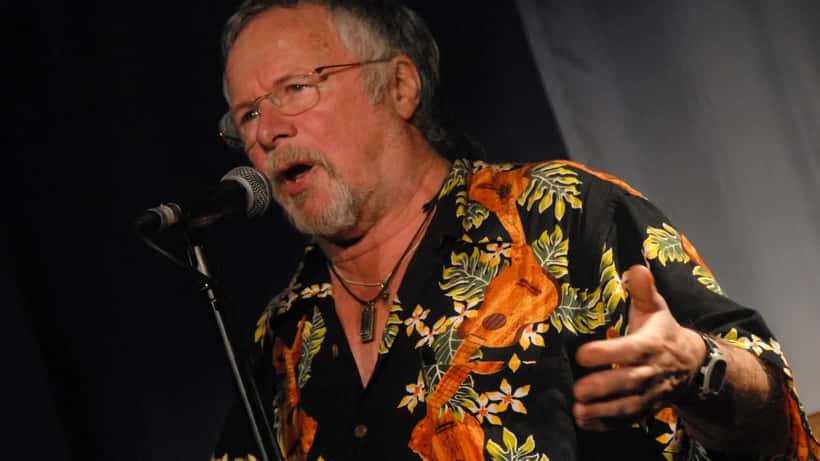
Bill Oddie, Britain's best-loved birder and founding member of comic trio The Goodies, died on 27 July 2026 at the age of 85. His agent David Foster confirmed the news, describing Oddie as "a multi-talented celebrity who spent decades teaching Britain to care about its natural world." From live television coverage of nesting swifts to early-morning birdwatching programmes that drew millions of viewers, Oddie made wildlife accessible — and left behind a conservation challenge his friends and colleagues say has never felt more urgent.
The Man Who Taught Britain to Look Up
Born in Rochdale in 1941, William Edgar Oddie found fame through The Goodies in the 1970s but it was his wildlife work that defined his lasting impact. A council member of the Royal Society for the Protection of Birds (RSPB) and the Wildfowl and Wetlands Trust, he received the RSPB Medal in 1997 — one of conservation's most prestigious honours — and was appointed OBE in 2003 for services to wildlife conservation. He also served as president of the Northumberland Wildlife Trust and sat on the advisory boards of the Worldwide Fund for Nature and numerous regional wildlife organisations.
His BBC series Springwatch and Autumnwatch, which he fronted alongside Chris Packham and Kate Humble, drew peak viewership of 4.2 million at their height, making wildlife broadcasting one of the most-watched genres on British television. Friends described him not as a celebrity who dabbled in conservation, but as a serious ornithologist who also happened to be funny.
"It was never fame that he valued," a close friend said on the day of his passing. "Instead he encouraged us to respect and protect the environment. He taught us the wonder of it. He protested, lobbied and campaigned for it."
A Crisis He Spent His Life Trying to Reverse
The statistics that drove Oddie's campaigning instincts are staggering. The UK has lost an estimated 44 million birds since the 1970s, a figure that spans farmland species, seabirds, and the garden birds that Oddie spent his later career encouraging people to nurture. House sparrow populations have fallen by 71% since 1977. Starling numbers — once among the most common sights at a British bird feeder — have dropped by 66% since 1979, according to data from the British Trust for Ornithology (BTO).
Oddie attributed much of this decline not only to habitat loss, but to public ignorance about how to help. "People want to do the right thing but they don't always know how," he said in a 2019 interview. "They put out the wrong food, they don't know when to intervene, and they don't know when to call a professional." More than 40 million garden birds were counted across the UK during the 2026 RSPB Big Garden Birdwatch, suggesting that public engagement with garden wildlife has never been higher — but informed engagement, experts note, is a different matter.
What Wildlife Experts Say We Should Do Now
Wildlife vets and animal rehabilitation specialists in the UK receive thousands of calls each summer from members of the public who have found birds or other wild animals in apparent distress. The picture is a familiar one: someone discovers a bird on their lawn, worries it has been abandoned, picks it up, brings it inside — and inadvertently seals its fate.
The most common error, according to wildlife rehabilitation centres across Britain, is well-intentioned intervention when none is needed. Young fledgling birds that appear "stuck" on the ground are frequently in the normal juvenile phase of learning to fly. Parent birds typically continue to feed them from nearby branches — but will not approach while a human is close. An otherwise healthy juvenile bird taken indoors has less than a 30% chance of survival, compared with around 70% for those left in place with parental supervision still present, according to RSPB guidance on bird rescue.
But the opposite failure — not calling a professional when one genuinely is needed — is equally damaging. Wildlife vets note that the treatment window for many injuries, particularly internal injuries or puncture wounds from cat attacks, closes within 24 to 48 hours. What can be treated effectively on day one may become irreversible by day two.
If You Find a Bird in Your Garden This Summer: A Concrete Scenario
Consider a situation that plays out across tens of thousands of British gardens every July and August: it is late afternoon, and you find a juvenile starling on your patio in West Yorkshire. It has been in the same spot for four hours. One wing appears lower than the other. A cat was in the garden that morning.
Here is the if/then logic that determines the bird's outcome:
If the wing is visibly drooping asymmetrically, there are visible wounds or matted feathers, or the bird was observed being struck by a cat — this is a veterinary emergency. Cat saliva contains the bacterium Pasteurella multocida, which can cause fatal septicaemia in birds within 24 to 48 hours even from a minor puncture wound. Every hour of delay reduces survival probability. A wildlife vet or rehabilitation centre should be contacted immediately, not the following morning.
If the bird is alert and reactive, both wings appear symmetrical, the feathers are intact, and there is no evidence of predator contact — the most likely scenario is a healthy fledgling going through a normal developmental phase. The correct response is to observe quietly from indoors for 60 to 90 minutes and check whether parent birds continue to visit. If they do, leave well alone. Moving such a bird inside is one of the most commonly made — and most harmful — interventions well-meaning people undertake.
The number that matters most here is that 30% figure. Getting the right expert advice before you act can more than double the bird's chance of survival. A five-minute call to a wildlife vet or rehabilitation specialist is often enough to determine which scenario you are facing.
How to Help Garden Wildlife in Oddie's Memory
Beyond the immediate question of injured animals, wildlife vets and ecological consultants in the UK offer a range of practical advice that maps closely onto the positions Oddie spent decades advocating.
Feeding station hygiene matters more than most people realise. Bird tables and feeders that are not cleaned regularly become vectors for salmonella and trichomoniasis, two infections that can devastate local garden bird populations. A wildlife specialist can advise on the correct cleaning schedule and food types for the species most likely to visit your region.
Native planting is the single highest-impact garden intervention. A single native oak tree can support over 280 insect species, providing a food source that tit species rely on almost entirely during nesting season. An ecological consultant can survey your garden and recommend planting combinations that will attract the species most in need of support in your local area.
Water sources need specific maintenance. Shallow water features for bathing and drinking are among the most effective tools for supporting garden bird populations, but standing water that is not refreshed regularly can carry avian influenza and other pathogens. Guidance from a wildlife specialist on safe water feature management is straightforward to obtain and can make a meaningful difference.
According to the RSPB, Britain's 24 million private gardens collectively represent a habitat larger than all the UK's nature reserves combined. If garden owners followed even a fraction of the practical advice Oddie advocated throughout his career, the cumulative impact on bird population decline would be measurable at a national level.
What Oddie Would Have Wanted You to Do
Bill Oddie's most enduring legacy is not his television work or his comedy career. It is the millions of garden bird feeders that went up across Britain in the decades he was broadcasting. It is the people who, because of him, know the difference between a house sparrow and a tree sparrow, or who understand why connecting neighbouring gardens with hedgehog corridors matters for wildlife movement.
Honouring that legacy does not require a grand gesture. It starts with knowing when to leave well alone — and when to pick up the phone and get an expert involved. Wildlife vets, animal rehabilitation specialists, and ecological consultants are available across the UK to advise on exactly the kinds of questions Oddie spent his career helping people ask. If you are uncertain about the welfare of a wild animal in your garden, speaking to one of them is both the most effective and the most fitting way to continue the work he started.
format_used: Expert reaction
