 Imogen Bennett
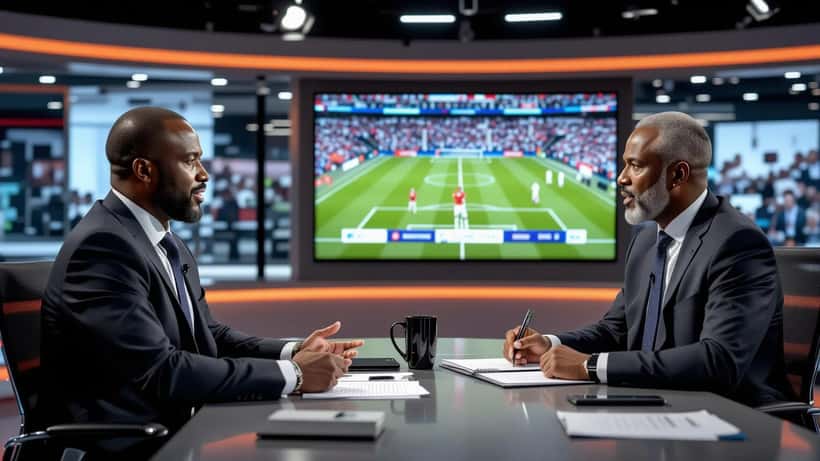
Benni McCarthy, South Africa's record international goal-scorer and former Manchester United attacking coach, joined the BBC Sport pundit team for the 2026 FIFA World Cup this summer — taking his place alongside Alan Shearer, Wayne Rooney, Micah Richards, and Olivier Giroud. The appointment came while McCarthy retained his position as head coach of the Kenya national team, making him one of the few active international managers to simultaneously hold a major broadcast role in the UK.
The BBC Role and What It Signals
McCarthy's inclusion in the BBC panel reflects both his Premier League coaching pedigree and the broadcaster's ambition to represent African football in what is the largest World Cup in history, spanning 48 nations across the United States, Canada, and Mexico. His two years at Manchester United — where he worked directly with Marcus Rashford, Alejandro Garnacho, and Anthony Martial as the club's attacking coach from 2022 to 2024 — gave him a profile and analytical credibility that translates directly to British television audiences.
The dual role has drawn attention in both Kenya and the UK. McCarthy was unveiled as Harambee Stars head coach in March 2025 on a two-year contract, and his broadcast commitments will run alongside Kenya's Africa Cup of Nations qualification campaign. It is a complex professional arrangement — and a financially layered one.
The Numbers Behind the Career Pivot
The salary figures across McCarthy's career tell a striking story. At Manchester United, McCarthy reportedly earned £40,500 per week — approximately £162,000 per month, or just over £2 million per year. His current contract with the Football Kenya Federation, confirmed by FKF to fall under Kenya's Salaries and Remuneration Commission guidelines, pays approximately $17,000 (around £13,000) per month.
That represents a reduction of more than 90% in monthly earnings from his Old Trafford salary. For a footballer who won the UEFA Champions League with Porto in 2004, scored the first goal in a 3-0 win over Monaco in the final, and finished his playing career with 31 goals for South Africa, the financial contrast is stark.
McCarthy's net worth is estimated at $16 million (approximately £12.5 million). His assets are reported to include property in Cape Town's Clifton area, a UK property, and a portfolio spanning restaurant ventures, equity investments, and football academy development projects. That diversification — across real estate, business interests, and professional services — is precisely what wealth managers recommend for high earners navigating career transitions.
What Happens When Peak Earnings End
The BBC role adds a further income stream to a career that has moved through distinct phases: playing (peak earnings), Premier League coaching (strong salary), national team coaching (substantial reduction), and now broadcasting. Each phase carries different financial characteristics, and the pattern is common across professional sport.
Income disparity in football is sharper than most people realise. The contrast between figures like Cody Gakpo's £200,000-per-week Liverpool contract and the financial realities of national team management illustrates exactly how quickly the earning curve can shift, even for athletes who reach the highest levels of the game.
A frequently cited estimate from financial advisers working in professional sport suggests that a significant proportion of footballers face financial difficulty within five years of retirement — not because their earnings were insufficient, but because the transition from high-income employment to lower-income roles (coaching, consultancy, media) happened without adequate planning during peak years.
McCarthy appears to have managed that transition well. The combination of property assets, business investments, and a media profile that has now expanded to the BBC suggests a deliberate approach to building income sources that outlast any single employment contract.
Broadcasting as a Wealth Strategy
Broadcast roles in football have become increasingly significant income streams. Premier League punditry contracts for established names can reach six figures annually, and major tournament fees — for a World Cup that runs from June to July 2026 — can add substantially to that. McCarthy's placement alongside Alan Shearer and Wayne Rooney signals a premium role with corresponding compensation, not a minor appearance.
For athletes and coaches considering career transitions, the broadcasting path offers something club management often does not: relative income stability, a public profile that sustains commercial value, and flexibility around other professional commitments. McCarthy's arrangement — coaching Kenya while appearing on the BBC — suggests these two roles are designed to complement rather than conflict with each other.
Managing Wealth Across Jurisdictions
One complexity McCarthy navigates that many athletes share is multi-jurisdictional finance. He splits professional time between South Africa, Kenya, and the UK. Each country has its own tax treatment of employment income, broadcast fees, and investment returns. Property in the Cape Town market operates in South African rands, while a UK property and BBC earnings arrive in sterling, and Kenya coaching income in dollars or Kenyan shillings.
Currency exposure, tax residency status, pension planning across different national systems, and capital gains treatment of investment assets are all areas where specialist advice makes a material difference. According to MoneyHelper, even high-net-worth individuals benefit from structured financial planning that considers both short-term cash flow and long-term asset protection — particularly when income arrives from multiple sources in different currencies.
A Summer in the BBC Spotlight
For British viewers watching the World Cup on the BBC this summer, McCarthy's presence on screen provides expert commentary from someone who played in the tournament, managed in the Premier League, and now coaches an African national team. The perspective is genuinely rare.
For anyone paying attention to the financial side of his career, the picture is equally instructive. From Porto's Champions League triumph to Old Trafford, from Kenya's Harambee Stars to the BBC studio, McCarthy's career has required not just footballing intelligence but financial adaptability. The $16 million net worth is not a product of one big salary — it is the result of decisions made across two decades of professional sport.
That is the wealth management lesson his career offers: the peak is temporary, the planning is permanent.
