 Amelia Ward
A24's Backrooms opens in UK cinemas on 29 May 2026. Directed by Kane Parsons — now 20 years old, A24's youngest-ever feature director — the film adapts the internet's most enduring piece of liminal horror: a photograph of a carpeted, fluorescent-lit void that has haunted online communities since at least 2003. The trailer released on 14 May 2026 has already generated millions of views. Early critic reactions describe it as "claustrophobic, pulse-pounding" and "horror stripped to its essentials."
What makes Backrooms different from most horror releases is its explicit psychological architecture. The film centres on a therapist entering the liminal dimension to rescue a missing patient. The horror is built around mental health themes from the inside out.
So when a film like this genuinely disturbs you — or makes anxiety feel very real — how do you know when that reaction is normal, and when it signals something worth taking seriously?
What the Backrooms Actually Represent
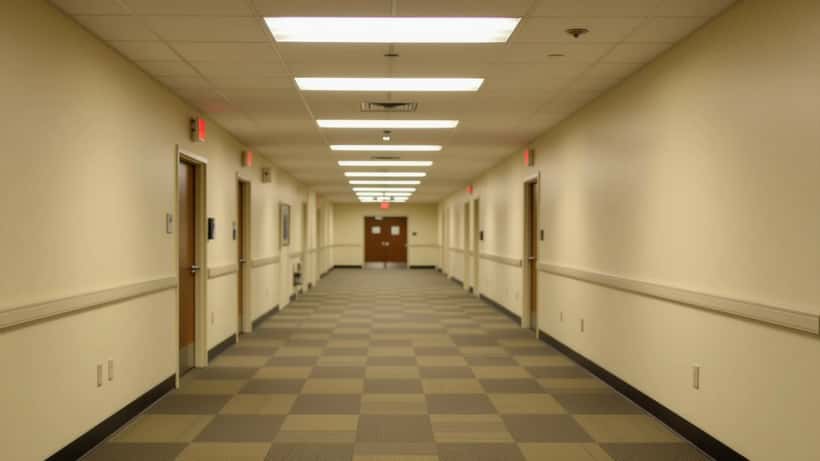
The Backrooms phenomenon began with a single photograph, now confirmed by Wisconsin local news WBAY (14 May 2026) to have been taken around 2003 during a furniture store renovation in Oshkosh. The image depicts a yellow-carpeted, low-ceilinged interior with fluorescent lighting — a space that feels recognisably familiar and deeply wrong at the same time.
That specific sensation has a name in psychology: liminality. Liminal spaces are transitional environments — stairwells, hotel corridors, empty shopping centres, waiting rooms — that are designed for passing through, not occupying. When they appear unoccupied and frozen in time, the human nervous system registers something as fundamentally out of place.
Kane Parsons, in interviews ahead of the May 2026 release, was explicit about the connection to mental health. "The backrooms," he said, "has felt aligned with what happens when someone goes through sensory deprivation. The body, the nervous system needs stimulation so badly when it's deprived of it." The film's therapist-patient plot was not incidental. It was the point.
How Horror Films Affect the Nervous System
The physiological response to horror content is well understood. When you watch a scene designed to generate threat, your amygdala — the part of the brain responsible for processing fear — triggers a stress response regardless of whether the danger is real. Heart rate increases. Cortisol and adrenaline are released. Breathing becomes shallow. The body prepares to act.
For most people, this response resolves within minutes of the threat passing. The brain's prefrontal cortex — responsible for rational assessment — re-engages and signals that the danger was fictional. The lingering unease, the heightened alertness for a few hours after a film, the reluctance to enter a dark hallway alone: these are normal downstream effects of a properly functioning fear system.
The Backrooms exploits a specific variation of this: not jump scares, but sustained dread. The threat is omnipresent, ambient, and purposelessly large. For viewers who are already carrying elevated background anxiety — a common condition in the UK, where approximately one in six adults experiences anxiety or depression in any given week, according to the NHS — this kind of horror can interact with existing patterns in ways that feel less manageable.
When a Horror Reaction Stops Being Normal
The key distinction is duration and intensity relative to the stimulus.
Normal horror responses include: heightened alertness for hours after watching, difficulty sleeping the same night, intrusive imagery in the short term (24 to 48 hours), and a reluctance to seek out similar content. These responses are proportionate, time-limited, and do not significantly disrupt daily functioning.
Responses that are worth discussing with a health professional include: anxiety or dread that persists beyond a few days, intrusive thoughts or images that arrive unprompted and feel difficult to dismiss, avoidance behaviour that extends beyond the specific content (avoiding public spaces, corridors, or unfamiliar buildings), physical symptoms including persistent elevated heart rate or sleep disruption lasting more than a week, or a significant worsening of pre-existing anxiety.
The Backrooms specifically engages with dissociative imagery — the sense of being in a familiar but displaced version of reality. For individuals with a history of dissociative episodes or depersonalisation, that particular type of imagery can be more activating than conventional horror. If you know this is part of your mental health history, managing your exposure before the film — rather than discovering the limit during it — is worth considering.
Why Young Audiences Should Pay Attention
Box office projections for Backrooms are significant. BoxOffice Pro forecasts a $20 to $30 million domestic opening weekend on a budget of under $10 million. UK audiences are among the most engaged in A24's international slate. The film is tracking strongly with viewers aged 18 to 30 — the same demographic that first encountered the Backrooms phenomenon on YouTube as teenagers.
This matters because anxiety disorders most commonly emerge or worsen between the ages of 18 and 25 in the UK. Many people in this age group are managing anxiety without formal diagnosis or treatment. Horror content that engages deeply with themes of entrapment, helplessness, and disorientation can amplify underlying anxiety in ways that feel disproportionate to the obvious stimulus.
The experience of watching a horror film and feeling genuinely worse for several days afterwards — not pleasantly unsettled, but actively disrupted — is more common than people acknowledge. It does not indicate fragility. It may indicate a nervous system that is already under load, and that deserves attention.
As our coverage of what horror films really do to your body found with Scream 7 earlier in 2026, the physiological effects of sustained cinematic fear are measurable and real — particularly for viewers with elevated baseline anxiety levels.
Knowing When to Speak to Someone
The most useful thing a qualified health professional can do in this context is not manage the aftermath of a film. It is help you understand whether your current anxiety baseline is functioning normally or carrying a load that was already there before you sat down in the cinema.
Questions worth asking yourself before 29 May include: Am I generally sleeping well? Is background worry a minor presence or a constant companion? Do I find it easy to leave unsettling images behind, or do they tend to stay?
If the answers suggest your baseline is already elevated, speaking with a GP or a mental health specialist before the film — or any significant stressor — is reasonable. It is also far easier than managing a worsening episode afterwards.
Connect with a qualified health specialist through Expert Zoom. Our practitioners include therapists and general health consultants who work with UK adults managing anxiety, sleep disruption, and stress. If Backrooms stays with you longer than it should, that is information — not weakness.
This article is for informational purposes only and does not constitute medical advice. If you are experiencing persistent anxiety symptoms, consult a registered healthcare professional.
