 Rebecca Taylor
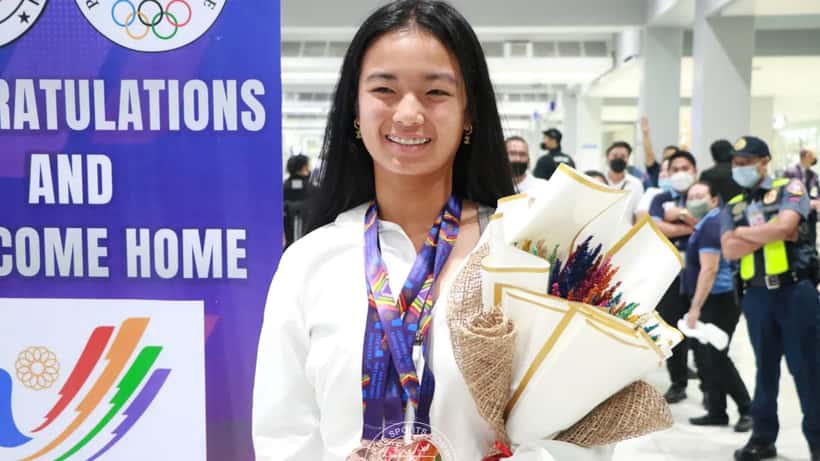
Alexandra Eala won the Lexus Birmingham Open on 7 June 2026, defeating Nikola Bartunkova 5-7, 6-3, 7-5 to claim her second WTA title. The 20-year-old Filipino then received a wildcard for the HSBC Championships at The Queen's Club — a grass-court event and direct Wimbledon warm-up — continuing a rise that has taken her from outside the top 100 to WTA No. 33 in under 18 months.
The trajectory is remarkable. The question doctors and physiotherapists are already asking is: how long can a body sustain it?
The Physical Reality Behind a Rapid Ranking Climb
Rankings do not rise in a vacuum. Every step up the WTA ladder corresponds to more matches, against stronger opponents, on tighter schedules. For Eala, the accelerating pace of 2026 has meant:
- Winning the Birmingham Open on clay, then immediately transitioning to grass courts for Queen's Club
- Managing the cumulative fatigue of back-to-back tournaments across different surfaces
- Competing at a level — top-30 — where opponents are more aggressive, rallies are longer, and physical margins narrow
In March 2026, Eala reached her career-high ranking of WTA No. 29 — the first Filipino player ever to break into the top 30. In February, she defeated world No. 8 Jasmine Paolini 6-1, 7-6 at the Dubai Championships, demonstrating she can compete with the best in the world physically and mentally.
That physical capability comes with a cost that is rarely reported alongside the results.
Why the Clay-to-Grass Transition Is a Critical Injury Window
The weeks between the French Open clay season and Wimbledon are among the most dangerous in the tennis calendar. The surfaces behave entirely differently:
Clay is slow, forgiving on joints, and rewards consistent baseline play. Rallies are longer, meaning athletes build up repetitive stress over many shots but the surface absorbs impact.
Grass is fast, low-bouncing, and places sudden lateral demands on ankles, knees, and hips. The first slip on grass — particularly in the early days of adapting from clay — is the most common origin of acute ankle injuries in professional tennis.
According to NHS guidance on sprains and strains, ankle sprains and knee ligament strains are among the most common acute injuries in sports requiring rapid directional changes. Both involve sudden overstretching of soft tissue — precisely the mechanism that grass court tennis, with its unpredictable low bounce and faster surface, creates far more frequently than clay. Grass court tennis sits squarely in this high-risk category.
For a rising player who spent the clay season competing deep into tournaments — accumulating match hours and fatigue — the transition to grass is the moment when the body is simultaneously most tired and most exposed to new movement patterns.
The Three Injuries That Derail Rising Tennis Players
Sports medicine specialists working with WTA players consistently identify three categories of injury that derail athletes at Eala's career stage:
Shoulder overuse injuries. High-volume serving in the 18-24 months of a ranking surge places repetitive stress on the rotator cuff. Iga Świątek's serve disruption at Roland Garros 2026 illustrated how quickly shoulder mechanics can deteriorate under competitive pressure. For players in a ranking climb, the temptation to push through minor shoulder discomfort — rather than rest — is one of the most common decisions that leads to longer absences.
Knee stress injuries. The repetitive lunging and sudden directional changes in tennis place chronic stress on the patellar tendon and knee cartilage. Players who progress rapidly often do so on a training load that was calibrated for a lower rank — the match volume grows faster than the supporting strength work.
Wrist and forearm strain. Grass courts demand more wrist stabilisation on low, skidding balls. Players adapted to clay, where the ball sits up, often develop forearm fatigue in the first week of grass-court competition.
None of these injuries announces itself dramatically. They accumulate as soreness, reduced range of motion, and declining power — until the moment they become acute.
What Rising Athletes — and Active Adults — Should Know
Eala's situation is a concentrated version of a pattern recognisable far beyond elite sport: the body is asked to perform at an intensity it has not yet fully adapted to sustain.
For recreational tennis players, runners, cyclists, and gym-goers in the UK, the same principle applies. Rapid increases in training volume — whether preparing for a half-marathon, returning to sport after a break, or intensifying a gym programme — create injury windows that are predictable and largely preventable.
Sports medicine research consistently shows that the highest injury risk occurs when:
- Training load increases by more than 10 percent week-on-week
- Surface or movement type changes suddenly
- Cumulative fatigue from a busy period has not been allowed to resolve
Recognising these windows and acting early — rather than waiting for an acute injury — is the difference between a brief adjustment and a prolonged absence.
When to Consult a Health Professional
Eala will have access to a full medical team throughout Wimbledon preparations. Most active adults do not — and many wait until an injury is established before seeking help.
The appropriate moment to consult a sports physiotherapist or GP is not after an injury occurs. It is when:
- Soreness in a joint or tendon persists for more than two weeks
- A particular movement pattern becomes consistently painful
- Performance drops despite no change in training or competition load
- There has been a recent rapid increase in physical activity
A health professional at ExpertZoom can assess your symptoms, recommend appropriate investigation, and help design a return-to-activity plan that avoids the loading errors that cause most sporting injuries.
Eala's Wimbledon Moment — and What It Means for Every Athlete
Alexandra Eala arrives at Wimbledon 2026 as one of the tournament's most watched players — a 20-year-old in the form of her life, playing the best tennis the Philippines has ever produced. The performance will inspire thousands of young players to train harder and compete more.
The medical insight from her story is simpler: the harder you push, the more important it is to listen to your body. The athletes who last longest are not those who ignore pain — they are those who act on it early, intelligently, and with professional support.
If you have been increasing your training load or returning to sport after a break, a consultation with a health specialist is the most effective investment you can make in your athletic longevity.
This article is for general information only and does not constitute medical advice. Consult a qualified healthcare professional for concerns about injury, pain, or physical health.
