 Phoebe Wilson
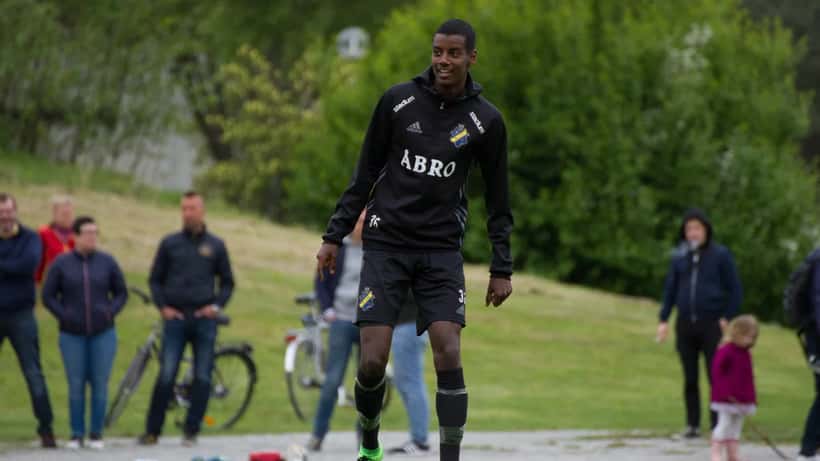
Liverpool's record signing has been everything the club hoped for in potential — and far more injury-prone than anyone anticipated. Alexander Isak, who joined from Newcastle United in September 2025 for a British-record fee reported at £125 million, has missed approximately half of his Premier League appearances in his debut season on Merseyside due to injury. His latest problem, reported in May 2026, is a groin issue described by his club as relatively minor. Given a career already marked by muscular setbacks, each new complaint raises the same question: when does a groin injury become something a specialist must assess rather than something rest and ice can fix?
For recreational footballers and amateur athletes watching from the sidelines, the pattern Isak displays is far more common than most realise.
Why Groin Injuries Are So Common in Football
The groin region — covering the hip adductors (inner thigh muscles), the hip flexors, and the lower abdominal musculature — is under sustained stress in football. Explosive acceleration, sharp directional changes, striking the ball and defensive tackling all generate high loads across these structures. The adductor longus muscle in particular is the most commonly injured structure in football, accounting for approximately 10% of all football injuries according to data gathered through the UEFA club injury study programme.
Groin injuries cluster in certain player profiles: tall strikers with long limbs who generate higher torque through each stride, players returning from previous groin or hip injuries, and those with muscular imbalances between adductors and abductors. Isak, at 1.92 metres, fits the first category precisely. His stride mechanics place significantly higher demand on the groin musculature than would be the case for a shorter, more compact player.
Groin Pain vs Groin Strain: Understanding the Difference
Not all groin pain represents the same injury. The term "groin strain" covers a spectrum that ranges from minor adductor stretching to complete muscle rupture, and the appropriate treatment — and realistic return-to-play timeline — differs substantially across that spectrum.
Grade 1 (mild): Microscopic tears with localised soreness but no meaningful loss of strength. Most athletes can return to light activity within five to seven days.
Grade 2 (moderate): Partial muscle tear causing pain on movement, point tenderness, and some loss of power. Return to competitive sport typically requires two to six weeks of structured rehabilitation.
Grade 3 (severe): Complete muscle rupture, often accompanied by visible bruising and significant functional loss. Surgical repair may be required; return to sport can take three to six months.
The most common error is misclassifying a Grade 2 as a Grade 1 — managing what feels tolerable and converting a moderate injury into a complete tear through premature return to loading. This is the mechanism behind most extended injury absences at elite level.
A separate category of chronic groin pain — athletic pubalgia, sometimes called a sports hernia — involves the structures at the pubic symphysis and can sideline athletes for an entire season if it goes undiagnosed and untreated.
The Red Flags That Mean You Need a Sports Medicine Specialist
Most people who strain their groin assume a few days of rest and an ice pack will resolve it. For mild Grade 1 injuries, this is often correct. The following symptoms, however, should prompt assessment by a sports medicine doctor or physiotherapist rather than home management:
- Groin pain that does not begin to improve within five to seven days of rest
- Pain radiating into the hip joint, lower back, or testicular region
- Weakness or instability in the affected leg when bearing weight
- Swelling or bruising visible in the upper thigh or groin fold
- Pain when coughing, sneezing, or performing any Valsalva manoeuvre — which may indicate a hernia component
Any athlete with a previous groin injury should give particular weight to these signs. Research published in the British Journal of Sports Medicine shows that a prior adductor strain more than doubles the statistical risk of re-injury to the same area.
The NHS provides guidance on groin pain and when to seek professional attention at nhs.uk/conditions/groin-pain — a useful starting point for any athlete unsure whether their symptoms warrant assessment.
What Proper Treatment Actually Involves
A comprehensive sports medicine approach to groin strain involves considerably more than rest. At elite clubs, injured players undergo MRI to classify the injury grade and rule out concomitant hip pathology, followed by manual therapy to reduce protective muscle spasm and restore mobility range, and then progressive loading protocols that rebuild strength without reloading the injured tissue prematurely.
The core principle — graduated load management — is counterintuitive to many athletes who associate recovery with complete rest. The injured tissue requires progressive stress to regenerate properly: complete immobilisation leads to weaker, less compliant scar tissue that is more vulnerable to re-injury than the original structure. A rehabilitation programme moves from gentle range-of-motion work through isometric holds, to isotonic strengthening exercises, to sport-specific movements, with return-to-sport criteria defined by strength benchmarks rather than calendar time.
For recreational players, accessing this level of care requires seeing a physiotherapist or sports medicine doctor — not simply waiting for the pain to fade.
Isak's Injury Record and What It Suggests
Alexander Isak has missed roughly half of available Premier League appearances across his last four seasons combined at Newcastle and Liverpool. No single diagnosis explains this fully, but sports analysts point to a combination of factors: his high-intensity playing style and extraordinary top-end sprint speed, previous thigh and hip injuries creating compensatory movement patterns, and the physical demands of operating as the primary pressing reference point in a high-intensity system.
For amateur athletes following Isak's season, the relevant lesson is not the specific details of his training load. It is the principle. Recurrent muscular injuries do not resolve by themselves. Each episode that is inadequately managed increases the structural vulnerability of the affected area.
For earlier coverage on football injury and sports medicine, see our piece on Ibrahima Konaté's hamstring injury and the lessons for amateur footballers and Matt Targett's chronic injury challenges and what specialist care can achieve.
This article is for informational purposes only and does not constitute medical advice. If you are experiencing groin pain that does not resolve with rest, consult a qualified healthcare professional or sports medicine specialist.
