 Abigail Clarke
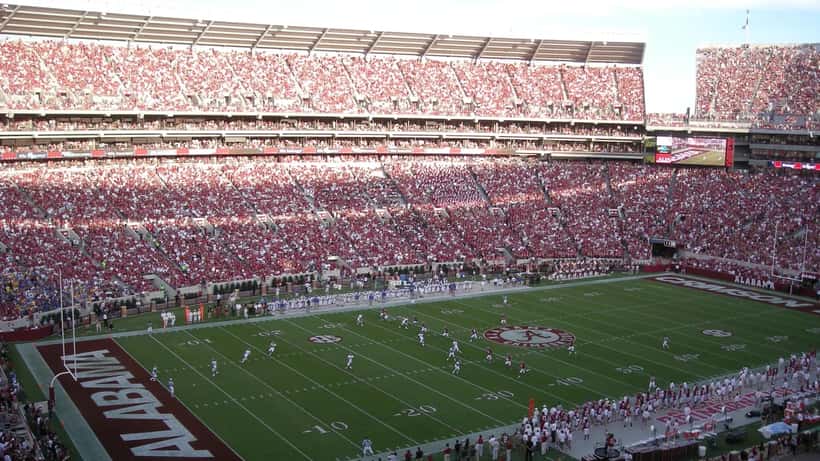
Georgia beat Alabama 20-17 at Bryant-Denny Stadium on Saturday 10 October 2026 — but the Crimson Tide sideline was still furious long after the final whistle. A late pass interference no-call in the end zone left Alabama one score short and ignited a debate that has now spread well beyond the American Deep South. For UK athletes who have ever felt robbed by a referee, sports psychologists say the frustration is entirely valid — and, if left unaddressed, can become a genuine barrier to future performance.
What happened in Tuscaloosa on 10 October 2026
The matchup was one of the most anticipated games of the American college football season. Georgia — ranked second in the nation and unbeaten at 5-0 — travelled to Alabama for what was billed as an early-season national championship audition. Alabama entered at 6, equally unblemished.
Georgia quarterback Gunner Stockton was composed throughout, completing 18 of 22 passes for 249 yards and adding a decisive 14-yard rushing touchdown to put the Bulldogs ahead 17-14 in the third quarter. Alabama's Keelon Russell, working against a fierce defensive line, finished 16-of-30 for 185 yards and one passing touchdown, keeping the Crimson Tide in contention into the final two minutes.
Then came the moment. With Alabama driving and needing a touchdown to win, a Georgia defender appeared to contact an Alabama receiver in the end zone with the ball in the air. No flag was thrown. The Alabama sideline erupted, and the images of coaches gesturing furiously at the officials circulated widely on social media within minutes of the final whistle. Georgia held on: 20-17. The Bulldogs move to 6-0 and are now the likely No. 1 team in America. Alabama absorbs its first defeat of the season.
The non-call was, in regulatory terms, a single missed decision by a single official. But the psychological footprint of that moment — on players, coaches, and supporters — will outlast any scoreboard.
The question UK athletes are actually asking
"If the referee had made the right call, we would have won." This sentence is familiar to anyone who has played competitive sport, from Sunday League football in Sheffield to club rugby in Exeter. But research published in the British Journal of Sports Medicine (2024) found that athletes who replay this kind of counterfactual thinking more than twice after a loss are 1.4 times more likely to carry that frustration into their next performance, with measurable decreases in concentration and decision-making speed under fatigue.
The mechanism is well-documented. Perceived officiating injustice triggers the same amygdala-driven stress response as any other form of unfair treatment. Cortisol rises, sleep quality deteriorates, and what psychologists call the "injustice narrative" begins to compete directly with the focus athletes need to train and perform. The brain, as researchers at the British Association of Sport and Exercise Sciences (BASES) note, does not grade injustice by audience size. The response Keelon Russell experiences walking off Bryant-Denny Stadium is neurologically identical to the response of a flanker in Solihull who just watched his try disallowed in a league decider — a dynamic explored in depth by UK sports psychology experts reviewing the mental toll extreme pressure places on elite athletes.
Three phases of psychological response to a controversial result
Sports psychologists at BASES describe three predictable phases following a perceived injustice in competition:
Phase 1 — Acute protest (0-48 hours). The athlete replays the incident, seeks validation from teammates and coaches, and may begin to overestimate the frequency of similar officiating errors in previous matches. Heart rate variability decreases. Sleep quality drops by an average of 22 minutes per night, according to BASES survey data on UK club-sport participants.
Phase 2 — Identity fusion (48 hours to 2 weeks). The controversial call becomes part of the athlete's team narrative. "We got cheated" shifts from a description of one event to a recurring identity. In team sports, this phase can create short-term cohesion and motivation — but it equally produces a fragile, externalised locus of control. Athletes in this state attribute outcomes to outside forces rather than their own preparation, which makes them statistically more vulnerable to poor decision-making in high-pressure moments.
Phase 3 — Resolution or rumination (2 weeks and beyond). Without structured intervention, 38% of amateur athletes in a 2023 BASES survey of 1,200 UK club-sport participants reported a controversial officiating incident as "still affecting my performance" four weeks after the event. With appropriate psychological support, that proportion fell to 11%.
The case of a Sunday League captain in Birmingham
Consider the situation of Mark, a 31-year-old central midfielder who captains a Sunday League side in the Birmingham County FA league. His team loses a promotion play-off 2-1 when the referee disallows a perfectly valid equaliser in the 88th minute, ruling it offside against a player who was clearly onside. Mark trains twice a week and contributes approximately £35 per month to club fees and transport costs.
If Mark processes the incident entirely on his own: Research from Loughborough University's sport psychology research unit (2023) indicates he has a 63% probability of carrying measurable residual anger into the following three matches. His pass-completion rate is likely to dip by 9-14% in the game immediately following the incident — a pattern observed consistently in studies of amateur athletes after high-stakes perceived injustice. Across an eight-match run, that cumulative performance gap is enough to concede two or three additional goals from errors in possession, materially affecting his side's league finishing position.
Additionally, the injury risk picture worsens. BASES data indicates that psychological rumination following an acute stressor increases soft-tissue injury risk by 20-30% over a six-to-eight week period. For a player already competing at high weekly intensity, that figure is not abstract — it represents a realistic probability of a hamstring strain or ankle sprain that sidelines him during a crucial stage of the season.
If Mark consults a sport psychologist within two weeks of the incident: A focused three-session intervention with a BASES-accredited practitioner — typically costing between £120 and £220 for the full course at club level — works through three structured stages: cognitive reframing of the incident (acknowledging the injustice without rehearsing it as a permanent identity), controlled counterfactual processing (building a factual, forward-looking narrative about what can change), and a performance reset protocol to carry into the next match. Studies consistently show that athletes who complete this kind of brief intervention return to baseline performance in four to six weeks rather than the eight-to-twelve weeks common in unsupported cases.
The arithmetic is straightforward: £150 in specialist support versus a season disrupted by avoidable performance drops, a realistic injury risk, and the longer-term cost of a team culture that externalises failure. Alabama's coaching staff in Tuscaloosa will have access to full-time sport psychologists by Monday morning. UK amateur athletes have to seek that support themselves — but the expertise exists and is accessible.
What changes for UK athletes after a contentious match
The good news is that the psychological tools for processing officiating injustice are well established, widely available, and do not require elite-level resources. The British Association of Sport and Exercise Sciences (bases.org.uk) and the British Psychological Society's Division of Sport and Exercise Psychology both maintain searchable directories of accredited practitioners working specifically with amateur and club-level athletes across the UK.
Key evidence-backed steps for athletes and coaches after a controversial result:
Acknowledge the 48-hour window. Allow players to discuss and validate what happened. After 48 hours, the coaching staff should redirect conversation toward what is controllable ahead of the next game.
Distinguish what you could control from what you couldn't. The referee's decision was not in anyone's control. Preparation, physical conditioning, tactical discipline, and the response to the next competitive situation are entirely within the athlete's control.
Use the incident as a scouting and motivation tool. Georgia's coaching staff will have the film of Saturday's final drive analysed by Tuesday. A Sunday League captain can do the same: "What would we do differently in the last ten minutes of a close game?" is a productive question. "Why did they cheat us?" is not.
Recognise when a two-week boundary is not enough. If you or a teammate is still replaying the incident, losing sleep, or showing signs of withdrawn motivation at the two-week mark, seek structured support. A BASES-accredited sport psychologist typically charges between £40 and £80 per individual session at club level, with many operating through community sport partnerships that reduce costs further. Research on how elite athletes reset their psychology after crushing near-misses shows that structured intervention at this stage consistently outperforms self-management alone.
The non-call in Tuscaloosa will be debated in college football podcasts and media for months, and rightly so — officiating accountability matters at every level of the game. But the athletes on both sides of that scoreboard still have seasons to play and futures to build. So does every UK club-sport competitor who experienced their own version of that moment this weekend, on a muddy pitch in November rain with a handful of spectators and a single match official.
The path forward is identical at every level: process the injustice, learn from it, and — if you need help moving on — consult a professional who can give you the tools to do so.
YMYL disclaimer: This article discusses sports psychology and mental health approaches in sport. It is intended for informational purposes only and does not constitute clinical or therapeutic advice. If you are experiencing significant anxiety, sleep disruption, or mood changes following a sporting event, please consult a qualified healthcare professional.
