 Eleanor Vance
Aidan O'Brien took the lead in the British Flat trainers' championship on Saturday 17 October 2026, after Minnie Hauk won the Fillies & Mares Stakes on Champions Day at Ascot. According to Racing Post, his advantage over Andrew Balding stood at £47,524 by the end of the afternoon, with the rest of the season still to run. Behind the headline is a quieter story about how top-level horses are managed, rested and sometimes pulled from races at the last minute.
The news: a title race decided by tight margins
The Irish Times reported on 17 October that O'Brien had taken over from Balding at the top of the table, while Racing Post framed Champions Day as a "massive afternoon" for both yards. Minnie Hauk's win and Sugar Island's fourth place in the same race pushed the Ballydoyle trainer ahead, although the reported gap varied between outlets as the day went on.
Other decisions made headlines too. Racing Post reported that O'Brien withdrew Scandinavia from the Long Distance Cup, saying the team felt running him "might not be fair to him" and wanted to keep him fresh for next year. Constitution River was switched to the Champion Stakes, while Gstaad stayed at a mile for the Queen Elizabeth II Stakes. Thoroughbred Daily News also noted Capability Brown's win in the Killavullan Stakes at Leopardstown, a record 17th for the trainer in that race.
None of these withdrawals involved an injury announcement. They still show a principle every horse owner can learn from: a good result next season often depends on a decision to stand a horse down this week.
What a vet sees behind a last-minute withdrawal
Equine vets describe the end of a long Flat season as the point where small problems surface. A horse that has raced and travelled since spring carries accumulated load in its tendons, joints and lungs. Heat in a lower leg, a slightly shortened stride or a dip in appetite can be early signs that rest is the better option than another start.
Trainers at the top of the sport rely on a repeating routine of checks: trotting up on a hard surface, palpating tendons, checking for filling around joints, and scoping the airways when a horse seems to be "not quite right". Most of these checks are not exotic. A leisure rider or small yard can copy the principle with the help of their own vet.
The principle behind "it might not be fair to him" is also a welfare one. The government's Code of Practice for the welfare of horses, ponies, donkeys and their hybrids sets out that owners must be able to recognise signs of ill health and seek veterinary advice promptly. You can read it on the GOV.UK welfare code of practice. It applies to a Group 1 winner and to a cob in a paddock in exactly the same way.
A concrete case: the end-of-season hack that "just isn't right"
Take a hypothetical owner, Sam, who keeps a 9-year-old gelding on part livery and has competed in affiliated showjumping since April. On the weekend of Champions Day, Sam notices mild warmth in the near-fore tendon after a gallop, but the horse trots up sound. There are two more events booked, with £60 in entry fees each, and Sam is tempted to carry on.
If the warmth is gone by the next morning and the leg stays cool after exercise on two consecutive days, a vet may reasonably advise cutting back work and rechecking in a week. That decision costs perhaps £60 to £100 for a visit. If instead the heat returns or the leg fills, a lameness exam and ultrasound scan is the sensible step. The scan can take the cost into the hundreds of pounds, but it is far cheaper than a tendon tear, which commonly means many months of box rest and rehabilitation.
So the logic is simple. If the leg is cool and sound two mornings in a row, then reduced work with a recheck is reasonable. If heat, swelling or lameness reappears, then stop work and book a scan before the next entry. Skipping £120 in entry fees can protect a horse for the whole of next season, which is the same bet O'Brien's team made with Scandinavia. These figures are illustrative and prices vary by practice, so ask your own vet for a quote.
The breeding side: Minnie Hauk and the next chapter
Reports after Champions Day suggest Minnie Hauk may be sent to be covered by Justify at the end of the year. For owners of broodmares, the move from racing to breeding is a separate veterinary journey. A mare normally needs a reproductive assessment, up-to-date vaccinations, worming based on faecal egg counts and a body-condition check before covering.
Timing matters. Mares are seasonal breeders, and a vet can scan the ovaries and uterus to pinpoint ovulation, which improves the odds of conception and reduces the number of covers needed. For smaller breeders, that is where the money is saved, not on the stud fee.
Why welfare scrutiny follows the big meetings
Racing's biggest days attract the widest audience, and with that comes closer public attention on how horses are looked after. Our earlier coverage of Grand National 2026 horse welfare and veterinary care explained how safety reforms changed what vets are asked to check before and after a race. The same logic applies at the end of the Flat season: the decisions that look cautious in October are often the ones that keep a horse sound in April.
For owners outside racing, the lesson is about record keeping. Write down dates of vaccinations, farrier visits, dental work and any lameness episodes. When a vet asks "when did you first notice it?", a clear diary turns a guess into a useful answer and can shorten the diagnosis.
Practical steps if you own or care for a horse
You do not need a Ballydoyle budget to apply the same discipline. These are habits that vets across the UK recommend at the end of a competitive season:
- Feel the legs daily. Run a hand down each tendon and joint after work so you know what normal feels like.
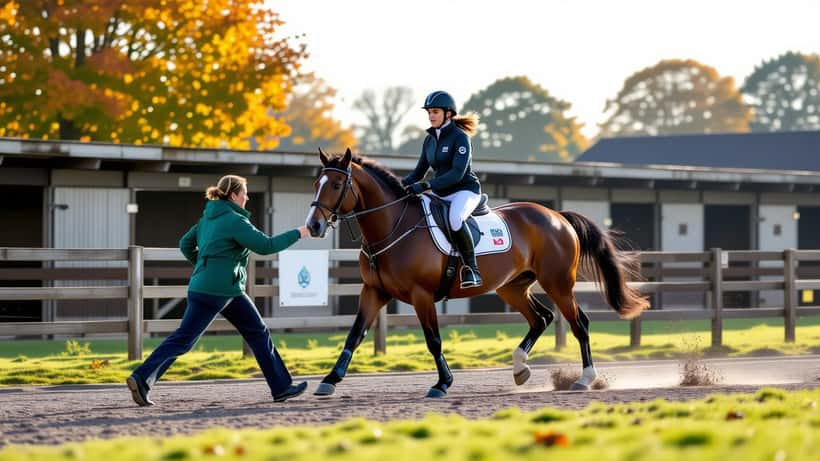
- Trot up on firm ground. Ask a helper to lead the horse while you watch for head nod or uneven strides.
- Plan a rest period. A planned break of several weeks lets minor strains settle before they become injuries.
- Review feed and weight. Falling condition or a dull coat can reveal dental, parasite or ulcer problems.
- Book the autumn check. Dental work, vaccinations and a lameness review are easier to schedule now than in a winter emergency.
If you are weighing a withdrawal or a return to work and want an independent view, an equine vet can examine the horse and explain the risks in plain terms.
When to ask an expert
Horse health decisions involve a living animal, and this article is general information, not veterinary advice. If your horse shows lameness, heat, swelling, colic signs or changes in behaviour, contact a vet promptly. On ExpertZoom you can compare animal and veterinary experts and ask them about your horse's end-of-season routine before the winter sets in.
