 Charlotte Hughes
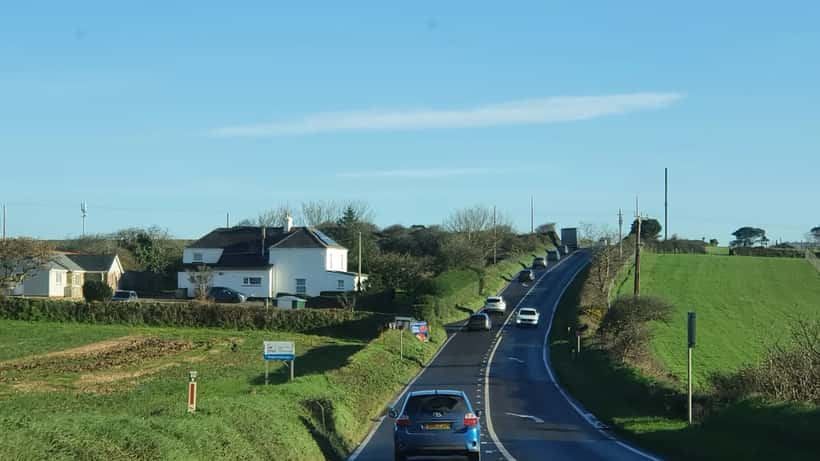
Major safety works on the A30 — Britain's longest A road, stretching from London to Land's End — have triggered a fresh wave of overnight closures across Cornwall and Devon in 2026, with National Highways confirming that junction improvements between Kennards House and Five Lanes require full road shutdowns from 9pm to 6am. For thousands of businesses, residents, and regular commuters, the disruption is not merely inconvenient: it is financially damaging. Yet fewer than one in five affected parties knows what legal protections actually exist.
What's Happening on the A30 Right Now
The A30 Chiverton to Carland Cross upgrade — a £330 million investment to convert 8.7 miles of single carriageway into dual carriageway — has been one of the UK's most consequential road infrastructure projects of recent years. But beyond that headline scheme, a parallel programme of targeted safety works at junctions has introduced a series of rolling closures throughout 2026.
National Highways confirmed overnight closures between Kennards House and Five Lanes running from 5 September to 10 September 2026, with signed diversions adding up to 25 minutes of travel time on already-congested rural routes. Earlier in the year, phased overnight closures ran from the Exeter junction (J29) through Honiton to Taunton Cross, with each phase lasting two to four weeks.
The practical impact extends well beyond inconvenience. Petrol stations, farm shops, holiday accommodation, and roadside cafés that depend on passing trade have reported significant drops in footfall. Meanwhile, residents whose driveways or access roads sit on or adjacent to the A30 corridor have found themselves navigating complex questions about their legal rights — questions that specialist solicitors say are frequently misunderstood by all parties involved.
The Legal Framework: What the Law Actually Says
The starting point for any roadworks compensation claim in England and Wales is the New Roads and Street Works Act 1991, supplemented by the Highways Act 1980. This legislation sets out the obligations that highway authorities and statutory undertakers must meet whenever they interfere with road access. Under Section 79 of the Highways Act 1980, landowners can in certain circumstances claim compensation where their property is directly and measurably affected by the authority's works.
However, there is a crucial distinction that legal specialists emphasise: pure economic loss — a business that loses customers because traffic flows differently — is treated very differently from direct damage to property or access, such as a driveway that is blocked, an access road severed, or physical damage to a building caused by nearby excavation.
For direct access interference, the Compensation Code under the Land Compensation Act 1973 may apply, particularly where works amount to a permanent depreciation in value of a qualifying interest in land. For temporary disruption — the typical roadworks scenario — the legal picture is more complex, and the outcome depends heavily on the specific facts.
According to solicitors specialising in infrastructure disputes, three factors typically determine whether a business or property owner has a viable claim:
- Duration: Short-term closures of days or a few weeks carry a very high legal bar — courts have historically been reluctant to award damages for temporary interference with business revenue alone. Closures extending to months, or those that permanently alter traffic patterns, attract far stronger claims.
- Proximity and specificity: Was your business or property affected in a way that is measurably distinct from the general public? A café directly on the A30 that loses 60% of its passing trade is in a considerably stronger position than a hotel two miles down a side road.
- Notice and consultation: Highway authorities have statutory obligations to notify affected parties in advance. Where proper notice was not given, or where the works exceed what was stated in scope or duration, the legal basis for a claim strengthens considerably.
It is also worth noting that the New Roads and Street Works Act 1991 Code of Practice requires a minimum of five days' advance notice for planned closures. Breaches of this procedural requirement are not merely administrative failures — they can underpin a formal complaint that, in turn, strengthens any subsequent civil claim.
When the Road Works Cut Your Livelihood: A Concrete Scenario
Consider the following situation — one that several solicitors have described as typical of cases arriving in their inboxes following the 2026 A30 works.
Emma runs a roadside café near Launceston, directly accessible from the A30. During the September 2026 overnight closure programme — when the main carriageway is shut from 9pm to 6am and all traffic is diverted onto the B3254 — her evening trade effectively disappears. She tracks her takings across the ten nights of the closure and finds that revenue drops by £2,800 compared with the equivalent period in 2025. Her fixed costs over that period — rent, staffing, and utilities — remain unchanged at approximately £1,200, leaving her with a combined net shortfall of around £4,000.
Can Emma claim? The position under current law is challenging but not without merit. If National Highways failed to provide adequate advance notice — the minimum five days required under the 1991 Act Code of Practice — that procedural breach alone gives her grounds for a formal complaint. If the diversion route actively steers traffic away from her access point rather than simply routing vehicles along an alternative road, she may have a direct-access interference argument that goes beyond pure economic loss.
A specialist solicitor would advise Emma to take four immediate steps. First, document the revenue shortfall using dated till receipts and bank statements — courts routinely dismiss claims where no contemporaneous evidence exists. Second, obtain a copy of the traffic management notice issued by National Highways, available via the Street Manager system, and check whether the closure ran longer or wider than originally advertised. Third, lodge a formal complaint with National Highways within 28 days of the works completing. Fourth, review her business interruption insurance policy: many commercial policies contain roadworks clauses, but also exclusions — a policy review by a solicitor is often the fastest way to determine whether the insurer, not National Highways, is the correct first port of call.
The key threshold: where the total revenue loss exceeds £5,000, instructing a solicitor on a fixed-fee basis typically becomes cost-effective. Below that figure, the small claims track (covering disputes up to £10,000 in England and Wales) and a formal complaint route are often the more proportionate options.
What You Should Do Before the September Closures Begin
The A30 closure window opening on 5 September 2026 means there is still time to act before the disruption begins — and early preparation matters significantly under the legal framework.
Record a baseline now. For businesses, documenting revenue, footfall, and delivery schedules in the two weeks before closures begin creates the comparative reference point that any future claim depends on. A claim without a documented baseline is a claim that is extremely difficult to quantify to a court's satisfaction.
Request the traffic management plan. National Highways is required to make this available. Reviewing it in advance reveals whether the diversion route will directly affect your access point — a fact that fundamentally shapes the strength of any subsequent legal argument.
Understand the time limits. For general civil claims, the Limitation Act 1980 sets a six-year window from the date the loss arises. But for formal complaints to statutory bodies, internal deadlines are far shorter — typically 28 to 56 days from the works completing. Waiting until the full cost of disruption is clear before acting can, paradoxically, close the legal options that would have been available to you.
Know what comparable cases have achieved. The legal landscape around road infrastructure is well-documented. The A31 lorry fire closure and the A66 Trans-Pennine upgrade have both produced compensation precedents that specialist solicitors can draw on when framing A30-related claims. The consistent lesson from those cases: the parties who obtained outcomes were the ones who sought legal guidance before the works concluded, not after.
The A30 is a lifeline for communities across Cornwall and Devon. When that lifeline is disrupted by works that go beyond what the law permits, or when the disruption is so severe that it crosses the threshold into compensable harm, legal advice is not an optional extra — it is the difference between absorbing a loss and recovering one.
This article provides general information only and does not constitute legal advice. If you believe you may have a compensation claim arising from the A30 roadworks, you should consult a qualified solicitor.
