 Eleanor Vaughan
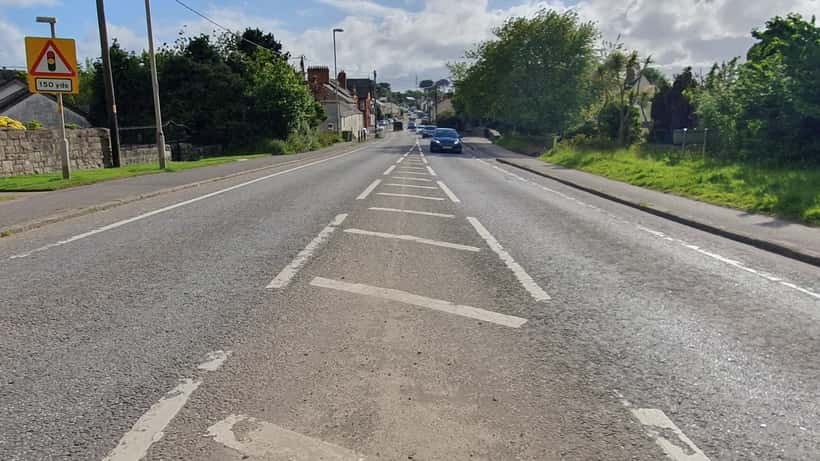
Two boys — aged eight and five — have died following a multi-vehicle crash on the A30 near Connor Downs, Hayle, Cornwall, on the morning of 29 May 2026. The eight-year-old died at the scene. His five-year-old brother, taken to Bristol Children's Hospital with serious injuries, died on 2 June 2026. A local man in his 60s has been arrested on suspicion of causing death by dangerous driving and causing serious injury by dangerous driving.
The investigation is ongoing. As Detective Inspector Andy Heath of Devon and Cornwall Police confirmed, officers continue to support the family while securing the evidence required. Behind the headlines of a tragic road accident lie legal processes — both criminal and civil — that bereaved families may not be aware of, and that a specialist road accident solicitor can help navigate.
This article is for general information only. It does not constitute legal advice. Families affected by road traffic fatalities should seek advice from a qualified solicitor.
What "Causing Death by Dangerous Driving" Means
Causing death by dangerous driving is one of the most serious motoring offences in England and Wales, governed by Section 1 of the Road Traffic Act 1988 (as amended). A driver is considered dangerous if their standard of driving falls far below what would be expected of a competent and careful driver, and if it would be obvious to such a driver that driving in that way posed a danger to others.
The maximum sentence on conviction is 14 years' imprisonment, following reforms introduced under the Police, Crime, Sentencing and Courts Act 2022, which nearly doubled the previous maximum of 7 years. A criminal court conviction also typically results in a minimum driving ban of two years, along with mandatory extended retest requirements before a licence can be restored.
Crucially, an arrest is not a charge, and a charge is not a conviction. The suspect in the A30 case has been released under investigation while Devon and Cornwall Police continue their enquiries. The Crown Prosecution Service will decide in due course whether there is sufficient evidence and whether it is in the public interest to bring charges.
Two Separate Legal Processes Can Run in Parallel
A point that many bereaved families do not initially realise is that a criminal prosecution and a civil compensation claim are entirely separate legal proceedings. One does not preclude the other, and neither has to wait for the other to conclude.
The criminal process is conducted by the state: the Crown Prosecution Service decides whether to charge and prosecute. The family of the deceased is not a party to the criminal proceedings; they are witnesses and victims, not claimants. A conviction in the criminal court does, however, create a strong evidential basis for a civil claim.
The civil process allows the immediate family of someone killed in a road accident to claim compensation through the civil courts under the Fatal Accidents Act 1976. Such claims can include dependency losses (financial support the deceased would have provided), bereavement damages (a fixed statutory sum currently set at £15,120 for qualifying relatives), and funeral costs. Claims under the Law Reform (Miscellaneous Provisions) Act 1934 may also be brought on behalf of the deceased's estate.
Civil claims can proceed even if criminal charges are not brought, or if the defendant is acquitted. They require the lower civil standard of proof: the balance of probabilities (more likely than not), rather than the criminal standard of beyond reasonable doubt.
The Coroner's Role and Fatal Accident Inquests
When a death occurs in circumstances such as a road traffic collision, the coroner for the relevant area will be notified. The coroner's investigation — and potentially an inquest — is an independent process aimed at establishing who died, when and where, and how they came to die.
If a suspect is charged with a criminal offence in connection with the death, the coroner's inquest is typically adjourned until after the criminal proceedings conclude. An inquest is not a trial: it cannot apportion blame or deliver verdicts of criminal liability. However, the findings of an inquest can be significant for subsequent civil litigation and can provide families with important answers about the circumstances of a death.
Families are entitled to have legal representation at an inquest. A specialist solicitor can ensure that key questions are put to witnesses, that relevant documentation is obtained, and that the family's interests are properly represented throughout the process.
The Motor Insurers' Bureau: When Insurance Is in Doubt
Where a driver involved in a fatal accident was uninsured or cannot be traced, the Motor Insurers' Bureau (MIB) provides a compensation mechanism for victims and their families. The MIB is a body established by the UK government and funded by motor insurers to handle claims that would otherwise go uncompensated.
Families should not assume that a lack of insurance on the part of the responsible driver means compensation is unavailable. A road accident solicitor can advise on whether an MIB claim is appropriate and manage the application process, which has its own deadlines and procedural requirements.
Seeking Legal Advice After a Fatal Road Accident
For families in the immediate aftermath of a tragedy like the A30 collision, legal advice may feel like a distant concern. In practice, early engagement with a specialist solicitor protects evidence, preserves key witness accounts, and ensures that statutory deadlines — particularly the three-year limitation period for personal injury and fatal accident claims — do not pass unnoticed.
Many road accident solicitors operate on a no-win, no-fee basis for fatal accident claims, meaning families face no upfront legal costs. The goal is not to profit from tragedy but to ensure that those responsible are held accountable and that bereaved families receive the financial support they are entitled to under law.
As Devon and Cornwall Police continue their investigation into the A30 crash near Hayle, the legal process for the family is only just beginning. Understanding it can, at the very least, ensure that they face it with proper support.
You may also find the following article relevant: A27 Fatal Crash: Your Legal Rights After Road Accidents
If your family has been affected by a fatal road accident, a specialist road accident solicitor can advise on both criminal and civil legal options. Find qualified legal support at ExpertZoom.
