
Hiring a qualified electrician in the UK requires more than picking the first name on Google. Around 12,500 domestic electrical fires occur each year in England alone, and faulty wiring ranks as the leading cause [Home Office, 2024]. Choosing a properly certified professional — and knowing what each certification actually means — protects your home, your family, and your wallet. This guide breaks down qualifications, realistic costs, emergency advice, and a step-by-step verification checklist.
NICEIC, NAPIT, and Part P: What Each Certification Means
An electrician working on domestic installations in England and Wales must comply with Part P of the Building Regulations (Approved Document P, 2013 edition). Part P requires that certain types of electrical work — new circuits, consumer unit replacements, and work in bathrooms or kitchens — are either carried out or inspected by a competent person registered with a government-approved scheme.
The three largest competent-person schemes are:
- NICEIC (National Inspection Council for Electrical Installation Contracting) — the oldest and most widely recognised body, with over 30,000 registered contractors [NICEIC, 2025]. NICEIC-approved contractors undergo rigorous initial assessment and annual re-inspection.
- NAPIT (National Association of Professional Inspectors and Testers) — covers electricians, plumbers, and gas engineers. NAPIT membership requires evidence of qualifications (typically NVQ Level 3 or City & Guilds 2357) plus regular compliance audits.
- ELECSA — a Certsure-operated scheme focused on smaller independent electricians. Entry standards mirror NICEIC but the brand recognition is lower.
Registration with any of these schemes means the electrician can self-certify notifiable work and issue an Electrical Installation Certificate (EIC) without involving local building control. If an electrician is not scheme-registered, the homeowner must arrange a separate building control inspection — adding £200–£400 to the bill [LABC, 2024].
Key point: all three schemes satisfy the legal requirement. NICEIC carries the strongest brand recognition, but a NAPIT or ELECSA member is equally compliant.
How Much Does an Electrician Cost in the UK?
Electrician rates vary by region, job complexity, and urgency. The benchmarks below reflect 2025 averages across England and Wales, based on trade-body surveys and pricing platforms [Checkatrade, 2025; MyBuilder, 2025].
Typical Hourly and Day Rates
Most domestic electricians charge between £45 and £85 per hour, or a day rate of £250–£450. London and the South East sit at the upper end, while the Midlands and North trend lower. A call-out fee of £50–£80 is standard for jobs under two hours.
What Drives the Price Up?
Three factors push quotes above the average. First, older properties with lath-and-plaster walls require careful chasing and more labour hours. Second, any work requiring scaffolding or access equipment adds £100–£300 per day. Third, emergency or out-of-hours call-outs typically carry a 50–100% surcharge on the standard rate.
Always request an itemised written quote rather than an estimate. A quote is legally binding; an estimate is not [Citizens Advice, 2024].
How to Verify an Electrician's Credentials Before Hiring

Checking credentials takes under five minutes and eliminates the most common risks. Follow these steps before agreeing to any work.
- Ask for their registration number. Every scheme-registered electrician carries a unique ID. Request it upfront — genuine professionals volunteer it willingly.
- Search the official register. Visit NICEIC, NAPIT, or ELECSA and enter the registration number or postcode. The listing confirms their name, business address, and approved scope of work.
- Check public-liability insurance. A reputable electrician carries at least £2 million in public-liability cover. Ask to see the certificate or ask their scheme — NICEIC and NAPIT require proof of insurance as a condition of membership.
- Request references and recent EICs. An Electrical Installation Certificate (EIC) shows the electrician tested the work to BS 7671 (the IET Wiring Regulations, 18th edition). Ask for two recent certificates from comparable domestic jobs.
- Verify TrustMark registration (optional but recommended). TrustMark is the government-endorsed quality scheme. TrustMark-registered firms are also lodged on the TrustMark data warehouse, which provides consumer protection under the Each Home Counts framework.
Key takeaway: If an electrician cannot provide a scheme registration number, do not proceed. Unregistered work may invalidate your home insurance and create liability issues if a fault causes damage.
Emergency Electrician: When to Call and What to Expect
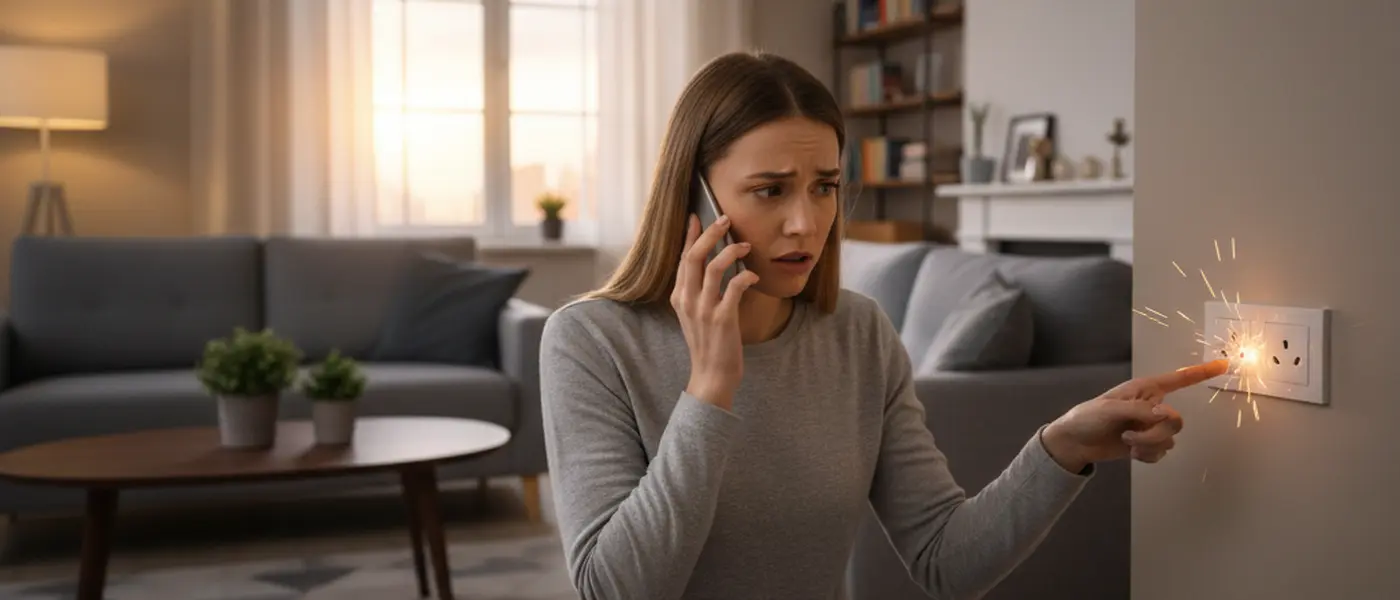
Not every electrical problem qualifies as an emergency, and misidentifying the situation wastes money on out-of-hours surcharges. True electrical emergencies include exposed live wiring, a burning smell from sockets or the consumer unit, repeated tripping of the RCD with no identifiable appliance fault, and any situation where someone has received an electric shock.
Before the Electrician Arrives
Switch off the main supply at the consumer unit if you can do so safely. If the consumer unit itself is the source of the smell or sparking, do not touch it — call the local electricity distribution network operator (DNO) via the 105 power-cut helpline instead. DNO engineers handle supply-side faults at no charge.
Emergency Call-Out Costs
Emergency electricians typically charge £100–£180 for the first hour during evenings and weekends, dropping to the standard rate thereafter [Checkatrade, 2025]. Bank holiday rates can reach £200+ per hour. Before the electrician starts work, confirm the call-out fee, hourly rate, and whether parts are included or quoted separately. A legitimate emergency electrician will still provide their scheme registration number and confirm insurance before beginning work.
Jane, a homeowner in Bristol, called an emergency electrician after smelling burning plastic near the consumer unit at 10 pm. The electrician arrived within 40 minutes, identified a loose terminal connection causing arcing, and completed the repair in under an hour. Total cost: £165 including parts — far less than the potential cost of an electrical fire.
What Paperwork Should an Electrician Provide After the Job?
Domestic electrical work governed by Part P requires specific documentation. The type of certificate depends on the scope of the job.
| Document | When Required | Who Issues It |
|---|---|---|
| Electrical Installation Certificate (EIC) | New installations, rewires, consumer unit replacements | The electrician who carried out the work |
| Minor Electrical Installation Works Certificate (MEIWC) | Small additions to existing circuits (extra socket, light fitting) | The electrician who carried out the work |
| Electrical Installation Condition Report (EICR) | Periodic inspection of existing installations (recommended every 10 years for homeowners) | Any qualified inspector |
| Building Regulations Compliance Certificate | Notifiable work completed by a scheme-registered electrician | The competent-person scheme (e.g. NICEIC) |
Retain all certificates permanently. They form part of the property's electrical safety record and are requested during conveyancing when selling. Missing certificates can delay a house sale by weeks [Law Society, 2024].
Red Flags: When to Walk Away from an Electrician
Spotting an unqualified or rogue electrician early saves money and prevents dangerous installations. Watch for these warning signs:
- No written quote. A verbal price with no breakdown is the single biggest predictor of disputes. Reputable electricians provide itemised written quotes as standard [Trading Standards, 2024].
- Cash-only, no invoice. This often signals an intention to avoid tax obligations and makes consumer recourse impossible if the work is defective.
- Reluctance to show credentials. A scheme-registered electrician will share their registration number without hesitation. Evasiveness suggests they are not registered.
- No isolation of circuits before working. Safe isolation is a fundamental requirement of BS 7671. An electrician who works on live circuits (except where live testing is specifically necessary) is breaching safety regulations.
- Pressure to skip an EICR. If your property has not had an inspection in over 10 years, a responsible electrician will recommend one — not discourage it.
Walking away from a low quote protects you from substandard work that could cost far more to rectify. The Electrical Safety First charity estimates that correcting cowboy electrical work costs UK homeowners an average of £1,200 [Electrical Safety First, 2024].
Frequently Asked Questions
Do I need a [qualified electrician](/gb/craftspeople/electricians) to change a light switch?
Replacing a light switch like-for-like is not notifiable under Part P, so you can legally do it yourself. However, if the switch is in a bathroom (a special location under BS 7671) or if you are altering the circuit, a qualified electrician must carry out or inspect the work.
How long does a full house rewire take?
A standard 3-bedroom semi-detached house typically takes 5–7 working days for two electricians, plus 1–2 days for final testing and certification [NICEIC, 2025]. Older properties with difficult access may take longer.
Is the cheapest quote always the worst?
Not necessarily, but a quote significantly below market rate warrants scrutiny. Compare at least three itemised quotes and verify each electrician's scheme registration. Price alone does not indicate quality — credentials and references do.
What is the difference between an EIC and an EICR?
An Electrical Installation Certificate (EIC) covers new work and confirms it meets BS 7671 at the time of installation. An Electrical Installation Condition Report (EICR) is a periodic inspection of existing wiring, grading each circuit's condition from C1 (danger present) to C3 (improvement recommended).
Disclaimer: The information on this page is provided for general guidance only and does not constitute professional electrical or legal advice. Always consult a qualified electrician for your specific situation.