
Most electronics faults start small — a flickering screen, a device that runs hot, a charging port that works only at certain angles. Ignoring these early signs often turns a £40 repair into a £400 replacement. The UK's electronics repair market handles over 5 million device repairs each year [Restart Project, 2024], yet many consumers wait too long or attempt fixes that cause further damage.
This listicle covers the seven clearest warning signs that your gadget needs a qualified electronics technician, what professional repair typically costs in the UK, and how to choose a service you can trust.
1. Persistent Overheating That Restart Cycles Cannot Fix
Overheating ranks among the most common reasons consumers bring devices to electronics repair shops in the UK. A smartphone, laptop, or games console that consistently exceeds safe operating temperatures — typically above 40 °C for phones, 95 °C for laptop CPUs — signals a hardware-level fault rather than a software glitch.
Common culprits include degraded thermal paste on processor heat sinks, blocked ventilation fans clogged with dust, or a failing battery cell that swells under load. While cleaning external vents is safe to do at home, opening a sealed device to replace thermal paste or a swollen battery requires specialist tools and ESD-safe (Electrostatic Discharge-safe) handling.
Key point: If your device shuts down from heat despite being in a cool room with no intensive apps running, the internal cooling system likely needs professional attention. Continuing to use an overheating device risks permanent damage to the motherboard or, in rare battery cases, a fire hazard [UK Fire and Rescue Service incident data, 2023].
2. Screen Glitches Beyond a Simple Crack
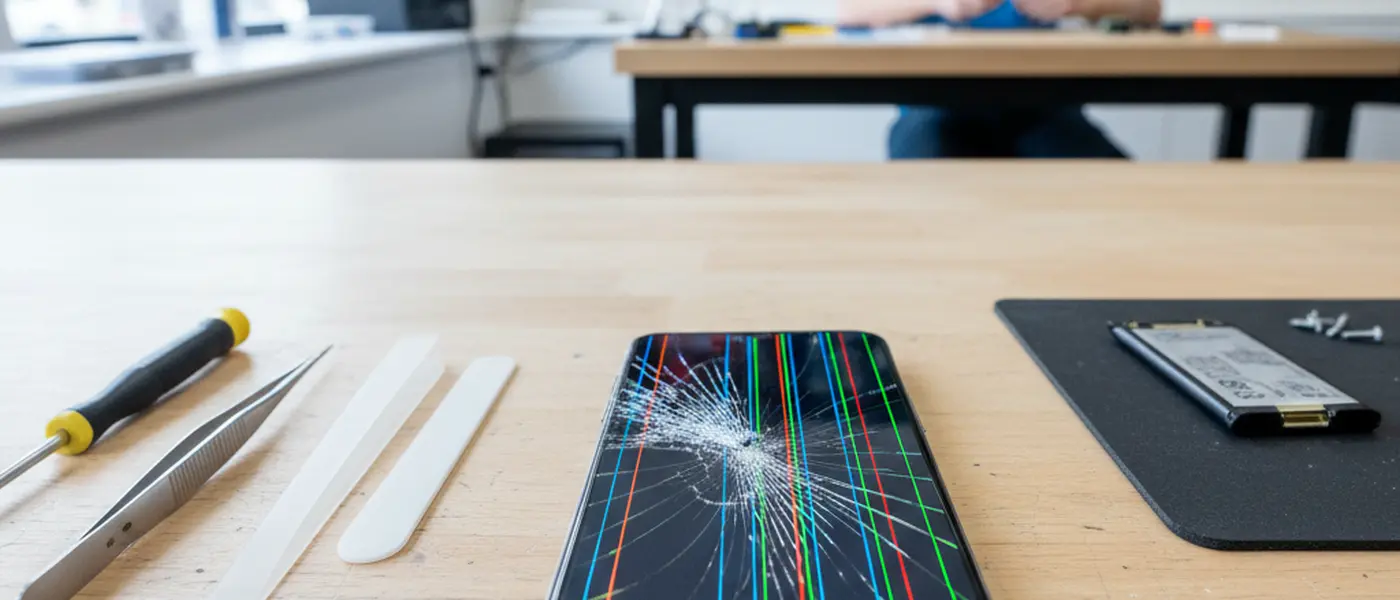
A cracked screen is obvious, but subtler display problems often point to deeper electronics repair needs. Dead pixel clusters that spread over days, horizontal or vertical coloured lines across the panel, and phantom touch inputs — where the screen registers taps you never made — all indicate a failing display connector or damaged graphics chip rather than surface glass damage.
Replacing a screen assembly on modern smartphones costs between £50 and £250 depending on the model [UK Repair Association pricing survey, 2025]. For laptops, expect £100 to £400. DIY screen kits sold online may seem cheaper, but incorrect installation frequently tears the ribbon cable that connects the display to the logic board, turning a straightforward swap into a board-level repair.
Essential takeaway: Screens showing colour banding, flickering at random intervals, or ghost touches need a diagnostic from a qualified technician before any parts are ordered. A misdiagnosis wastes money on the wrong component.
3. Charging Failures and Battery Drain
A device that charges intermittently, only at a certain cable angle, or loses 30 % battery within an hour of light use is signalling an electronics repair need. Charging port issues account for roughly 18 % of all smartphone repairs in the UK [Counterpoint Research, 2024].
When the Port Is the Problem
Debris lodged inside a USB-C or Lightning port can sometimes be cleared with a plastic toothpick and compressed air. When that fails, the port's solder joints may have cracked — a micro-soldering job that requires a hot-air rework station and magnification equipment.
When the Battery Is the Problem
Lithium-ion batteries degrade after approximately 500 full charge cycles. A battery health reading below 80 % (visible in iOS Settings or third-party Android apps) justifies replacement. Swollen batteries that push the screen or back panel outward demand immediate professional removal, as puncturing a swollen cell releases toxic fumes.
4. Water Damage Indicators and Corrosion

Dropping a device in water — or even sustained exposure to steam in a bathroom — can trigger corrosion on internal circuit boards within 48 hours. Most smartphones contain a Liquid Contact Indicator (LCI) strip that turns red on contact with moisture. A technician checks this strip first during any electronics repair assessment.
Rice does not fix water damage. The widely shared advice to place a wet phone in a bag of rice has been debunked by multiple repair industry bodies, including Apple's own support documentation [Apple Support, 2024]. Rice grains leave starch dust inside ports and do nothing to halt corrosion spreading across solder joints.
Professional water damage treatment involves ultrasonic cleaning of the circuit board in isopropyl alcohol, followed by microscope inspection of each chip and connector for corrosion traces. UK repair shops typically charge £40 to £100 for this process, with additional costs if corroded components need replacement.
Essential takeaway: The faster a water-damaged device reaches a professional, the higher the recovery rate. Powering on a wet device accelerates short-circuit damage — remove the battery (if possible) and take it to a technician the same day.
5. Audio or Microphone Failures
Distorted sound, crackling speakers, or a microphone that cuts out during calls points to component failure that software resets rarely resolve. On smartphones, the speaker unit sits on a flex cable connected to the main board — physical shock from a drop can fracture this connection even when the exterior looks undamaged.
Laptop audio failures often stem from a blown internal speaker driver or a faulty headphone jack that shorts the audio output. A qualified electronics technician tests the audio IC (Integrated Circuit) with a multimeter to determine whether the chip itself or a downstream component has failed.
Repair costs for audio components range from £20 for a speaker swap on budget phones to £150 or more for board-level audio IC replacement on premium laptops [Multicare Electronics, 2025]. Before booking a repair, check whether the issue persists across wired and Bluetooth output — this helps the technician isolate the fault faster.
6. Random Shutdowns and Boot Loops
A device that powers off without warning or restarts in an endless loop has moved beyond a software crash into likely hardware failure. On phones, a degraded battery unable to deliver stable voltage is the most frequent cause. On laptops, failing RAM modules or a corrupted SSD (Solid-State Drive) controller often trigger the same behaviour.
How a Technician Diagnoses It
Sarah, a freelance graphic designer in Manchester, experienced random shutdowns on her MacBook every 20 minutes. She reinstalled macOS twice with no improvement. A technician at a local electronics repair shop ran a board-level diagnostic and found two failed capacitors near the power management chip — a £90 fix that restored full stability.
Professional diagnosis typically involves:
- Running hardware diagnostics from a bootable USB to rule out software
- Testing the power delivery circuit with an oscilloscope
- Checking RAM and storage with dedicated test tools
- Inspecting solder joints under magnification for micro-cracks
This structured approach identifies the root cause before any parts are replaced, avoiding the costly trial-and-error of swapping components blindly.
7. Connectivity Drops: Wi-Fi, Bluetooth, and Cellular
Frequent Wi-Fi disconnections, Bluetooth devices that refuse to pair, or mobile signal that vanishes in areas with confirmed coverage all suggest antenna or RF (Radio Frequency) module faults. These components are fragile — a single drop can shift an antenna contact point by a fraction of a millimetre, enough to degrade signal strength by 50 % or more.
On smartphones, the antenna connects via spring-loaded contacts to the logic board. Corrosion, physical displacement, or a cracked antenna feed line all require disassembly to diagnose. On laptops, the Wi-Fi antenna runs through the screen hinge — hinge damage frequently disrupts wireless performance.
Before assuming hardware failure, test the device in safe mode to rule out rogue apps and try resetting network settings. If the problem persists, a professional electronics repair technician can test RF output with a spectrum analyser and pinpoint the fault within minutes.
Choosing a Reliable Electronics Repair Service in the UK
Not every high-street phone repair kiosk has the equipment for board-level work. When selecting a technician for electronics repair, look for these indicators:
- Industry certification — CompTIA A+ or manufacturer-authorised service provider status confirms baseline competence
- Transparent diagnostics — Reputable shops offer a diagnostic fee (typically £20–£40) that is waived if you proceed with the repair
- Warranty on parts and labour — A minimum 90-day guarantee on replaced components is standard practice among professional repair businesses
- Right to Repair compliance — Since 2021, UK regulations under the Ecodesign for Energy-Related Products Regulations require manufacturers to make spare parts available for certain product categories, making independent repair more viable
"The single biggest predictor of a good repair outcome is a proper diagnostic before any parts are ordered. Rushing to replace components without testing is the most expensive mistake in electronics repair." — James Chen, CompTIA-certified technician, Birmingham
Disclaimer: The information on this page is provided for general guidance only and does not constitute professional technical advice. For device-specific issues, consult a qualified electronics repair technician.