 Julia Vachon
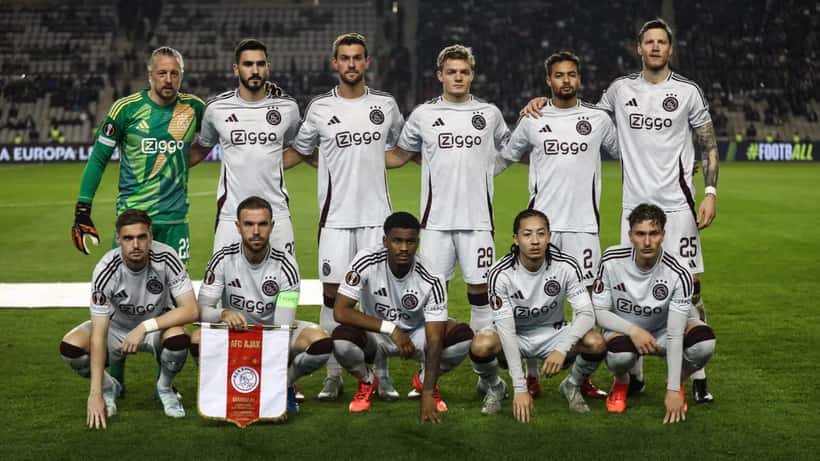
Wout Weghorst is living the athlete's ultimate paradox: running out onto a World Cup pitch on June 29 while his club contract expired the very next day. The Dutch striker, 33, came on as a second-half substitute against Morocco in the Round of 32 in Monterrey — flicking a header that launched the build-up to Cody Gakpo's decisive goal — all while his Ajax deal quietly reached its end date of June 30, 2026.
It's a scenario that raises a question Canadian fans watching from home rarely consider: what does a professional footballer do when the cheers fade and the pay cheques stop?
A Career Worth Millions — But for How Long?
Weghorst's salary history reads like a graph of calculated risk-taking. At Wolfsburg, he earned roughly €3 to €3.5 million annually. A loan to Burnley brought in around £1.7 million per year. His controversial short-term loan to Manchester United in January 2023 — where he famously scored twice in extra time against Argentina at the 2022 World Cup — came with a reported £100,000-per-week package. His Ajax contract, signed in August 2024, paid approximately €48,000 per week — or €2.5 million per year — and was always set to expire on June 30, 2026.
According to salary tracking site Salary Sport, Weghorst's estimated net worth stands at around £19.1 million. Impressive by any standard — yet not the kind of number that lasts a lifetime without careful management.
The June 30 Deadline No One Talked About
The coincidence is almost cinematic. While Weghorst was sprinting onto the pitch in Monterrey to help the Netherlands past Morocco, his Ajax contract was ticking towards zero back in Amsterdam. As of July 1, 2026, he is an unrestricted free agent — no club, no guaranteed pay cheque, no safety net beyond whatever financial structures he and his advisors have built over his career.
At 33, Weghorst is not necessarily finished. But he is at the stage where every offer matters more than the last one, because there may not be another one after it. Clubs sign strikers in their early thirties with one eye already on the exit. A career-ending injury — or simply a run of poor form — can end the salary stream overnight.
"The average professional football career lasts around eight years," notes the Financial Consumer Agency of Canada in its guidance on irregular income planning. "Athletes who retire in their mid-thirties can face 50 or more years of post-career life to finance."
For a man like Weghorst, who has earned significant sums across his career, the challenge is not accumulation — it's preservation and growth.
What the World Cup Distraction Costs
Elite tournaments like the FIFA World Cup are genuinely dangerous moments for athlete finances. Players are focused entirely on performance. Agents are fielding calls. New contracts are being dangled. It's exactly the environment in which decisions get made too fast, without enough independent advice.
Weghorst's situation is instructive. He's simultaneously:
- In free-agent territory with no confirmed next club
- Playing on the sport's biggest stage, which inflates his perceived market value
- At an age when teams offering long-term deals have already moved on
This mix — urgency, visibility, pressure — is precisely when athletes make financial mistakes. Signing for the wrong club (for the wrong money) because the tournament created a false sense of leverage. Spending on lifestyle upgrades triggered by World Cup exposure. Or, conversely, undervaluing themselves by signing quickly out of anxiety when the tournament ends.
A qualified wealth manager with experience in professional sports can stress-test both scenarios. What does Weghorst's financial picture look like if he signs a one-year deal in the Netherlands? What if he takes a lucrative but short offer in Saudi Arabia or the MLS? What if he retires outright in 2027?
The Three Questions Every Athlete Should Answer Before Retirement
Canadian financial planners who work with professional athletes — hockey players, tennis pros, golfers — consistently flag the same three oversights:
1. Tax residency and treaty planning. Weghorst has lived and earned in Germany, England, Turkey, and the Netherlands over his career. Each jurisdiction handles tax treatment of accumulated savings and pension vehicles differently. Without deliberate structure, athletes can owe taxes they thought they'd already paid — sometimes across multiple countries at once.
2. Investment diversification away from sport. Too many athletes keep wealth in assets they understand — real estate in their home country, club ownership stakes, endorsement deals in their own sport. Genuine diversification means exposure to assets that perform regardless of whether football is popular or profitable.
3. Cash flow planning for the transition year. The 12 months after a major contract ends are statistically the highest-risk period for athlete finances. Spending habits built on a €48,000-per-week income do not automatically adjust the moment the direct deposits stop. A cash flow model built 18 months before contract expiry — not 18 days after — is the standard of care.
The Bigger Picture: Canada's Athletes Face the Same Math
Canada's 2026 World Cup squad includes players earning Premier League and Bundesliga salaries for the first time in some cases. Other World Cup finalists face the same scrutiny — as the tournament spotlights player earnings like never before. Jonathan David, Cyle Larin, Alphonso Davies — these players are building wealth in their prime years. But the Weghorst scenario is their future too: contracts ending, tournaments finishing, and suddenly a lifetime of earned income needing to work independently.
The Financial Consumer Agency of Canada offers free resources on budgeting, savings, and working with financial advisors — tools that apply just as much to a professional athlete managing millions as they do to any Canadian planning for retirement.
When the Final Whistle Sounds
Weghorst will find a new club. He is too good, and too experienced, not to. But the window for a truly transformative financial decision — one that secures his family's wealth across generations, not just his own retirement — is narrow. It requires independent advice from someone who is not also trying to earn a commission on the transfer.
The World Cup spotlight is blinding. The financial decisions made in its shadow deserve their own kind of clarity.
If you or someone you know is managing a significant income transition — whether from sport, entrepreneurship, or a corporate career — an expert consultation can help structure the next chapter with as much precision as a counter-attack in extra time.
This article is for informational purposes only and does not constitute financial advice. Consult a qualified wealth management professional for guidance specific to your circumstances.
