 Maya MacDonald
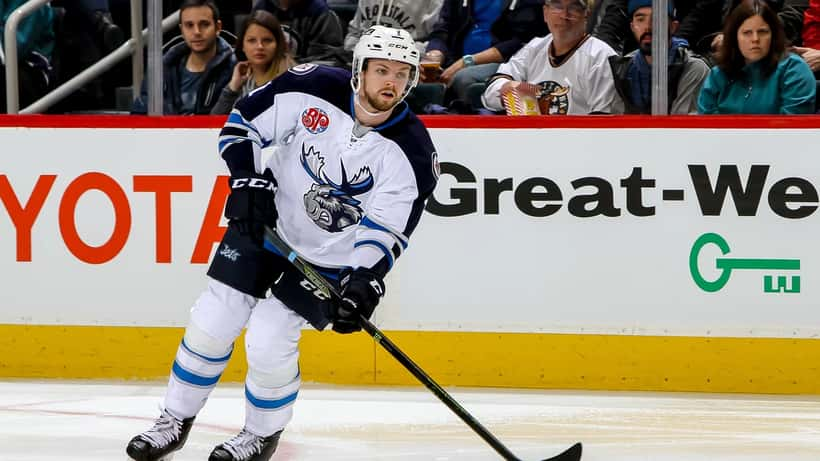
Jets defenceman Josh Morrissey is listed day-to-day with an upper-body injury ahead of the Oct. 25 Heritage Classic against the Montreal Canadiens — and his situation is raising a question that hundreds of thousands of Canadian recreational hockey players ask every autumn: when does a sore shoulder actually need professional attention?
Morrissey joins a long line of NHL skaters who miss games early in the season due to upper-body issues that are frustratingly vague yet potentially serious. For the Winnipeg Jets, losing their first-line shutdown defenceman — even temporarily — matters. For the average beer-leaguer lacing up skates in a rink across Manitoba, Ontario, or British Columbia, the same category of injury carries an even higher personal cost because there is no team physician waiting in the tunnel.
What Upper-Body Injuries Mean at the Start of the Season
The 2026-27 season opened Oct. 2 at Canada Life Centre, and the Jets are already navigating the physical toll of early NHL hockey. Cole Perfetti is thriving on the top line, Kyle Connor is on pace for his fourth 90-point season, and yet injuries are already trimming the roster depth. Morrissey will not suit up against the Anaheim Ducks while the coaching staff manages his recovery carefully.
In elite hockey, "upper body" is a catch-all term that most often refers to shoulder, collarbone, or wrist injuries — sometimes with soft-tissue involvement, sometimes not. A study published in a peer-reviewed sports medicine journal found that shoulder injuries account for a significant share of all ice hockey injuries, with a rate of approximately 0.35 per 1,000 game-hours in competitive play, and that most shoulder injuries result in at least one week of time away from sport. In adult recreational leagues where physical play remains common, the pace may be slower but the risk is real: players 35 to 60 years old often skate with pre-existing wear in their rotator cuffs and acromioclavicular joints that makes an otherwise minor collision far more damaging.
The Expert Angle: Why Recreational Players Often Make the Wrong Call
NHL players like Morrissey have access to team physicians, orthopaedic surgeons, athletic therapists, and imaging — all within 24 hours of an incident. The average Canadian rec-league player does not.
What usually happens instead is a familiar pattern: the player finishes the shift, notices pain and swelling, ices the shoulder at home, takes ibuprofen, and assumes it will heal on its own. This works for mild strains. It can be a serious mistake for anything involving the acromioclavicular (AC) joint, the rotator cuff tendon, or the labrum.
Sports medicine physicians are trained to distinguish between injuries that respond to rest versus those that require imaging, physiotherapy within a specific time window, or surgical evaluation. Delayed presentation — showing up weeks or months after an injury — is one of the most common reasons that shoulder injuries in recreational athletes become chronic. A labral tear, for example, typically requires MRI for diagnosis; without it, players often return to skating too soon, compound the damage, and eventually face surgery that could have been avoided or at least better timed.
A general practitioner can order an X-ray to rule out fracture, but a sports medicine specialist adds clinical assessment of joint stability, impingement, and range-of-motion deficits that most GPs do not perform in a standard appointment. In Canada, access to a sports medicine physician without a referral is possible in most provinces, and wait times are significantly shorter than for specialist orthopaedic consultations.
A Concrete Case: What Happens If You Wait
Consider a 44-year-old recreational defenceman in Winnipeg — call him Brian — who takes a board hit during a Thursday night game the week before the Heritage Classic. He feels immediate pain in the front of his right shoulder and sits out the third period. The next morning the shoulder is swollen and he has pain when lifting his arm above shoulder height. He can still drive to work and decides to see how the week goes.
If Brian's injury is a Grade I AC sprain — the most common outcome in this scenario — relative rest for 2-3 weeks and a physiotherapy program costing roughly $80-$120 per session will resolve it fully. He misses four games. That is the best case.
If it is a Grade II or III AC sprain — meaning partial or complete ligament rupture — and he waits three weeks before seeking care, he misses the window for the most effective conservative management. A Grade III AC separation that is diagnosed and managed within 10 days of injury can often be treated non-surgically in recreational athletes; the same injury managed after three weeks of compensatory movement patterns frequently requires surgical reconstruction, which in Canada carries an out-of-pocket cost of $4,000-$8,000 at a private orthopaedic clinic or a wait of 12-18 months in the public system. A sports medicine consultation that Brian could book within 3-5 days in Winnipeg or any major Canadian city costs $150-$250 without a referral.
The if/then logic: If Brian sees a sports medicine specialist within 72 hours of his board hit, the cost is $150-$250 and he gets an accurate diagnosis with a recovery timeline. If he waits three weeks hoping it heals and it is a Grade II-III injury, he faces either $4,000-$8,000 in surgical costs or a 12-18 month wait — plus six weeks post-operative rehabilitation. The early consultation costs a fraction of either delayed outcome.
The Heritage Classic Effect: Why This Matters Right Now
The Oct. 25 Heritage Classic — the Jets hosting Montreal at Princess Auto Stadium in an outdoor game — is expected to drive a spike in recreational hockey registration across Manitoba as fans take inspiration from the spectacle and sign up for winter leagues or return to skating after summer breaks. Hockey Canada estimates that over 600,000 Canadians play registered adult recreational hockey, with significant registration volumes in the October-November window.
Every adult who returns to hockey after a summer off arrives with a shoulder that has not been exposed to contact in months, a skating stride that is not yet calibrated, and often a higher pain tolerance built from years of playing through mild soreness. This combination — enthusiasm, seasonal deconditioning, and a culture of toughness — is exactly what makes early-season upper-body injuries in recreational hockey so frequently undertreated.
According to the Government of Canada's sport injury prevention resources, upper-body injuries represent a leading category of sport-related emergency department visits among adults aged 35-54 in Canada. The report notes that many of these visits occur days or weeks after the original incident, when pain has become unmanageable — a timeline that typically means more complex treatment.
The Winnipeg Jets' medical staff will ensure Morrissey gets exactly the right care at exactly the right time. His day-to-day status will be monitored with precision. Canadian recreational players deserve the same precision, even if they have to arrange it themselves.
What to Do If You Are Josh Morrissey (Or Just Playing Like Him)
The indicators that warrant a same-week sports medicine appointment rather than a wait-and-see approach:
- Visible deformity or asymmetry at the shoulder joint (a "step" at the AC joint)
- Pain that is severe and constant rather than activity-related
- Complete loss of range of motion, not just stiffness
- Numbness or tingling down the arm, which can indicate nerve involvement
- Any collision where the shoulder absorbed direct impact against the boards or another player
You do not need to be experiencing all of these. Two or three of them together is sufficient reason to call a clinic rather than ice and wait.
A sports medicine specialist can typically see you within three to five business days at most major Canadian clinics. If your city has a sports medicine walk-in — available in Vancouver, Calgary, Edmonton, Winnipeg, Toronto, Ottawa, and Montreal — same-day or next-day appointments are often possible.
Internal medicine platforms like Expert Zoom connect patients with health professionals who can help you understand your options, triage your situation, and prepare the right questions before your in-person appointment.
The Heritage Classic is nine days away. If you are suiting up before then — or anytime this fall — treat your shoulder the way the Jets' medical staff would treat Morrissey's. Get eyes on it early.
Note: This article is for informational purposes only and does not constitute medical advice. Consult a qualified health professional for any injury assessment or treatment decision.
