 Dimitri
 The Brunswick Creek wildfire near Canyon Alpine, British Columbia, has grown past 1,800 hectares and forced the closure of Highway 1 between Boston Bar and Ainslie Road, pushing thick smoke and fine grey ash across the province's southern Interior since early July 2026. According to the Government of Canada, 796 wildfires were burning nationally as of mid-July, with the country now sitting at National Preparedness Level 4 — and from the Okanagan to Revelstoke and into Alberta, millions of parked vehicles are collecting a powdery film that can quietly corrode paint, choke filters and strain engines long after the smoke clears.
Most drivers focus on evacuation routes and air quality warnings, which is right. But once the immediate danger passes, a second, slower problem is left behind on your hood, your intake and your cabin vents. Here is what mechanics want Canadian drivers to understand — and the concrete steps to take this week.
Why wildfire ash is not ordinary dust
Wildfire ash looks like grey dust, but it behaves very differently. The particles are gritty and abrasive, and auto-detailing specialists warn that dragging them across a panel — even with a cloth — can scratch the clear coat that protects your paint. Worse, the ash is chemically active. Because burned wood, vegetation and building materials leave behind alkaline and acidic compounds, ash mixed with morning dew or rain turns mildly caustic. Left on the surface, it can etch and dull paint within days, not months.
That is why the instinct to "just wipe it off" is exactly wrong. Rubbing dry ash is like sanding your own car. The damage is cumulative and, once the clear coat is compromised, expensive to reverse.
The hidden damage under the hood
The bigger cost is often invisible. Your vehicle pulls outside air through two filters: the engine intake filter, which feeds combustion, and the cabin filter, which cleans the air you breathe inside. Both are designed to trap normal road dust — not the dense particulate of a wildfire season.
Mechanics report that smoke and ash clog these filters far faster than usual. A saturated engine air filter starves the motor of airflow, which can reduce power, hurt fuel economy and, over time, contribute to exhaust and performance problems. A clogged cabin filter overworks your air-conditioning system precisely when you need it sealed and running to keep smoke out of the interior. Fine ash can also settle on the radiator and condenser fins at the front of the car, reducing cooling efficiency during the hot, high-fire-risk weeks when engines are already working hard.
What a mechanic recommends right now
The good news: a few low-cost habits prevent most of the damage. Auto-care specialists across fire-prone regions consistently give the same advice.
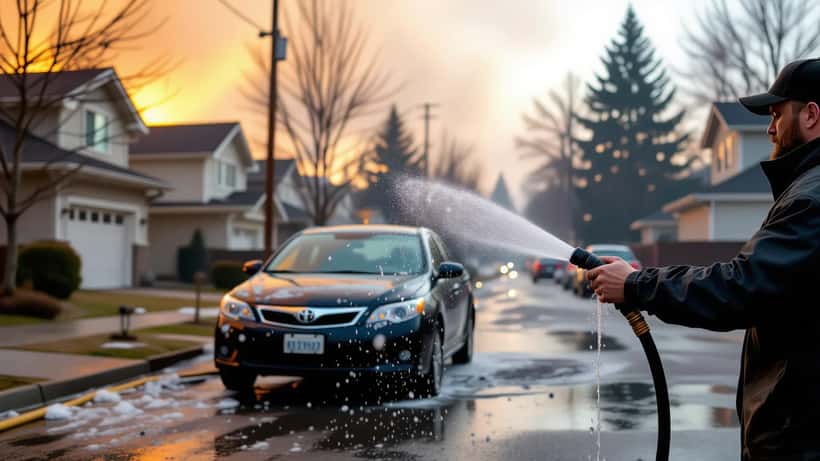
- Rinse before you touch. Flood the vehicle with plenty of water first to float loose ash away. Never wipe a dry, ash-covered panel.
- Wash gently, then dry fully. Follow the rinse with a proper soap wash using only soft materials, and dry the car completely so no acidic residue is left to sit.
- Check both filters after heavy smoke. Inspect the engine and cabin air filters as soon as a smoke event passes, and replace them if they are grey and loaded. They are inexpensive compared with the repairs a starved engine can require.
- Keep it covered. Park indoors or under cover when you can, and avoid driving through dense smoke unless necessary — reduced visibility is a safety risk on top of the mechanical one.
- Watch your cooling system. If you notice temperatures creeping up, have a technician clear ash from the radiator and condenser.
For families still under evacuation alert, the federal government's emergency vehicle kit guide is a useful checklist for keeping a reliable, ready-to-go car during fire season.
When to bring in a professional
Some jobs are worth a shop visit. If ash has been sitting on your paint for more than a few days, if you see dull spots or fine scratches after washing, or if your engine feels sluggish and your fuel consumption has jumped, book an inspection. A mechanic can assess clear-coat damage, swap filters correctly, and pressure-clean the cooling stack without forcing grit further into sensitive components. Detailers can also apply a protective wax or sealant that makes the next ash fall far easier to rinse off.
This matters most for anyone who left a vehicle parked outdoors during an evacuation order. Cars that sat under falling ash for a week face the highest risk of etching and filter saturation, and a professional assessment is the difference between a $60 filter change and a repaint.
If you are unsure whether the film on your car is cosmetic or a sign of deeper trouble, a qualified mechanic can diagnose it in minutes. On Expert Zoom you can compare local mechanics and repair specialists, read reviews and book an inspection before small ash damage becomes a costly repair.
The bottom line for Canadian drivers
The 2026 wildfire season is already one of the more active on record, and the Canadian Wildland Fire Information System shows fires burning across multiple provinces. Smoke drifts hundreds of kilometres, which means even drivers far from the flames — in Kelowna, Kamloops or the Alberta foothills — are dealing with ash on their vehicles. Treating that ash the way you would treat any hazard to your car, promptly and gently, protects both your paint and your engine.
Wildfire recovery is not only about your home and your health. Your vehicle is often your lifeline during an evacuation, and a little care now keeps it running when it matters most.
