 Adèle Chartrand
Canada has recorded 295 human cases of West Nile virus so far in 2026, according to federal surveillance data — far above the 190 cases logged in all of 2024 and the 98 reported in 2023. The virus is circulating widely weeks before the usual August–September peak, and public health agencies are urging Canadians to know which symptoms warrant a call to a doctor and which can be safely watched at home.
The surge matters because West Nile is unpredictable. Most people who are bitten by an infected mosquito never know it. But for a small minority, the same bite triggers a neurological illness that can cause lasting damage. Knowing the difference between a nuisance summer bug and an emergency is now a practical health skill for households across Ontario, Quebec, Alberta and beyond.
Why 2026 is an unusually active year
A warm, wet spring across much of southern Canada produced ideal breeding conditions for Culex mosquitoes, the species that carries West Nile. Federal and provincial agencies track the virus through mosquito trapping, dead-bird reports and animal testing, and this year those signals lit up early. The 295 confirmed human cases represent a sharp jump over recent seasons and confirm the virus is established in multiple provinces rather than isolated pockets.
The trend is not limited to Canada. In the United States, health authorities have already confirmed 48 cases across 23 states in early 2026, including 38 severe neurological cases. Because peak transmission historically arrives in late summer, this year's totals are expected to climb further before mosquito activity fades in the fall.
Most infections cause no symptoms — but watch the exceptions
Here is the reassuring part: roughly 70 to 80 per cent of people infected with West Nile virus develop no symptoms at all. Of those who do get sick, most experience a mild, flu-like illness — fever, headache, body aches, fatigue, sometimes nausea or a skin rash. These cases typically resolve on their own within a week and do not require antiviral treatment, because none exists specifically for West Nile.
The danger lies with the fewer than one per cent of infected people who go on to develop invasive, or neurological, West Nile disease. This is where the virus attacks the central nervous system, causing encephalitis (inflammation of the brain) or meningitis (inflammation of the membranes around the brain and spinal cord). The risk of this severe form rises significantly for adults over 60 and for people living with heart disease, high blood pressure, diabetes or a weakened immune system.
When to see a doctor — the warning signs that matter
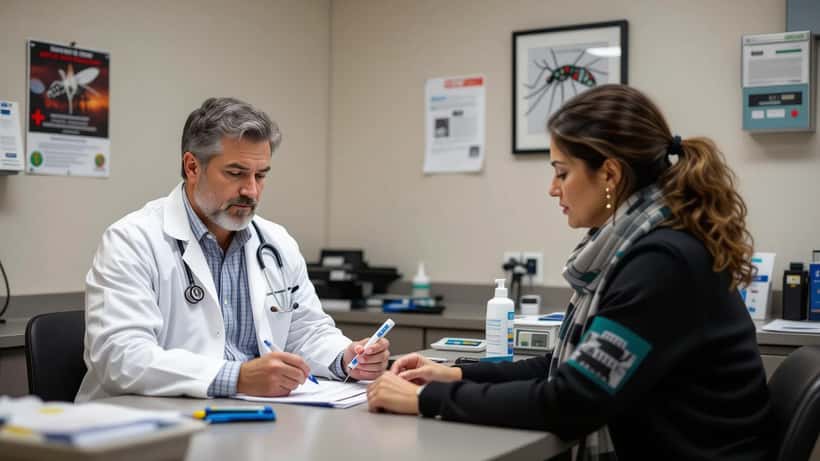
A family doctor or emergency physician will tell you that timing and symptom type are everything with West Nile. Mild fever and aches after a summer of mosquito bites usually do not require a clinic visit. But certain red-flag symptoms should prompt immediate medical attention:
- A sudden, severe headache unlike your usual headaches
- High fever that does not respond to over-the-counter medication
- A stiff neck, especially with light sensitivity
- Confusion, disorientation or difficulty concentrating
- Muscle weakness, tremors, or sudden loss of coordination
- Convulsions or fainting
These are potential signs that the infection has reached the nervous system, and they are a medical emergency. If you or an older family member develop them in the weeks after mosquito exposure, do not wait — go to an emergency department. A doctor can order blood or spinal-fluid tests to confirm the diagnosis and provide supportive care, such as hospitalization and monitoring, that materially improves outcomes in severe cases.
A physician can also help higher-risk patients weigh their symptoms in context. Someone over 60 with diabetes and a new fever should have a lower threshold for seeking care than a healthy 30-year-old with the same reading. This is exactly the kind of judgment call where a brief consultation — even a virtual one — can spare you an anxious weekend of guessing.
Protecting yourself for the rest of the season
Because there is no vaccine for West Nile in humans and no targeted cure, prevention remains the strongest tool. Public health guidance for the 2026 season is straightforward:
- Use an insect repellent containing DEET or icaridin on exposed skin
- Wear long sleeves and pants during peak mosquito hours at dawn and dusk
- Repair torn window and door screens
- Empty standing water from planters, gutters, birdbaths and toys weekly, since Culex mosquitoes breed in stagnant water close to homes
Households with elderly relatives should pay particular attention, as this group faces both the highest odds of severe disease and, often, the most time spent outdoors in gardens during summer.
The bottom line for Canadians
West Nile virus in 2026 is more active than it has been in years, but the practical response has not changed. Reduce mosquito bites, and treat neurological symptoms as the emergency they are. For the overwhelming majority, an infected bite will pass unnoticed. For the small group who develop warning signs — and especially for older adults and those with chronic conditions — a prompt medical assessment is the single most important step you can take.
If you are unsure whether your symptoms cross the line from mild to serious, a qualified health professional can review your situation quickly and tell you whether home care or urgent evaluation is the right call. When it comes to a virus that occasionally attacks the brain, that clarity is worth seeking early rather than late.
This article is for general information and does not replace personalized medical advice. Consult a licensed healthcare provider about your specific symptoms. Official surveillance data is published by the Public Health Agency of Canada.
