 Julia Vachon
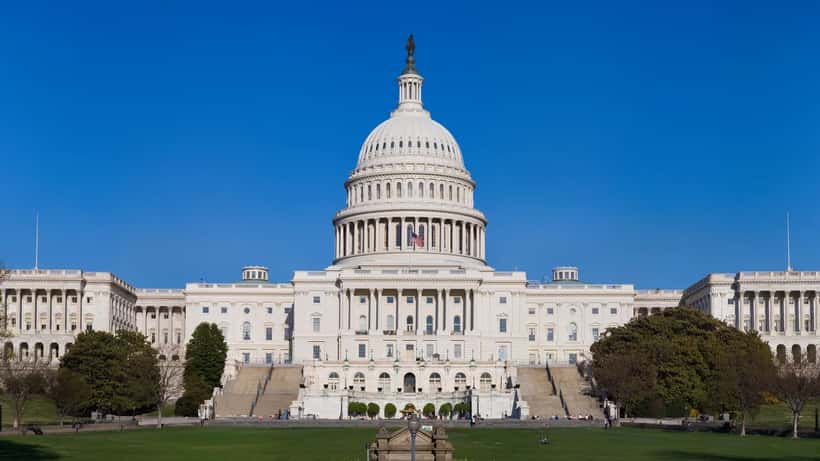
Pennsylvania and Kentucky voted in Democratic primaries on May 19, 2026, sending early signals that the party is serious about reclaiming the U.S. House of Representatives in November. With Democrats needing just three seats to flip the chamber and polling ahead in at least five competitive districts, the political winds are shifting in Washington — and that shift carries direct financial consequences for Canadians who trade with, invest in, or hold assets correlated to the American economy.
Why U.S. Midterms Are a Portfolio Event for Canadians
The United States is Canada's largest trading partner by a margin that no other relationship approaches. Roughly $2.3 billion in goods crosses the Canada-U.S. border every single day. When the composition of the U.S. Congress changes, so does the regulatory and trade environment that underpins much of that commerce.
The 2026 midterms are particularly consequential because they coincide with a scheduled review of the Canada-United States-Mexico Agreement (CUSMA/USMCA) in July 2026. That review — the first since the agreement came into force in 2020 — will determine whether the trade framework is extended, renegotiated, or allowed to lapse. The party that controls the House will have significant influence over any renegotiation terms.
Under the current Republican-controlled Congress, House Democrats voted 219-211 in February 2026 in a rare bipartisan rebuke of the Trump administration's 25% tariffs on Canadian imports. Those tariffs have been estimated to cost American families approximately $1,700 annually — a figure that has become an unexpected campaign issue heading into November. If Democrats flip the House, tariff policy could shift quickly, with direct implications for Canadian exporters, cross-border businesses, and investors holding positions in sectors affected by trade policy.
CUSMA Review in July: The Immediate Deadline Most Canadians Are Missing
Most Canadian investors are watching November's election, but the more immediate deadline is July 2026. The CUSMA review process begins this summer, and the negotiating positions taken by both governments in the coming weeks will shape the trade framework governing the next six years.
According to the Government of Canada's CUSMA overview, the agreement covers automobile manufacturing rules of origin, agricultural market access, digital commerce, intellectual property, and financial services — sectors collectively representing the majority of Canada's export economy. Any renegotiation will touch industries from dairy farming to software development.
For Canadian investors, this is not an abstract geopolitical event. It is a direct determinant of corporate earnings projections, employment trends, and sector rotation within Canadian equity markets. The composition of the U.S. Congress heading into those negotiations will shape how flexible or confrontational the American position is at the negotiating table.
3 Scenarios Every Canadian Portfolio Manager Should Model
Scenario 1: Democrats flip the House in November
A Democratic House would face pressure to roll back or cap the current Canadian tariffs, particularly if those tariffs continue to function as a political liability in swing districts. For Canadian exporters — especially in automotive, lumber, and energy — a tariff reduction could restore margin compressed since early 2025. Canadian equity funds with significant materials and energy exposure could benefit. However, the timing lag between election and policy implementation means that any portfolio repositioning should happen in early 2027, not on election night.
Scenario 2: Republicans maintain the House but Democrats gain Senate seats
This split-Congress scenario would produce legislative gridlock on trade legislation, leaving tariff policy in executive hands. Canadian investors should model for continued tariff pressure through at least mid-2027, with CUSMA review outcomes remaining the primary mechanism for trade normalization. Currency hedging on U.S.-dollar denominated holdings may be worth revisiting with a financial advisor if this scenario appears likely by September.
Scenario 3: Democrats win both chambers
This outcome — currently considered unlikely but not impossible given the Senate map, where Democrats are contesting competitive seats in Alaska, Georgia, and New Hampshire — would give Democrats the ability to pass legislation directly constraining presidential tariff authority. Canadian businesses with cross-border structures, particularly those managing transfer pricing between Canadian and American subsidiaries, would likely benefit from greater regulatory certainty. A wealth advisor can model the tax implications of those structures under each scenario before the outcomes are known.
For broader context on how geopolitical realignment affects Canadian portfolios, the analysis in Xi-Trump Summit and the Thucydides Trap: 4 Portfolio Lessons for Canadians illustrates the scenario-based thinking that protects long-term returns during periods of political uncertainty.
What to Do Before November — and Before July
The standard advice during election cycles is to "stay the course." That advice is sound for most investors — but it assumes your current portfolio was built with these specific risks in mind. If your Canadian equity allocations were set in 2022 or earlier, before the current tariff regime and before the CUSMA review timeline were established, those allocations may be implicitly betting on a trade environment that no longer exists.
A certified financial planner can run a scenario analysis against your specific holdings — evaluating exposure to tariff-sensitive sectors, currency risk in your RRSP or non-registered accounts, and the opportunity cost of current positioning versus a political-realignment scenario. That analysis is most valuable now, when positions can be adjusted deliberately, not in November when markets are already pricing in results.
ExpertZoom connects Canadians with qualified wealth management professionals who specialize in cross-border financial planning. Whether you need a full portfolio review ahead of the CUSMA negotiations in July or a second opinion on your U.S. equity allocation, a scheduled consultation now is more actionable than a reactive conversation after voting day.
The Pennsylvania and Kentucky primaries have started the clock on November. The CUSMA review follows in July. Your portfolio strategy should account for both.
This article is for informational purposes only and does not constitute investment advice. Consult a registered financial advisor before making any investment decisions.
