 Maya MacDonald
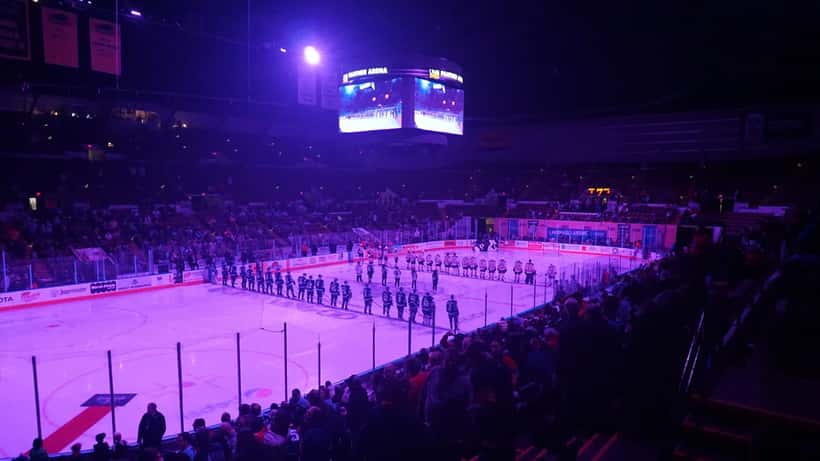
The Toronto Marlies defeated the Cleveland Monsters to advance to the AHL Eastern Conference Finals on May 27, 2026, where they now face the Wilkes-Barre/Scranton Penguins in the franchise's first appearance at this stage since 2019. Canadian hockey fans are tracking every shift. Behind the playoff excitement, the series quietly spotlights a reality that rarely appears in game summaries: AHL hockey carries injury risks serious enough to end careers permanently, and players at the developmental level navigate those risks with meaningfully less medical support than their NHL counterparts.
Understanding that gap — and knowing when an injury requires independent specialist care rather than a team physio — matters to players, families, and any Canadian fan who has followed a prospect's career trajectory with genuine interest.
The Physical Reality of AHL Hockey
The American Hockey League operates as the primary development league for all 32 NHL franchises, combining near-NHL skating speeds with full-contact rules across a demanding 72-game regular season followed by multi-round playoffs. Research published in peer-reviewed sports medicine literature estimates injury exposure rates of approximately 54 incidents per 1,000 hours of play among elite competitive hockey players. A player who accumulates 1,500 ice hours across a four-year AHL career — a reasonable estimate for a developing forward or defenceman — can expect multiple injuries requiring medical attention.
The most frequently injured anatomical areas in elite hockey are the hip and pelvis, accounting for roughly 24% of all injuries, followed by the head at 17.6% and the shoulder. Of those three, shoulder injuries are considered the most burdensome in terms of total games missed and long-term performance impact.
Why the AHL-NHL Medical Gap Matters
In the NHL, every franchise employs dedicated athletic therapists, team physicians, and direct access to orthopaedic surgeons. Players receive imaging within hours of a suspected injury. Specialist consultations happen the same day. In the AHL, resources vary considerably by market. Players on smaller-market franchises may wait days for specialist referrals that an NHL player would receive before the next morning skate.
A 2024 study on hip arthroscopy outcomes in professional hockey found that the overall return-to-sport rate following this common hockey procedure is 79.3%. Roughly one in five players who undergoes hip arthroscopy never returns to professional competition. For players under 30, that rate improves to 90%, which confirms what sports medicine physicians already know: early diagnosis and rapid access to care directly determine career survival. The time between symptom onset and surgical intervention is not a scheduling inconvenience — it is often the deciding variable in whether a player skates professionally again.
Head injuries introduce a further layer of complexity. Post-concussion symptoms are inconsistent and invisible on standard imaging, which creates pressure — rarely formal, but real within locker-room culture — for players to return before they are medically ready. AHL franchises operate under NHL-mandated concussion protocols, but compliance quality is not uniform across all markets.
What Players and Families Can Do
Players in the AHL, and CHL prospects who feed into systems like the Marlies', have more options than they typically use. Teams hold a legal obligation to provide baseline medical support, but that obligation does not prevent a player from seeking an independent evaluation. Any player experiencing persistent joint pain, post-concussion symptoms, or soft-tissue injuries that are not resolving on the team's timeline has the right to consult an outside physician.
The Public Health Agency of Canada maintains guidance for athletes navigating contact-sport injuries, emphasizing that early specialist involvement reduces both recovery time and the likelihood of chronic long-term damage. You can access general injury prevention resources at the Public Health Agency of Canada's health portal. In Ontario, where the Marlies play, provincial health coverage includes medically necessary specialist referrals. In other provinces, a team's group benefits plan typically covers specialist consultations, and any gap can be bridged through a referral from a family physician.
Related coverage of how NHL playoff injuries have affected Canadian hockey players illustrates the physical toll at the top level of the game and why the developmental pipeline deserves the same scrutiny.
Indicators That Warrant Specialist Care
Recognizing when to escalate beyond a team physio is a skill that can protect a career. The following situations warrant an independent sports medicine evaluation, regardless of what a coaching staff or team trainer recommends:
- Joint pain that persists beyond four to six weeks without a clear diagnosis and documented improvement trend
- Recurring headaches, cognitive fog, or visual disturbances following any head contact, even contact that did not draw a penalty
- Shoulder instability or clicking that affects shooting mechanics or pass release
- Hip flexor or groin pain that limits skating stride without a confirmed soft-tissue diagnosis from imaging
AHL players in Ontario can access the provincial health system for specialist referrals. Players in other provinces should confirm what their team's benefits plan covers. Independent assessments from a sports medicine physician or orthopaedic specialist are frequently the fastest route to an accurate diagnosis and an effective return-to-play timeline.
Getting the Right Medical Support
The Marlies' run in the 2026 Calder Cup Playoffs is a reminder that AHL hockey demands elite bodies performing under extreme pressure for months at a stretch. For every player celebrating a series win, there are others managing pain in ways that may shorten careers if left without proper medical attention.
Expert Zoom connects hockey players and families across Canada with verified sports medicine physicians and orthopaedic specialists. Whether a player is working toward an NHL call-up or managing an in-season injury, an independent medical opinion early in the process can change the entire career arc.
This article is for informational purposes only and does not constitute medical advice. Always consult a qualified healthcare professional for any health concerns or injury assessment.
