 Elara Deschamps
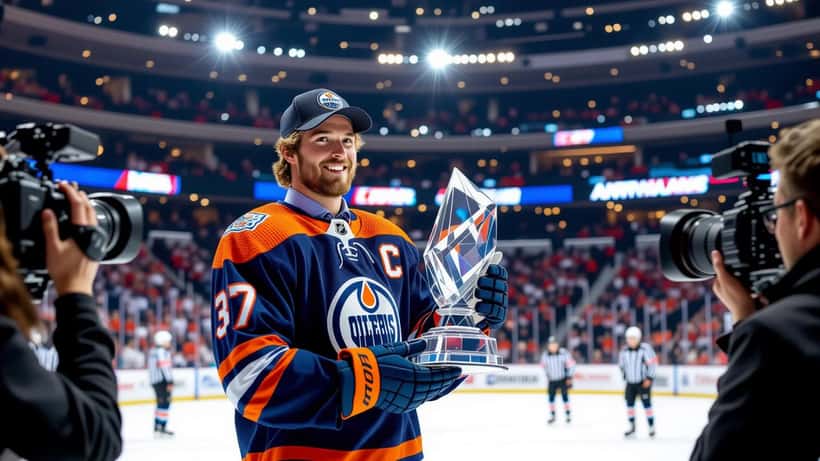
Connor McDavid, Nikita Kucherov and Macklin Celebrini were named finalists for the 2026 Ted Lindsay Award on April 28, 2026, setting up one of the most competitive races in recent memory for the trophy voted on by NHL players themselves. While fans debate who deserves the honour, the bigger story lies in the gruelling physical toll required to sustain MVP-calibre performance across an 82-game season.
McDavid finished the 2025-26 campaign with 138 points, including 90 assists and 48 goals, according to Oilers Nation. Kucherov posted 44 goals and 86 assists for 130 points with Tampa Bay, while Celebrini, the 19-year-old San Jose phenom, recorded 45 goals and 115 points in just his second NHL season. These numbers reflect not only extraordinary skill, but also remarkable durability in a sport where the average career spans less than five years.
What the Ted Lindsay Award Really Measures
First presented in 1972 as the Lester B. Pearson Award and renamed in 2010 to honour Hall of Famer and union pioneer Ted Lindsay, the trophy is bestowed annually on the player judged "most outstanding" by fellow members of the NHL Players' Association. Unlike the Hart Trophy, which is voted on by hockey journalists, the Lindsay Award carries the unique weight of peer recognition. Players understand better than anyone what it takes to perform at that level night after night.
McDavid has already won the award four times (2017, 2018, 2021, 2023), tying him with Mario Lemieux for second all-time behind Wayne Gretzky's five wins. Kucherov captured the trophy in 2025, while Celebrini is a first-time finalist.
The Physical Cost of Elite Performance
NHL players skate at speeds exceeding 30 kilometres per hour, absorbing body checks that generate forces comparable to minor car accidents. According to Sport Canada, the federal government invests in athlete health and safety initiatives that support Canada's high-performance sport system. A 2023 study published in the British Journal of Sports Medicine found that professional hockey players experience musculoskeletal injuries at a rate of roughly 15 per 1,000 athlete exposures, with concussions representing approximately 10 percent of all reported injuries.
For players logging 20-plus minutes per game across a full season, the cumulative wear on joints, tendons and the central nervous system is substantial. McDavid, who turned 29 in January, has already played 697 regular-season games. Kucherov, at 32, has suited up for 754 contests. Celebrini's youth offers him a recovery advantage, but early-career mileage can set the trajectory for long-term durability.
How Sports Medicine Extends Careers
Behind every finalist stands a team of specialists whose work rarely makes headlines. Sports medicine physicians, physiotherapists, athletic therapists and strength coaches collaborate to manage workloads, accelerate recovery and prevent minor issues from becoming season-ending problems.
Load management has become a critical tool. Teams now use GPS tracking and heart-rate variability monitors to quantify fatigue and adjust practice intensity accordingly. Cryotherapy, contrast baths and pneumatic compression devices help reduce inflammation between games. Manual therapy and targeted exercise programmes address muscular imbalances before they manifest as injuries.
For Canadian hockey players at every level, access to qualified sports medicine professionals can mean the difference between a brief stint in junior hockey and a lengthy professional career. A physiotherapist specialising in hockey biomechanics can correct skating stride inefficiencies that strain the hip flexors. A certified athletic trainer can design neck-strengthening protocols that reduce concussion risk. These interventions are not luxuries; they are career-sustaining necessities.
When Should Athletes Seek Expert Help?
Recreational and amateur hockey players in Canada can learn from how elite athletes manage their bodies. Persistent joint pain, recurring muscle strains, or headaches following contact should prompt consultation with a sports medicine professional rather than self-treatment with rest and ice alone.
Early intervention typically shortens recovery timelines and prevents compensatory injuries. A player who ignores a nagging groin pull may alter their skating mechanics, eventually developing lower-back pain or knee issues. Addressing the original problem with targeted rehabilitation breaks that chain.
Parents of young athletes should also consider baseline concussion testing and periodic movement assessments. Identifying asymmetries or weaknesses during adolescence allows corrective training when the body is most adaptable.
The Bigger Picture for Canadian Health
Hockey remains deeply woven into Canadian culture, with nearly 650,000 registered players across the country according to Hockey Canada. The visibility of the Ted Lindsay Award finalists offers a timely reminder that athletic excellence depends fundamentally on health management. Whether aspiring to the NHL or simply trying to stay active on local rinks, players benefit from treating their bodies with the same systematic care that professionals receive.
The 2026 winner will be announced at the NHL Awards ceremony in June. Regardless of whether McDavid claims his fifth Lindsay, Kucherov repeats, or Celebrini becomes the youngest winner since Sidney Crosby, each finalist's season represents a masterclass in physical preparation and resilience.
Consult a sports medicine expert or physiotherapist through Expert Zoom to develop a personalised injury prevention or recovery plan tailored to your athletic goals.
