 Olivia Dubois
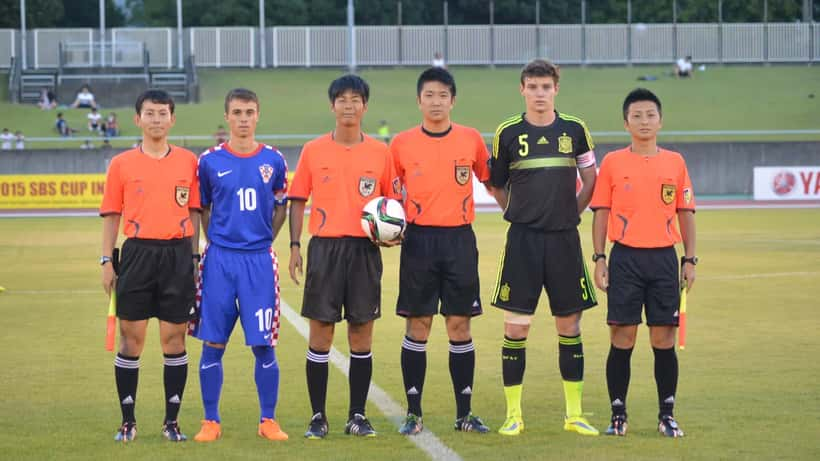
Spain's first-minute blitz against Croatia — Lamine Yamal netting inside two minutes at the Ramón Sánchez-Pizjuán — overshadowed a more sobering subplot from Tuesday's 2-1 Nations League victory: six players from both squads missed the fixture due to physical breakdowns. Eric García, Pedro Porro, and Joan García were absent from Spain's camp; Croatia arrived without Martin Baturina, Josip Juranović, and Martin Erlić. Three players per side, sidelined before the ball was even in play.
Elite football calendars have never been more demanding. For the athletes populating Canada's grassroots leagues, university teams, and weekend amateur pitches, the picture is not dramatically different. The science of sports injury management — and particularly concussion management — has evolved significantly. But awareness among recreational players, youth coaches, and parents has not kept pace.
An Injury-Riddled Fixture and What It Signals
The injury list for September 29's Nations League Group A3 clash was not unusual by modern standards. In an era where elite players rotate through Champions League, domestic league, and international duty with barely a two-week gap, soft tissue and overuse injuries have become endemic. Pedro Porro missed the Spain camp entirely after suffering a thigh problem during Tottenham Hotspur's defeat to Aston Villa. Eric García felt knee discomfort in the Wembley warm-up against England and was replaced by Robin Le Normand on short notice.
Croatia's losses were even more abrupt: illness claimed Baturina and Juranović, while Erlić was ruled out by injury. The result was a Nations League fixture played by both teams without key squad members — a microcosm of football's broader injury crisis.
For Canadian athletes, the lesson isn't about elite squad depth. It's this: high-contact sport damages the body, and the protocols we use to manage that damage — especially for head injuries — matter enormously. According to the Public Health Agency of Canada, concussions are among the most common sport-related injuries in the country, accounting for an estimated 200,000 medical visits annually.
Why Football Head Injuries Demand a Sports Medicine Perspective
Football is a full-body contact sport. Aerial challenges, heading duels, accidental elbow-to-temple contact, goalkeeper dives, and mid-sprint collisions all carry concussion risk — and not all of those incidents look dramatic from the sideline.
A 2026 systematic review published in the Journal of Science and Medicine in Sport found that football players who experienced concussion were 50% more likely to return to training before completing a full return-to-play protocol — primarily because symptoms like persistent headache, dizziness, and difficulty concentrating are easy to minimize in the adrenaline of competition. The consequences of premature return are not trivial. Second-impact syndrome — a rare but serious condition triggered by a second concussion before the brain has fully healed from the first — can cause permanent neurological damage.
Even without a second impact, research suggests that athletes who are rushed back through the protocol take an average of three to four weeks longer to fully recover than those who complete each stage properly. Canada's youth football associations have adopted heading restrictions in recent years: no heading for players aged 11 and under; limited heading (approximately 30 minutes per week maximum) for players aged 12 to 13; no restriction for players 14 and above. These rules exist precisely because developing brains are more vulnerable to repeated mechanical stress. But the rules only work if coaches and parents can recognize a concussion when it happens — and if they know what comes after.
What Happens When a Sports Medicine Expert Reviews These Cases
A sports medicine physician watching Spain vs Croatia on September 29, 2026, would see not just tactics and results, but a real-time case study in how professional clubs now integrate medical staff into squad management. The fact that both teams voluntarily withdrew injured players from the squad — rather than risking further harm during training or match play — reflects a significant maturation in sports medicine culture at the elite level.
At the recreational level, that culture is still developing. According to Parachute Canada, fewer than 40% of youth coaches across the country have received formal concussion training. Many youth sporting environments still operate under an informal "walk it off" ethos that prioritizes continued participation over safety. The gap between a professional football club's medical infrastructure — sports physicians, physiotherapists, dedicated concussion assessment tools like the Sport Concussion Assessment Tool 6 (SCAT6) — and what's available to a volunteer coach running a Sunday-morning under-15 league is enormous. That gap is precisely where most concussion mismanagement occurs in Canada.
A sports medicine consultation after a suspected concussion isn't a luxury. It's the difference between a recovery that takes 8 days and one that takes 8 weeks.
Scenario: The 15-Year-Old Who "Feels Fine" Two Minutes Later
Consider a situation that unfolds on pitches across Canada every weekend: a 15-year-old midfielder goes up for a header and takes an elbow to the temple. She shakes it off, jogs back into position, and tells her coach she feels fine. The coach, seeing no visible bleeding or loss of consciousness, lets her play on. The game ends. The next day she has a headache. Her parents give her ibuprofen and send her to school.
Under the six-stage return-to-play protocol endorsed by the Public Health Agency of Canada, this athlete should have been removed from play immediately for a sideline concussion assessment. Here is what proper management requires, stage by stage — and the timeline that applies:
- Day 0 (match day): Remove from play. 24 to 48 hours of cognitive and physical rest, including reduced screen time and ideally no school if symptoms are present.
- Day 2–3: Light aerobic activity only — walking, gentle cycling — provided she is entirely symptom-free at rest.
- Day 4–5: Sport-specific exercise such as light running patterns, with no contact or heading.
- Day 6: Non-contact drills — passing, positioning — at moderate intensity.
- Day 7: Full training with contact, only after medical clearance.
- Day 8 or later: Return to competitive match play.
The critical number: a minimum of eight days between initial injury and return to competition, assuming no symptoms recur at any stage. If a symptom reappears at Stage 3, the protocol resets to Stage 2. Many athletes rushed through the process in three or four days rather than eight or more experience symptom relapse — and that second recovery typically takes significantly longer.
Had this 15-year-old been allowed to play on, taken another aerial contact 20 minutes later, and suffered a second impact on a partially injured brain, the recovery timeline could extend to six to twelve weeks, with a measurable risk of longer-term cognitive effects including difficulty concentrating in school, persistent headache, and sensitivity to light. A sports medicine expert can provide the formal clearance documentation her school and insurance provider may require.
The Six-Stage Protocol: Not a Shortcut, but a Road Map
Each of the six return-to-play stages exists for a specific reason: it stress-tests the brain's recovery under progressively higher physical and cognitive loads. Skipping a stage doesn't save time — it creates a false positive. The brain may feel recovered during light exercise but remain functionally compromised under the sustained cardiovascular demand of a 90-minute match with headers, sprints, and collision stress.
For athletes under 18, a parallel return-to-learn protocol runs alongside the physical stages. Being symptom-free during classroom activities and homework is a prerequisite before advancing to non-contact training. This surprises many parents: concussion recovery isn't only physical. Reading, sustained concentration, and screen exposure can all prolong symptoms if reintroduced too quickly. Coordinating with the school about academic accommodations — extended deadlines, reduced screen time, a quiet testing environment — is part of a complete concussion management plan.
For more on how sports medicine injuries affect athletes at the elite and recreational levels, see our breakdown of what Kenan Yıldız's calf injury reveals about athlete load management and when to seek a specialist.
Five Steps Canadian Athletes and Parents Should Take After a Head Knock
Spain and Croatia arrived in Seville missing six players — elite athletes with entire medical departments monitoring their every training load and recovery metric. Recreational Canadian athletes have no such safety net. What they do have is access to evidence-based protocols and, increasingly, access to sports medicine expertise through digital platforms.
If you or your child takes a head knock during play, the evidence supports the following:
- Remove from play immediately. Do not wait for obvious symptoms — concussion often presents gradually, with full symptom onset occurring 30 to 60 minutes after the initial impact.
- Do not return the same day. Even if the athlete feels fine after 20 minutes, same-day return increases second-impact risk significantly.
- Seek a physician's clearance before starting any stage of the return-to-play protocol — self-assessment is not sufficient.
- Follow the six-stage protocol in full sequence — minimum eight days under typical recovery, longer if any symptoms recur.
- Document everything — dates of injury, symptom progression, clearance notes — in case school accommodations, insurance claims, or follow-up care are needed.
If you're uncertain about concussion symptoms, need help navigating the return-to-play or return-to-learn process, or want a formal medical clearance before your athlete returns to competition, a health expert or sports medicine specialist can provide personalized guidance. Expert Zoom connects Canadians with qualified health professionals who specialize in sports medicine consultation — no referral required, with appointments typically available within 24 hours.
This article is intended for informational purposes and does not constitute medical advice. A qualified healthcare professional should always assess and manage any suspected concussion.
