 Stéphanie Fournier
When Montreal Mayor Soraya Martinez Ferrada disclosed in June 2026 that her husband — a Black man — had been stopped by city police "at least five or six times — for nothing" in a single year, it crystallized a question thousands of Canadians had been asking quietly: what legal protection do you actually have when you believe police stopped you because of your race?
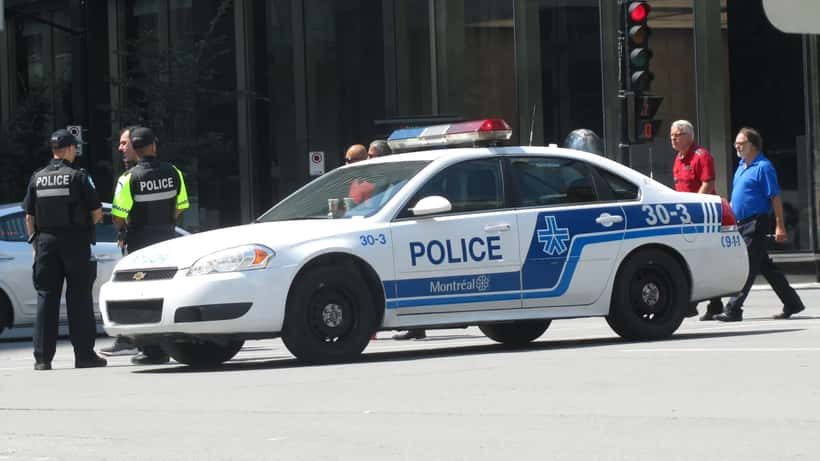
The revelation came amid a sweeping investigation into Station 39 in Montréal-Nord, where 16 police officers were removed from patrol duties for alleged racist and hateful acts committed against Black and Arab residents, including tickets issued solely on the basis of ethnic background, according to CBC News reporting from June 2026. Two officers were suspended outright; 14 others were reassigned, and the SPVM dismantled the unit's night patrol entirely. Mayor Ferrada called the allegations "extremely disturbing" and acknowledged that "the bond of trust between the public and police has been weakened."
For many residents — not just in Montreal, but across Canada — the scandal opened a door to a question that is both deeply personal and legally complex.
The Question Canadians Are Actually Asking
The question is deceptively simple: if an officer pulls you over, stops you on the street, or follows you through a store — and you believe race was the reason — what exactly can you do about it?
The answer involves three overlapping bodies of law: the Canadian Charter of Rights and Freedoms, the Canadian Human Rights Act, and provincial human rights codes. Understanding how they interact — and where they fall short — is where a legal expert becomes indispensable.
What Canadian Law Actually Says About Racial Profiling
Racial profiling is not merely a social concern in Canada — it is a recognized legal concept affirmed by courts and human rights tribunals. The Supreme Court of Canada has confirmed that racial profiling violates the equality rights guaranteed under section 15 of the Canadian Charter of Rights and Freedoms. Section 9 of the Charter also protects against arbitrary detention, meaning a police stop made without objective grounds is, on its face, unlawful.
The Canadian Human Rights Act (R.S.C., 1985, c. H-6) prohibits discrimination in services provided by federal entities, which includes the RCMP. Provincial codes — including Quebec's Charter of Human Rights and Freedoms — apply to municipal police forces like the SPVM. According to the Canadian Human Rights Commission, the legal test focuses on effect, not intent: a complainant does not need to prove that an officer harboured racist attitudes — only that race was a factor in the differential treatment received.
Proving this typically requires a combination of personal testimony, pattern evidence (repeated stops without legal outcome, as in Mayor Ferrada's husband's case), and corroborating accounts.
What you cannot do, however, is invoke these protections without documentation. And that is precisely where most Canadians lose their cases before they even begin.
Your Rights During a Police Stop
When a police officer stops you — whether on foot or in a vehicle — Canadian law entitles you to specific protections. Under the Canadian Charter of Rights and Freedoms:
- You have the right to know why you are being stopped. Section 9 protects against arbitrary detention. An officer who stops you must have an objective, articulable reason — not a suspicion based on appearance alone.
- You have the right to be told of your right to counsel. If you are detained, section 10(b) requires the officer to inform you immediately that you can contact a lawyer without delay.
- You have the right to remain silent. Beyond identifying yourself in certain provincial contexts, you are not required to answer questions.
These rights exist on paper. Asserting them calmly, clearly, and without escalation — and knowing the difference between a voluntary conversation and a legal detention — is where advance legal guidance makes the most practical difference.
When Four Traffic Stops Become a Human Rights Complaint
Consider the situation of Marcus, a 38-year-old teacher living in Montréal-Nord who drives a newer-model SUV. Between January and July 2026, Marcus was pulled over by SPVM officers four times in his own neighbourhood. Each stop lasted between 8 and 25 minutes. On each occasion, he received no ticket, no warning, and no explanation beyond "routine check." On two occasions, officers asked whether the vehicle was his.
Under Quebec's Charter of Human Rights and Freedoms (RLRQ, c. C-12), four stops in seven months with no legal outcome constitutes a potential pattern of differential treatment based on a prohibited characteristic. A complaint filed with the Commission des droits de la personne et des droits de la jeunesse (CDPDJ) would be evaluated against this documented pattern.
If Marcus had logged each stop — date, time, officer badge number, duration, exact words used, and whether nearby vehicles were also stopped — his case becomes substantially stronger. A legal expert evaluating this file would typically assess a 30–40% success rate at the complaint stage without independent witnesses, rising to 55–65% if the pattern can be corroborated by dashcam footage or additional testimony. Tribunal-ordered remedies in comparable Quebec racial profiling cases have ranged from $5,000 to $25,000 in moral damages, alongside orders to cease the discriminatory conduct.
Critically: if Marcus waited more than 12 months from the date of the first stop before filing a CDPDJ complaint, the Commission could dismiss it on limitation grounds — one of the most common and entirely preventable failures in racial profiling cases. A legal consultant can identify which incidents still fall within the limitation window, what evidence to preserve going forward, and whether a human rights complaint, a civil suit under article 49 of the Quebec Charter, or both, represents the optimal path.
Five Steps to Take Right After a Stop You Believe Was Discriminatory
The actions taken in the hours immediately following a stop can determine whether a complaint ultimately succeeds or fails. Legal practitioners specializing in racial profiling in Canada consistently prioritize five steps:
- Write everything down within 24 hours: exact time, location, the officer's badge number or name (you can ask directly), what was said, how long the stop lasted, the stated reason if any, and what you were doing just before being stopped.
- Note your surroundings: were other vehicles or pedestrians present? Were any of them also stopped?
- Retain any paperwork: a ticket, a warning notice, a business card from the officer — all become evidence in a complaint file.
- Avoid social media before consulting a lawyer: public statements, even those expressing justified frustration, can be used to challenge your credibility in tribunal proceedings.
- Act promptly: the 12-month limitation period runs from the date of each discriminatory act, not from when you decided to take action.
What Montreal's Scandal Changes for the Rest of Canada
The SPVM investigation carries significance well beyond Montreal. It has established, with unusual clarity, that racial profiling by municipal police forces can constitute systemic — not merely individual — misconduct. The case has already prompted Quebec's Domestic Security Minister Ian Lafrenière to appoint an independent observer to monitor the investigation, and the province's Director of Criminal and Penal Prosecutions has been notified, meaning criminal charges against individual officers remain a possibility.
Mayor Ferrada's personal disclosure, as a serving public official with direct authority over the SPVM, substantiates the "pattern" element that human rights tribunals look for when assessing systemic discrimination claims. Human rights practitioners in Toronto, Vancouver, Calgary, and Halifax are watching Montreal closely — not because racial profiling is new in those cities, but because the evidentiary pattern now being documented provides a template for building cases elsewhere.
For any Canadian who has been stopped and suspected race played a role: the legal tools exist, the evidentiary thresholds are achievable with proper documentation, and the limitation clock is already running. The gap between a legally viable claim and one dismissed on procedural grounds is almost always a matter of preparation — which is precisely what a qualified legal expert can help you build before time runs out.
This article is for informational purposes only and does not constitute legal advice. Racial profiling complaints involve complex provincial and federal legal processes. Consult a qualified legal expert before taking any action specific to your situation.
