 Eliza Perron
Justice Sonia Sotomayor warned this month that the US Supreme Court is facing an "unprecedented" surge in emergency applications — and her remarks are sparking debate across North America about judicial independence, the pace of legal change, and what citizens can do when the law shifts rapidly beneath their feet.
What Sotomayor Said — and Why It Matters Now
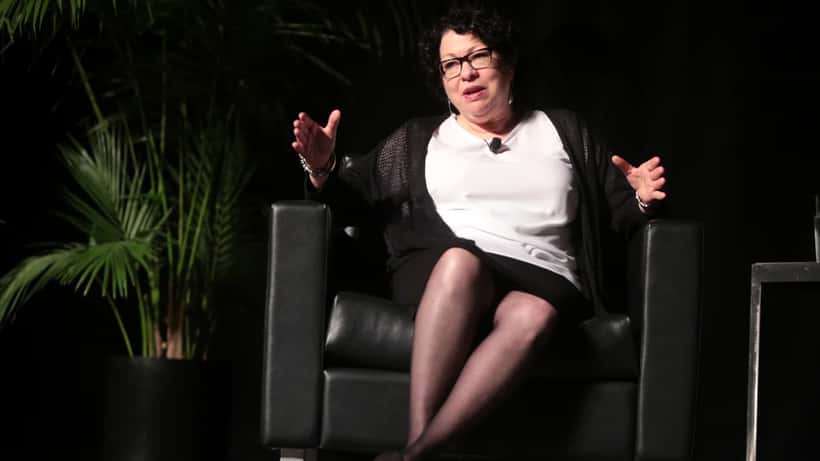
On April 7, 2026, Justice Sotomayor addressed roughly 1,700 people at the University of Kansas, delivering one of her most pointed public speeches in years. Her message was direct: people have the power to change bad laws, but that power requires civic courage and legal knowledge to exercise.
"Laws are made by people. Policies are made by people. Bad policies can be changed by people," she told the Lawrence crowd, according to reporting by the Lawrence Journal-World.
Her concern goes beyond rhetoric. Since early 2025, the Trump administration has filed approximately 30 emergency applications with the Supreme Court — an unprecedented volume by historical standards. The Court has ruled in the administration's favour in more than 80% of those cases, according to reporting by Newsweek. Sotomayor, one of only three justices appointed by Democratic presidents on the current 6-3 conservative bench, has become one of the loudest dissenting voices.
Emergency Applications: A Fundamental Shift in How Law Is Made
For most of the Supreme Court's modern history, emergency applications — often called the "shadow docket" — were reserved for narrow, genuinely urgent situations: stopping an imminent execution, halting a regulation hours before it took effect. They were rare. The Supreme Court of the United States publishes its full docket publicly, and the recent volume of emergency filings is visible to anyone who checks.
What's happening now is different. Policies on immigration, environmental regulations, and administrative authority are being decided at emergency speed, without full briefing, oral argument, or the deliberate back-and-forth that defines standard Supreme Court review.
"This represents a fundamental change in the Court's traditional approach," Sotomayor warned, and legal scholars across the ideological spectrum have echoed that concern. Harvard Law professor Laurence Tribe described the shadow docket as "the new normal," one that allows sweeping policy changes to take effect before lower courts — or the public — can adequately respond.
Why Canadian Lawyers Are Watching
Canada and the United States share a legal heritage rooted in British common law, a deeply interconnected economy, and overlapping constitutional values around due process and judicial review. When the world's most powerful court alters its operating norms, the effects ripple northward — in cross-border business disputes, immigration cases involving dual citizens, and the intellectual frameworks that Canadian law schools teach.
More immediately, many Canadians find themselves entangled in US legal proceedings: Americans living in Canada, Canadians working for US companies, dual citizens navigating tax law, or families separated by immigration decisions. When US courts shift rapidly, those caught in the middle often need guidance that crosses both jurisdictions.
A lawyer with experience in international or cross-border legal matters can help you understand how changes in US federal policy affect your specific situation — whether that's a pending visa application, a business contract governed by US law, or a family matter involving American courts.
What "Unprecedented" Means for Ordinary People
The shadow docket's expansion is not just an abstract legal controversy. It has real consequences for real people.
Consider immigration. In one case Sotomayor cited directly in her dissent, the Court allowed immigration stops based partly on race and language — what she called "Kavanaugh stops," named after the justice who authored the majority opinion. Similar policies affect Canadian permanent residents who travel to or through the United States.
Or consider regulatory changes. When the EPA's authority to limit industrial emissions was curtailed at emergency speed, businesses on both sides of the border faced sudden uncertainty about environmental compliance standards for cross-border operations.
For individuals and businesses, the core problem is the same: decisions are happening faster than most people can track, and the window to seek legal advice before a policy change takes effect is shrinking.
The Canadian Judicial Context: A Different Model
Canada's legal system offers an instructive contrast. The Supreme Court of Canada does not use an emergency application mechanism in the same expansive way. Applications for emergency stays are heard on notice to both parties, with at least minimal written submissions. The Court's constitution prevents any single justice from acting unilaterally on emergency requests.
This doesn't make Canadian courts immune to political pressure or rapid change — but the institutional design creates friction that tends to slow the pace of major legal shifts, giving lawyers, businesses, and citizens more time to adapt.
Understanding these structural differences matters if you are navigating a legal situation with any cross-border dimension. The rules, timelines, and remedies available to you may differ significantly depending on which legal system governs your case.
What to Do If the Law Is Moving Faster Than You
Sotomayor's broader message at the University of Kansas was ultimately one of civic empowerment. She reminded her audience that democratic systems have built-in mechanisms to push back against overreach — but using those mechanisms requires knowledge, and knowledge often requires expertise.
If you are uncertain how recent shifts in US federal law affect your situation — whether in immigration, business, employment, or family law — consulting a qualified lawyer is the most direct way to get clarity.
Disclaimer: This article is for informational purposes only and does not constitute legal advice. If you have a specific legal situation, consult a licensed lawyer in your jurisdiction.
Legal systems change quickly — and in 2026, they are changing faster than usual. Getting professional guidance early is almost always better than waiting until a deadline has passed or a right has been lost. Expert Zoom connects Canadians with qualified legal professionals who can help you understand what the current moment means for your specific situation.
