 Maya MacDonald
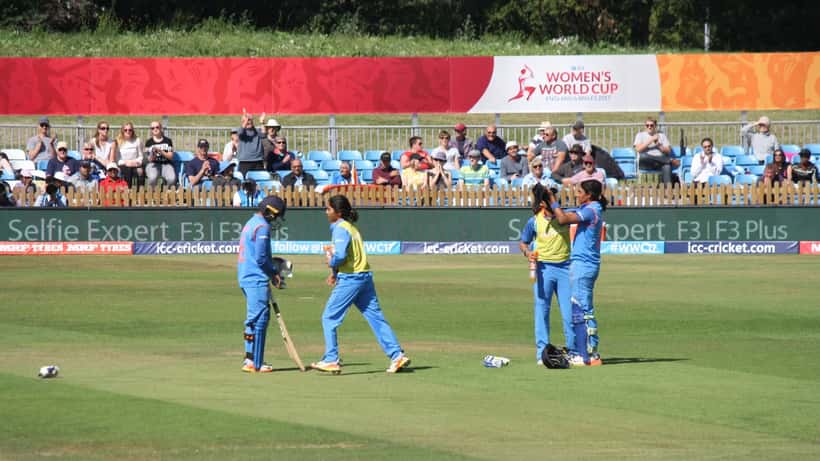
When Sri Lanka Women completed a commanding 2-0 T20I series victory over Pakistan Women on August 2, 2026 in Dambulla, it sent a clear signal to the cricket world: women's cricket has arrived as a force of its own. Athapaththu and Kavindi's all-round brilliance captivated fans across South Asia — and lit up search trends in Canada, where the women's game is quietly but steadily growing.
But behind every boundary hit and wicket taken lies a physical toll that too many female cricketers — from elite touring sides to recreational players in Toronto and Vancouver — are not fully prepared for. According to emerging research, women cricketers face a higher injury burden than their male counterparts, and most have limited access to the specialist care they need.
The Boom Nobody Talks About
Canada is not Sri Lanka or Pakistan, but women's cricket here is expanding faster than many realize. Community leagues across Ontario, British Columbia, and Alberta now field dozens of women's teams that didn't exist five years ago, and Cricket Canada's national program has seen sustained growth in registered players since 2022.
The SL-W vs PAK-W series offered a window into that global growth. Sri Lanka Women dominated the Pakistan Women's side across both formats during the tour: winning the ODI series convincingly and then clinching the T20I series 2-0, a performance that reflects years of structured investment in the women's game. Pakistan showed genuine quality — particularly with the bat — but Sri Lanka's physical conditioning and workload management made the difference in the final stages of each match.
What fans watching the highlights rarely see is the injury toll that accumulates over a gruelling international schedule: the hamstring strains, the tibial stress fractures in bowling arms, the shoulder impingements, and the ankle sprains that cut careers short. These are not problems reserved for elite athletes. They are problems increasingly showing up in Canadian recreational cricket, and the window for early intervention is far shorter than most players assume.
What the Research Now Shows
For decades, sports injury research was conducted almost exclusively on male athletes, with findings applied — often incorrectly — to women. That is finally changing, and the emerging data on women's cricket is striking.
A 2026 study published in the British Journal of Sports Medicine examined injury incidence and prevalence across the women's cricket performance pathway in England and Wales over three competitive seasons. The findings were clear: injury rates in women's cricket exceeded those previously recorded in men's community-level cricket, driven by a combination of increased fixture density, workload mismanagement, and biomechanical differences between male and female athletes. You can access the full study abstract via PubMed (NCBI, US National Library of Medicine).
Three key injury patterns stood out in the research:
- Lower limb stress fractures, particularly in fast and medium-pace bowlers who are under-conditioned for repetitive high-impact loads
- Rotator cuff and shoulder injuries from throwing mechanics that differ significantly from bowling action and are often underdiagnosed
- Ankle and knee injuries linked to multi-directional movement on uneven outfield surfaces
Canadian researchers at the University of Calgary, working as part of a 109-strong international team, published recommendations in 2026 noting that injury and concussion rates among women and girl athletes are rising in direct proportion to surging participation numbers. The central finding: injury prevention protocols designed for male athletes are being applied to female players without adaptation, and the gap is measurable.
The Pattern Clinicians Are Seeing in Canada
Sports medicine specialists in Canadian cities are increasingly seeing a specific presentation among recreational female cricketers — and it follows a recognizable pattern.
A woman plays cricket for fun, usually at the weekend-league level. The season is short — May through August — and training between matches is minimal. Then comes a weekend tournament, a charity fixture, or a sudden surge in the schedule. Workloads spike. Recovery time collapses. Within days or weeks, an injury that was entirely preventable has become a clinical problem.
The most common entry point is lower limb pain — specifically, shin or foot pain that begins during activity and then persists at rest. Most women wait weeks before seeking care, attributing the pain to soreness or overuse that will resolve on its own. Sometimes it does. Often, it does not.
A Scenario That Plays Out Across Canada
Consider the following situation, which mirrors the presentations sports medicine clinicians in Ontario and British Columbia increasingly encounter.
A 27-year-old right-arm medium-pace bowler plays for a recreational league in Brampton. Over a typical summer weekend tournament, she bowls 18 to 22 overs across two back-to-back matches on consecutive days. Her workload in the preceding four weeks had been light — one net session per week and a single Saturday match. Then came the tournament.
By Sunday evening, she notices sharp pain along the lateral edge of her right shin, worsening through her bowling run-up. She finishes the day. By Monday, the pain is present at rest.
This is a textbook stress reaction — the precursor to a full stress fracture. Here is the critical if/then logic that determines her outcome:
If she seeks imaging within 5 to 7 days: an MRI can detect a Grade II tibial stress reaction before it progresses. Managed correctly, she returns to play in 4 to 6 weeks with a graduated load-return protocol.
If she waits 6 to 8 weeks before seeking professional assessment — which is what most recreational athletes do — the stress reaction may have progressed to a Grade IV stress fracture. Recovery extends to 10 to 14 weeks. In a worst case, a displaced fracture requires surgical fixation and a 4 to 6 month timeline.
The difference between these two outcomes is roughly $200 — the cost of a private MRI in Ontario if not covered through provincial referral — and one week's delay in seeking care. X-rays alone miss up to 70% of early stress reactions, which is why a sports medicine consultation, not just a GP visit, matters.
For women who play cricket at any level in Canada, that specific threshold — bone pain at rest, persisting beyond 48 to 72 hours — is the line at which waiting becomes genuinely costly.
Why Women Face a Distinct Risk Profile
The biomechanics of bowling in women's cricket create specific injury pathways that differ from men's. Female athletes typically have a wider pelvis relative to femur length, producing a greater knee valgus angle. This affects how ground reaction forces travel through the lower limb on each delivery stride, concentrating stress in patterns that men's conditioning programs do not account for.
Hormonal variation also plays a documented role. Research consistently shows that ACL injury risk in female athletes peaks during the pre-ovulatory phase of the menstrual cycle, when oestrogen levels are elevated and ligament laxity increases. This is almost never discussed in recreational cricket contexts — but it is a factor that a sports medicine specialist can help a player monitor and build into a training structure.
Shoulder injuries in female cricketers follow a similar under-detection pattern. Women who bowl at medium pace often develop subtle rotator cuff tears that present as general fatigue or vague "soreness," not acute pain. Without formal assessment, the tear can progress over one or two seasons into a significant structural injury requiring surgical intervention.
Signs That Warrant Expert Attention
A sports medicine consultation is appropriate — not optional — when any of the following are present:
- Bone pain at rest: Any pain in the shin, foot, or forearm that persists after activity stops and does not resolve within 48 to 72 hours
- Shoulder clicking combined with weakness: Audible joint sounds during throwing or bowling paired with measurable difficulty lifting the arm to shoulder height
- Swollen knee after activity: Effusion (fluid accumulation) in the knee is never a normal soreness response and always warrants imaging
- Wrist or hand pain after batting: Hamate fractures from repeated bat-handle vibration are frequently misdiagnosed as sprains
- Persistent headache or cognitive changes after a blow: Concussion management at the recreational cricket level in Canada remains inconsistent — specialist oversight matters
Timing is the variable that determines outcomes. A sports medicine specialist consulted in the first week of a new injury can typically redirect the trajectory entirely. The same injury, managed with rest alone for four to six weeks, often takes three to four times as long to resolve — and may not resolve fully.
Getting the Right Care Before the Damage Compounds
Many Canadian female cricketers assume that sports medicine care is expensive, slow to access, or reserved for elite athletes. In practice, none of those assumptions hold.
Most provincial plans cover initial sports medicine consultations when referred through a family physician. Private clinics in major Canadian cities offer consultations within 48 to 72 hours for acute presentations. An assessment includes movement screening, palpation, functional testing, and where appropriate, a referral for imaging — OHIP-covered in Ontario for medically indicated scans.
A specialist will also review workload: how many overs per week, how many matches per season, and whether a mismatch exists between current conditioning and playing volume. That mismatch — identified in the 2026 research on women's cricket injury pathways — is the leading modifiable risk factor for serious injury.
You can explore cricket injury trends and the broader evidence base for women's sports medicine on the india women vs england women cricket analysis on Expert Zoom.
The SL-W vs PAK-W series is worth watching for the cricket. It is also worth treating as a prompt to think about physical preparation and medical access for female players in Canada. The margin between a stress reaction and a stress fracture — or between a sore shoulder and a torn rotator cuff — is narrow. The margin between consulting a sports medicine expert early and waiting until the injury is established is far wider than most players realize.
This article is for informational purposes only and does not constitute medical advice. If you are experiencing pain or injury symptoms, consult a qualified sports medicine specialist or physician promptly.
