 Dimitri
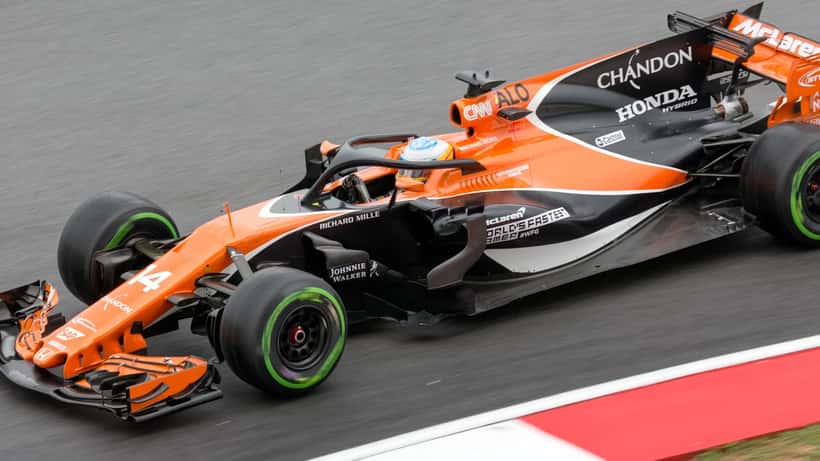
 Formula 1 confirmed on July 26, 2026, that Malaysia's Sepang International Circuit will host the relocated Bahrain Grand Prix on October 2–4 — marking the sport's first return to Asia since 2017. For the engineers and mechanics who keep F1 cars running at 320 km/h under tropical heat, Sepang is not just a legendary circuit. It is the world's most demanding laboratory for vehicle heat management, and the lessons it teaches apply directly to every car on Canadian roads this summer.
Why Sepang Is the Ultimate Test of Vehicle Engineering
The Sepang International Circuit sits 5 kilometres south of Kuala Lumpur International Airport in conditions that routinely reach 35°C with 90% humidity on race day. In Formula 1, this is classified as extreme. Tire pressures fluctuate by up to 30 kPa between the formation lap and mid-race. Cooling duct configurations must be redesigned from European-spec. Engine management software is rewritten entirely for tropical ambient temperatures.
When Malaysia last hosted F1 in October 2017, three cars retired due to cooling-related failures in a race that finished under a safety car. The engineering post-mortems from that event have shaped how every team approaches thermal management to this day. The lesson learned was stark: at Sepang, heat is not a background variable. It is the primary technical threat.
The Sepang circuit's return to the 2026 calendar arrives between the Azerbaijan Grand Prix and the Singapore Grand Prix, creating a compressed triple-header from September 26 to October 11. Teams are now spending millions preparing their cars for the Malaysian climate — a level of heat-engineering investment that puts everyday automotive maintenance in sharper relief.
What F1 Thermal Engineering Tells Every Canadian Driver
"The difference between a winning car and a retirement at Sepang is often 2°C in coolant temperature," according to the engineering logic that has driven every F1 operation in Malaysia. Canadian road cars face a structurally identical challenge every summer — and most drivers are entirely unaware.
A certified automotive mechanic specializing in performance diagnostics will confirm the same pattern. July and August in Canada — particularly during heat events above 33°C in Ontario, British Columbia, and Quebec — place the same category of stress on a consumer vehicle's cooling system. The physics are identical to what Sepang imposes on a Formula 1 chassis. The difference is scale, not physics. Coolant temperature thresholds, pressure integrity, and thermostat calibration operate on the same engineering principles whether the vehicle is a $14-million F1 car or a 2018 Toyota Camry.
Transport Canada's vehicle safety guidance identifies cooling system failure as one of the three leading causes of highway breakdowns in summer months, alongside tire blowouts and brake fade. Yet unlike tire pressure — which many Canadian drivers now check seasonally — cooling system inspections are frequently skipped between oil changes, even on vehicles approaching 100,000 kilometres.
The F1 return to Sepang in October 2026 is a timely prompt. Before the race weekend arrives, ask yourself: when did a certified mechanic last inspect your vehicle's cooling system under load conditions?
When Summer Heat Becomes a Real Problem: A Canadian Driver's Scenario
Consider a situation that plays out thousands of times in Ontario each July. Picture a 2019 Honda CR-V with 87,000 kilometres, driven daily by a commuter on the two-hour highway run from Toronto to Barrie. Outside temperature is 34°C. Air conditioning is running at maximum. The owner had an oil change in March 2026 but has not had a dedicated cooling system inspection since early 2024.
If the coolant level has dropped by just 15% below the manufacturer's minimum fill line — a condition that develops silently over two to three years without visible leaks — no dashboard warning appears. The engine management system stays silent until coolant temperature reaches approximately 110°C, well above the safe operating threshold of 90–95°C for most passenger vehicles. At that point, the thermostat restricts coolant flow and the radiator fan runs at full speed. Within 20–30 minutes of sustained highway driving in 34°C ambient heat, head gasket stress begins to increase significantly.
The if/then logic is concrete. If a vehicle has no coolant pressure test in the last two years and exceeds 60,000 kilometres, then driving 45+ minutes in 32°C+ heat creates measurable mechanical risk — even with a clean dashboard. A coolant pressure test at a certified shop takes under 30 minutes and costs $65–$95 CAD, depending on the province. Replacing a head gasket that fails as a result of sustained overheating costs between $1,800 and $3,500 CAD on most mid-size vehicles.
The math is not complicated. The F1 engineers preparing for Sepang understand this instinctively. Most Canadian drivers have never been shown it.
Four Checks F1 Teams Run That Your Mechanic Should Too
In Formula 1, no car leaves the garage for a hot-weather session without a structured pre-run checklist. For Canadian road vehicles in summer 2026, certified automotive technicians recommend four equivalent verifications — each grounded in the same engineering logic applied at high-heat circuits like Sepang.
Coolant level and mixture concentration. Check the coolant reservoir (never the radiator cap directly on a hot engine) when fully cold. Coolant should sit between the MIN and MAX marks, and the mixture should be tested with a refractometer or hydrometer to confirm the correct antifreeze-to-water ratio. In Canadian conditions, a 50/50 mix provides year-round protection and raises the boiling point to approximately 126°C — well above summer operating temperatures.
Thermostat function. A thermostat stuck in the closed position causes rapid overheating on hot days, even when the rest of the cooling system is functioning correctly. This is one of the most common causes of summer roadside breakdowns in Canada and typically costs $120–$180 CAD to diagnose and replace — far less than the downstream damage from an overheated engine.
Radiator fan relay and operation. Test that the electric cooling fan activates both when the air conditioning is engaged and when the engine approaches operating temperature. A failed fan relay is a $25–$40 part but is responsible for a disproportionate share of summer highway incidents. On vehicles manufactured before 2015, fan relays should be inspected as part of any summer maintenance visit.
Tire pressure adjusted for ambient heat. F1 engineers at Sepang measure and correct tire pressures multiple times per session because tire pressure increases by approximately 1 PSI per 10°C of temperature gain. The same physics applies to road tires: a tire inflated to its correct cold-weather spec of 32 PSI in a Canadian winter could reach 36–37 PSI on a 35°C summer highway. Exceeding the manufacturer's maximum recommended pressure reduces the tire's contact patch, shortens braking distances, and increases the risk of blowout on rough pavement.
What to Do Before Sepang's Lights Go Out on October 2
The 2026 Bahrain Grand Prix at Sepang will be watched by millions of fans, many of them Canadian. The teams arriving with their cars calibrated for Malaysian heat will have completed hundreds of hours of thermal engineering preparation. Most Canadian drivers have completed none.
Before Formula 1 races at Sepang on October 4, 2026, take one actionable step: book a summer cooling system inspection with a certified automotive technician. For any vehicle over 75,000 kilometres, request a dedicated coolant pressure test, thermostat check, and radiator fan function test — not just a visual fluid level check. If you are planning a long road trip of 300 kilometres or more during August or September, treat the inspection as non-negotiable.
An automotive specialist can review your specific vehicle's make, model, and mileage history to identify which components are most likely to show heat-season stress — and whether a full coolant flush is overdue. For vehicles on extended service intervals, the inspection may also reveal that manufacturer-recommended coolant replacement at 5 years or 160,000 km has been missed. According to Transport Canada's motor vehicle safety guidance, cooling system maintenance is a key factor in preventing road incidents during extreme weather conditions.
This summer, the world's best engineers are asking the same questions about their cars that your mechanic should be asking about yours. The only difference is they have three months to get ready for Sepang. You have the rest of July.
