 Nathalie Dubois
Canadians scrambling for Savannah Bananas tickets in 2026 are encountering a now-familiar pattern: the lottery closes in hours, face-value seats vanish, and resale listings appear at three to five times the original price within days. What many fans don't know is that Ontario quietly rewrote the rules this spring — and the province has already handed out its first major fine to a resale platform that didn't comply.
The Savannah Bananas Ticket System, Explained
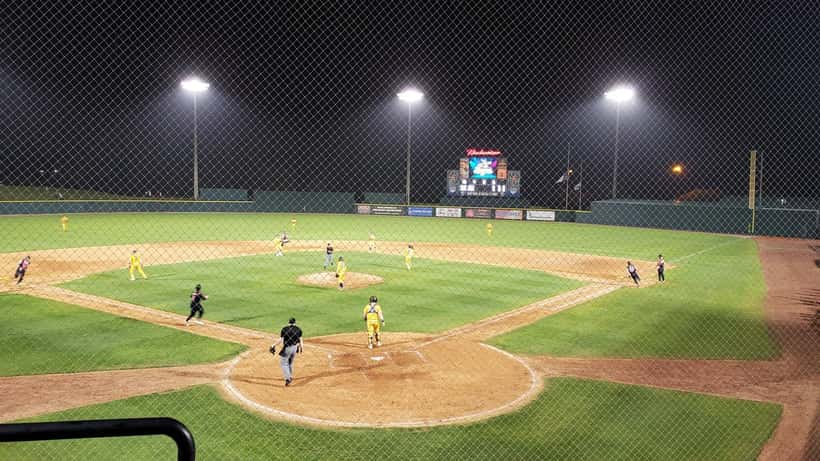
The Savannah Bananas — the viral baseball entertainment troupe built around trick plays, choreographed routines, and a fast-paced format they call Banana Ball — have become one of the most in-demand touring acts in North America. Their 2026 World Tour, running from spring through a fall homecoming finale, relies on a lottery model: fans register online during a fixed window, and a random draw determines who gets a purchase opportunity at face value, typically $35–$60 per ticket depending on the venue and seat level.
The team designed the lottery specifically to cut scalpers out of the equation. Every registered fan enters on equal footing. In practice, however, the demand so far outstrips available supply that secondary market listings surface within hours of draw results being sent out — often priced at $120–$250 per seat for shows at major North American stadiums.
For a family of four, that arithmetic adds up fast. At $189 USD per resale ticket, a group paying to see the Bananas at a US venue can spend more than $1,000 USD before adding travel costs — nearly eight times the total face value of those same four seats.
Ontario's Ticket Sales Act: Bill 97 and the Resale Cap
In April 2026, Ontario passed Bill 97, part of the Plan to Protect Ontario Act, amending the province's Ticket Sales Act, 2017. The amendment introduced a hard cap: resale tickets for events in Ontario cannot be listed or sold above the original total price paid, including all mandatory fees, service charges, and applicable taxes.
The law is broad in scope. It applies to concerts, sporting events, theatrical performances, and touring entertainment shows — including any Banana Ball-style shows that play Ontario venues — regardless of which secondary platform facilitates the sale. Platforms are required to disclose the original purchase price and to retain proof of that price.
The province sent warning letters to 27 resale platforms in spring 2026, signalling that enforcement would begin immediately. Ticketmaster responded by removing above-cap resale listings from its Canadian-facing platform. StubHub stated it would require sellers to certify their listings comply with the new rules.
The first formal enforcement action came on September 3, 2026. According to BNN Bloomberg, the Ontario government fined SeatGeek Canada $25,000: $10,000 for selling a ticket above its original total price, $5,000 for failing to disclose the original purchase price, and $10,000 for facilitating a transaction without holding proof of the original price paid.
The full current text of Ontario's Ticket Sales Act, 2017, as amended by Bill 97, is publicly accessible at the Ontario e-Laws database.
When the Law Stops at the Border
Here is the structural gap that Ontario's legislation was not designed to close: the resale cap applies to events held in Ontario. When the Savannah Bananas play in Chicago, Minneapolis, or Foxborough — as their 2026 US schedule indicates — Ontario's Ticket Sales Act does not follow a Canadian buyer across the border.
A Canadian fan purchasing a resale ticket through a US-based platform to a show in Massachusetts is governed by Massachusetts consumer law, the platform's terms of service, and whatever protections apply under their credit card's dispute process. The Canadian federal Consumer Protection Act and Ontario's provincial statute do not extend jurisdiction to contracts for events located outside Canada.
This asymmetry affects more Canadian fans than most realize. With the Savannah Bananas touring exclusively in the United States for most of their 2026 schedule, a large share of Canadian demand is directed at cross-border purchases — precisely where the new provincial protections do not apply. For context on how similar gaps played out with other major events, see how Ontario fans navigated MLB ticket resale rights during the Giants vs. Royals series earlier in the season.
Scenario: A Toronto Fan, Two Cancelled Tickets, and $530 in Unrecoverable Costs
Consider the situation of a 34-year-old teacher from Toronto — call her Jamie — who enters the Savannah Bananas lottery for their August 28 show in Foxborough, Massachusetts. Jamie doesn't win the draw. Two weeks before the event, she finds two floor-level seats on StubHub at $189 USD each and purchases them for $378 USD — approximately $516 CAD at October 2026 exchange rates.
Three days before the show, the seller cancels the listing. StubHub's FanProtect guarantee promises a replacement ticket of equal or greater value, or a full refund if no replacement is available. StubHub issues a refund of $378 USD.
Jamie had already booked a non-refundable Toronto–Boston round-trip flight for $310 CAD and a two-night hotel room for $220 CAD. Those costs are not covered by StubHub's ticket guarantee. Ontario's Ticket Sales Act does not apply because the event is in Massachusetts. Ontario Small Claims Court would likely lack jurisdiction over StubHub's US operations.
The if/then calculus: If a Canadian fan buys secondary-market tickets to a US event without travel insurance, and the seller cancels, then total unrecoverable costs can easily exceed the ticket price itself. In Jamie's case: $530 CAD lost — with zero applicable provincial legal remedy.
If Jamie had purchased travel insurance before booking — roughly $45–$65 CAD for a short US trip — a policy with explicit "supplier default" or "ticket cancellation" coverage might have covered the hotel, depending on the policy wording. The flight, booked as non-refundable, would require a specific cancellation benefit for reimbursement.
For Canadian fans buying tickets for US shows, the rule of thumb is to budget for 100–120% of the resale ticket cost as potential unrecoverable risk exposure when flights and accommodation are included — before a single ball is thrown. The Sacramento Athletics expansion case offers another example of how Canadian fan rights diverge once the event crosses the border.
Where a Legal Adviser Can Help
For Ontario fans attending events in the province, a consumer protection lawyer can assist with complaints to the Ministry of Public and Business Service Delivery and Procurement if a resale platform violated the Ticket Sales Act's cap. Individual consumers can file complaints directly or retain legal counsel to pursue a breach claim. The SeatGeek fine establishes that the province is willing to levy penalties — a signal that platforms are now under active scrutiny.
For cross-border purchases, a lawyer familiar with Canada–US consumer rights can assess whether a credit card chargeback under the "services not rendered" category is viable. Many fans are unaware that a last-minute seller cancellation typically qualifies for a Visa or Mastercard chargeback dispute. If the purchase was made through a Canadian-registered platform, even for a US event, Ontario's Consumer Protection Act, 2002 may apply to the contract itself rather than the underlying event.
Disclaimer: This article provides general information only and does not constitute legal advice. Consult a qualified lawyer in your jurisdiction for guidance specific to your circumstances.
Four Steps Before You Buy Resale Tickets
- Check resale cap compliance if buying for an Ontario event. The listing must disclose the original total price paid, and the resale amount cannot exceed it.
- Screenshot and save everything — the listing, the original price disclosure, the platform's terms, and your purchase confirmation. This documentation is required for any Ministry complaint or chargeback claim.
- Buy travel insurance before booking transportation when attending a US event. Look explicitly for "supplier default" or "event cancellation" language in the policy, not just medical coverage.
- Consult a legal professional if you believe a platform has violated Ontario's Ticket Sales Act or the Consumer Protection Act, 2002. An initial consultation can clarify whether your situation supports a formal complaint, small claims action, or chargeback dispute.
The Savannah Bananas built their fan experience on a simple principle: everyone deserves a fair shot. Ontario's Bill 97 tries to apply that same logic to the secondary market. The challenge for Canadian fans is knowing exactly where those protections stop — and planning accordingly before the lottery results arrive.
