 Megan Thériault
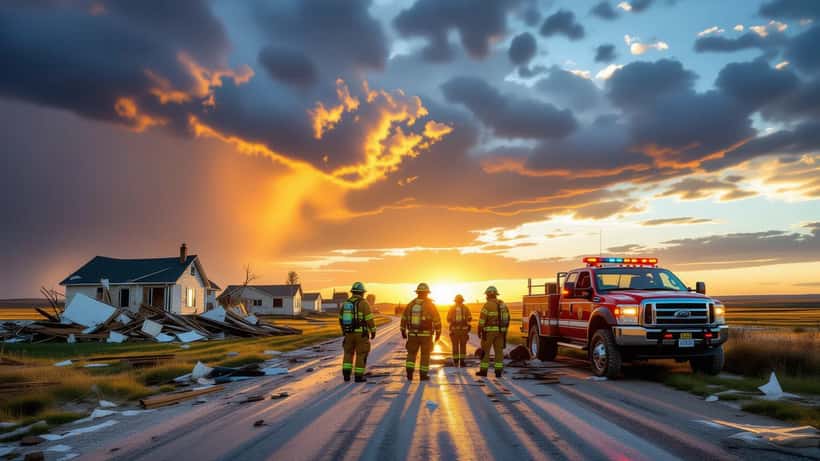
When tornado warnings swept across Saskatchewan in the summer of 2026, many residents had only minutes to decide whether to shelter in place or evacuate. The storms touched down in several rural municipalities and skirted larger centres, leaving a trail of damaged homes, downed power lines and disrupted livelihoods. In the aftermath, the conversation quickly shifted from weather forecasting to emergency response: who coordinates the cleanup, how homeowners access help, and what experts recommend before the next watch is issued.
Saskatchewan sits at the northern edge of Tornado Alley, and while the province is no stranger to severe weather, the 2026 season has prompted renewed attention to preparedness. Environment and Climate Change Canada confirmed multiple touchdowns over a single week, with wind speeds that turned farm outbuildings into debris and snapped mature trees. The province activated its emergency operations centre within hours, but local officials emphasised that the first line of defence is always individual readiness.
Emergency management consultants say the most effective response begins before a warning siren sounds. That means knowing the difference between a watch and a warning, identifying the safest room in a home, and keeping a charged communication device within reach. For rural property owners, it also means securing fuel tanks, grain bins and loose equipment that can become projectiles. These details may seem routine, but specialists note that damage surveys consistently show that small preventive steps reduce injury rates and repair costs.
Homeowners looking for practical guidance can review Canada’s New Orange Watch System: What Homeowners Need to Know About Tornado Insurance in 2026. The framework explains how colour-coded alerts are communicated and why a watch should trigger preparation rather than panic. It also clarifies that standard home insurance in Canada typically covers wind and tornado damage, though policy limits and deductibles vary. Residents who have recently upgraded outbuildings or added secondary structures should confirm coverage with their broker before the next severe-weather event.
One of the less visible consequences of the 2026 Saskatchewan tornadoes has been the impact on animals and veterinary services. When a warning is issued, families with pets and livestock face additional decisions: bring animals into a secure shelter, identify them with tags or microchips, and keep an emergency kit that includes medication and leashes. The veterinary community in Saskatoon and surrounding areas mobilised quickly, offering triage for injured animals and temporary shelter for displaced pets. Readers can learn more from Tornades en Saskatchewan : 5 gestes essentiels pour la sécurité animale et les refuges vétérinaires en 2026, which outlines how clinics coordinate with first responders during a storm.
Forecasting accuracy has improved markedly over the past decade, and the 2026 season is no exception. Meteorologists are now able to identify atmospheric conditions favourable for tornado formation several days in advance, giving emergency planners a longer runway. Still, the exact path and intensity of a tornado remain difficult to predict more than a few minutes ahead. That gap between regional risk and local impact is why experts urge every household to monitor trusted sources such as WeatherCAN and local radio rather than relying on social-media rumours.
Canada Weather Tomorrow Forecast: Planning and Safety Tips for Families in 2026 offers a broader look at how short-range forecasts fit into a household emergency plan. The article explains how to interpret probability maps, why timing matters for outdoor events, and what to pack in a grab-and-go bag. For Saskatchewan residents, these habits are especially relevant during the June and July storm peak, when warm Gulf moisture collides with dry prairie air and creates the instability that fuels supercells.
Health risks do not end when the tornado dissipates. Downed power lines, ruptured gas mains and contaminated water supplies can turn a neighbourhood into a hazard zone. After the 2026 storms, public-health officers warned residents to avoid wading through floodwater, to wear sturdy footwear while clearing debris, and to seek medical attention for cuts that may have contacted soil or metal. Anyone with asthma or chronic respiratory conditions should also be cautious, because disturbed dust and mould can trigger symptoms. The article 5 Respiratory Symptoms to Watch After Canada’s May 2026 Dust Storms examines how airborne particles affect lung health and when to consult a clinician.
Beyond immediate safety, recovery from a tornado is a long-tail process. Insurance adjusters, contractors and municipal inspectors often arrive within days, but repairs can stretch across months. Emergency-response consultants recommend that homeowners document damage with photographs before clearing anything, keep receipts for temporary repairs, and maintain a written log of every conversation with insurers. These records can mean the difference between a smooth claim and a prolonged dispute. Businesses, too, should test their continuity plans; even a short closure can ripple through supply chains and payroll.
The 2026 Saskatchewan tornadoes also reignited discussion about community resilience. Neighbours checked on one another, volunteer groups distributed water and plywood, and local experts offered free structural assessments. That grassroots response is valuable, but specialists caution that it should complement—not replace—official emergency services. Overloaded 911 lines, uncoordinated volunteer traffic and unofficial donation drops can create bottlenecks that slow professional relief. Municipalities are therefore encouraged to pre-register skilled volunteers and use common communication channels to direct assistance where it is needed most.
For those who want a deeper understanding of alert terminology, Canada’s June 2026 Yellow Thunderstorm Warning: 5 Health and Safety Precautions from Experts breaks down how Environment Canada issues thunderstorm, tornado and severe-wind warnings. Understanding these distinctions helps residents calibrate their response: a thunderstorm warning calls for caution, while a tornado warning demands immediate shelter. Misreading one for the other can cost precious minutes.
Looking ahead, climate projections suggest that the Prairie provinces could see more variable precipitation and stronger convective storms in the coming decades. That makes adaptation a shared responsibility. Homeowners can reinforce garages and roof connections, communities can update warning sirens and shelters, and insurers can refine risk models to reflect changing weather patterns. None of these measures eliminates tornado risk, but together they reduce the human and economic toll.
In the end, the 2026 Saskatchewan tornado warning cycle is a reminder that expert advice matters most when it is translated into action. Whether the task is securing a property, evacuating livestock, filing an insurance claim or protecting respiratory health, the right guidance at the right time saves lives. As the storm season continues, residents are encouraged to revisit their emergency plans, stay connected to official alerts, and know which local experts to call when the sky turns dark.
