 Willow Bergeron
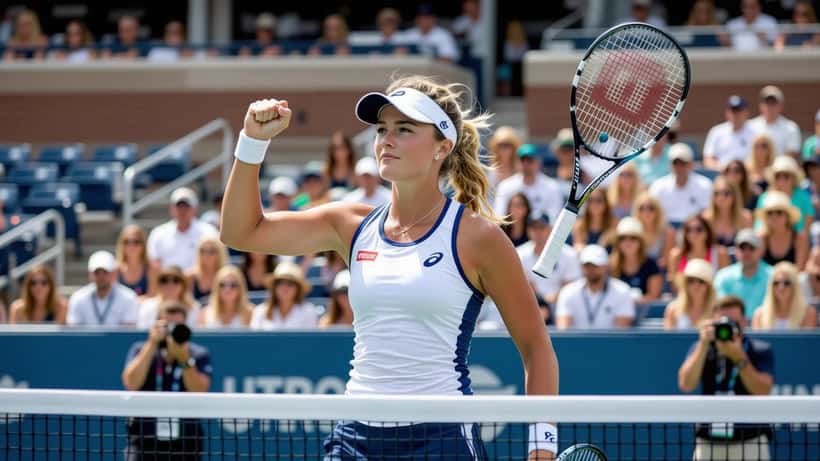
When Sára Bejlek clawed back from 5-1 down in a first-set tiebreak to stun world No. 1 Aryna Sabalenka 7-6 (9-7), 6-4 at the Cincinnati Open on August 20, 2026, she did more than reach her first WTA 1000 quarterfinal. She earned more in a single week than most working Canadians earn in three years — and exposed a legal blind spot that quietly derails hundreds of young professional athletes every season.
The 22-year-old Czech player banked at least $297,315 after advancing to the semifinals of a $7.43 million event. But at the exact moment of maximum leverage — when a young player's market value spikes overnight — the agent contracts, endorsement clauses, and prize money agreements most of them signed at 17 or 18 are still in force, untouched and often deeply unfavourable.
What Happened at Cincinnati on August 20, 2026
The Western & Southern Open — Cincinnati's premier combined WTA and ATP event — runs each August as the final major tune-up before the US Open. In 2026, the women's draw offered a total prize pool of $7,433,076, a 44% increase over 2025's $5,152,599, according to WTA official data.
Bejlek's run was the defining story of the tournament's first week. Ranked well outside the top 20 at the start of the draw, she strung together three consecutive victories, including a commanding 4-6, 6-1, 6-2 win over Ekaterina Alexandrova in the third round. Then came the Round of 16 against Sabalenka — the defending Australian Open champion and reigning world No. 1 for the better part of two seasons.
Down 4-1 in the second set after surviving a nervy tiebreak, Bejlek refused to let the match slip. She won five of the next six games to close out a historic straight-sets upset. "I'm speechless," she told reporters at the post-match press conference, describing a performance that combined patient baseline tennis with exceptional mental resilience under pressure.
After dispatching Sabalenka, Bejlek maintained her momentum, defeating former Cincinnati champion Madison Keys in a three-set thriller to advance to the semifinals — guaranteeing herself at least $297,315 in prize money from the Cincinnati draw alone.
Why a Breakthrough Win Is Also a Legal Turning Point
Sports attorneys and player advocates who work with young professionals on the WTA circuit describe Bejlek's type of breakout moment as a contract inflection point: the week a player's commercial value — sponsorship inquiries, appearance fees, racket and apparel deals — spikes sharply and permanently. It is also, too often, the worst possible moment to have an outdated agent representation agreement still in force.
Under standard WTA and international sports practice, agent contracts signed by minors or early-career players typically carry commission rates of 15% to 20% on prize money and 10% to 20% on endorsements. Those rates, agreed to when a player had little bargaining power at age 17 or 18, rarely contain automatic renegotiation triggers tied to ranking improvements or prize money thresholds.
Three clauses, in particular, are consistently missing from junior-to-professional player agreements:
A renegotiation trigger clause automatically reopens commission negotiations when the player achieves defined milestones: cracking the top 100, winning a WTA 1000 match, or earning above a specified prize money threshold in a single season. Without one, a player earning at Bejlek's Cincinnati level is still paying the same commission rate she agreed to as a relatively unknown qualifier.
A territorial image rights carve-out specifies which geographic markets the agent controls for endorsement commissions. Without this clause, an agent based in Prague may hold contractual authority over a Canadian sporting goods company's direct approach — collecting a commission on a relationship the player's own network established.
A unilateral exit clause allows the player to terminate the representation agreement, with 90 days' written notice, if earnings exceed a defined annual threshold or if the agent fails to secure at least one endorsement deal within 12 months. This clause is now standard in well-drafted post-2022 agreements but is absent in most contracts signed before 2020.
A Concrete Case: What $150,000 in Prize Money Actually Costs Without the Right Contract
Consider a realistic scenario involving a 22-year-old Canadian player — call her Mia — who signed a standard representation agreement with a licensed sports agent at age 18. The terms: 18% commission on all prize money and 15% on endorsements, with a five-year term running through 2027, and no renegotiation trigger.
In the week Mia reaches her first WTA 1000 quarterfinal and earns $150,820 in prize money — the approximate quarterfinal prize at a Cincinnati-tier event in 2026 — her agent's 18% commission is $27,147. A Canadian athletic apparel brand, having watched her quarterfinal run, then approaches her directly about a three-year deal worth $40,000 per year. Under Mia's existing contract, her agent claims 15% on endorsements regardless of how the contact was initiated — $6,000 annually, or $18,000 over the three-year deal.
Total agent fees from one breakthrough week and its immediate commercial result: $45,147.
If Mia had negotiated a renegotiation trigger when she first cracked the top 80 — a process that typically costs $500–$1,500 in legal review time — she might now hold a renegotiated commission rate of 10% across both prize money and endorsements. Under those terms: $15,082 in agent fees on the same prize money and $12,000 on the endorsement deal, for a total of $27,082.
The difference: $18,065 from a single tournament run. Over a full season with similar results, the cumulative gap routinely exceeds $60,000 — money that would otherwise fund a full-time coach, international travel, physiotherapy, and nutritional support.
The risk compounds if the existing agreement lacks a territorial image rights carve-out. The Canadian brand's approach could become subject to legal dispute, with the agent claiming full commission authority over all endorsements regardless of origin. Resolving such a dispute through mediation typically costs $5,000–$15,000 before any court proceedings begin.
In Canada, athletes and agents involved in formal sport-sector disputes can access the Sport Dispute Resolution Centre of Canada (SDRCC), a federally funded, independent dispute resolution body established under Sport Canada's framework. The SDRCC processes cases involving athletes, coaches, and sport organizations — but only when the relevant agreement or governing policy includes a mediation clause. Without that provision in the original agent contract, this efficient and lower-cost route is unavailable.
Three Steps Young Canadian Tennis Athletes Should Take Before the Next Breakthrough
Bejlek's Cincinnati run is a reminder that commercial readiness in professional sport does not happen automatically. The legal infrastructure a player builds — or fails to build — in the early career years determines how much of a breakthrough they actually keep.
1. Request a contract audit at every ranking milestone. Any time a player moves from outside the top 200 into the top 100, or wins a first WTA 1000 or ATP Masters match, the existing agent agreement should be reviewed by a sports law professional. A legal review in Canada typically costs $500 to $2,000 — an amount that is almost always recovered through renegotiated commission reductions within a single tournament run.
2. Separate image rights by geography before signing endorsement deals. Ask explicitly whether the agent agreement contains a territorial limitation on endorsement commission claims. If it does not, add one before the next commercial approach arrives. This clause is now standard in post-2022 agreements for athletes above the top 150 and takes minutes to add during a contract review.
3. Negotiate a milestone-based exit clause from the first signing. A well-drafted exit provision protects against being locked into a representation agreement with an agent whose network no longer serves the player's competitive level. Negotiating it at the outset costs nothing and provides significant leverage; litigating out of an agreement that lacks one can cost considerably more than the prize money at stake.
The week Sára Bejlek erased a 5-1 tiebreak deficit against the world's best player was built over years of practice and preparation. The legal structures protecting what she earns from that week deserve the same advance planning.
Legal notice: This article provides general information about sports representation agreements and does not constitute legal advice. Contract terms, commission structures, and dispute resolution options vary by jurisdiction and individual circumstances. Consult a qualified sports law practitioner before signing or amending any representation or endorsement agreement.
To speak with a sports law specialist in Canada about reviewing a player representation agreement, endorsement contract, or prize money dispute, Expert Zoom's Legal directory connects you with practitioners who work with professional athletes at all career stages.
