 Nathalie Dubois
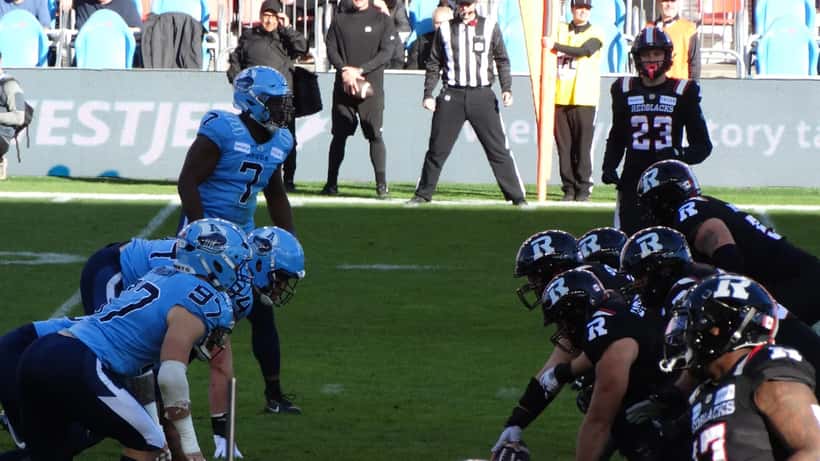
When the Ottawa Redblacks and Montreal Alouettes clash at TD Place, tens of thousands of fans track every yard gained. But off the field, a legal clock is ticking. The CFL's collective bargaining agreement contains a 2027 opt-out clause — and whether it gets triggered could determine whether players sustaining injuries in this East Division rivalry have any real legal protection. Here is what the current contract gap means for everyone on that field.
A Rivalry That Defines the East Division in 2026
The Redblacks and Alouettes have traded wins throughout the 2026 CFL season. Ottawa controlled the early schedule, winning 27–12 and 27–3 in May, before Montreal reversed the trend with a decisive 34–13 victory on July 31. As the East Division race tightens, every Redblacks–Alouettes matchup carries playoff implications.
The CFL operates under a seven-year collective bargaining agreement ratified in 2022, running until 2029. That deal set the 2026 salary cap at $6.28 million per team and established a minimum salary of $70,000 for all national, American, and global roster players. Despite those protections, a critical gap persists: CFL players remain excluded from provincial workers' compensation regimes across Canada — a legal blind spot that a Redblacks–Alouettes game, with its inevitable hard collisions, makes vivid.
Why CFL Players Fall Outside Workers' Compensation
Under current legislation in Ontario and Quebec — the provinces where the Redblacks and Alouettes are headquartered — professional team sport athletes are classified differently from standard employees for occupational health and safety purposes. That classification means a player injured during a game or practice cannot file a workers' compensation claim with the Workplace Safety and Insurance Board (WSIB) in Ontario or the CNESST in Quebec.
The CFLPA has been advocating to change this since 2018. Progress has been partial: the 2022 CBA extended post-retirement medical coverage for former players from three years to five, and concussion-related injury claims are now channelled through binding arbitration rather than civil courts. But workers' compensation — the standard backstop for an injured employee in any other Canadian industry — remains out of reach for the men wearing Redblacks red-and-black or Alouettes blue-and-red on game day.
A labour lawyer specialising in professional sports contracts would note that this gap creates significant exposure. If a player sustains a career-ending shoulder tear during a Redblacks–Alouettes game, access to long-term income replacement depends almost entirely on the individual contract negotiated before the season — not on any statutory employment right that would protect a construction worker, nurse, or warehouse employee in the same province.
The 2027 CBA Opt-Out: Why This Season Is a Legal Inflection Point
The urgency sharpens when you factor in the opt-out clause embedded in the current collective agreement. Either the CFL or the CFLPA can trigger early termination of the 2022 deal ahead of the 2027 season — but the trigger is directly tied to the league's broadcast agreement with TSN, which expires on December 31, 2026.
If the CFL and TSN finalise a new deal before year-end at a significantly different base fee, either party is entitled to notify the other that the CBA terminates two years early. That would return players' contracts, salary minimums, injury protections, and post-retirement medical benefits to the bargaining table — during an already volatile period for sports broadcasting revenues across North America.
For a player currently lining up against the Redblacks or Alouettes, that means the legal framework governing their protection is potentially months away from renegotiation. For more background on how the current salary framework affects player rights, see this breakdown of the CFL 2026 salary cap and player rights. A sports or employment lawyer would advise any CFL athlete entering 2027 extension discussions to understand exactly what their individual agreement provides — and what provincial law does not.
When a Redblacks Player Gets Hurt: What the Numbers Actually Mean
Take the case of a 26-year-old national-roster player for the Ottawa Redblacks earning the 2026 CBA minimum of $70,000. During a Week 12 regular-season game against the Alouettes, he tears his ACL returning a kick-off. The injury requires surgery and at least six months of rehabilitation, ending his season and any shot at a playoff run.
Here is what the legal and financial reality looks like under the current framework:
Salary continuation during the contract year: Under the CBA, a player injured during a game continues to receive his full salary through the contract term — so $70,000 at the minimum, or a negotiated amount above that floor. This obligation falls on the club, not a government board.
The workers' comp gap: An office worker in Ontario injured on the job would be eligible for up to 85% of pre-injury net earnings from the WSIB — with benefit support for rehabilitation, retraining, and long-term income replacement. The Redblacks player receives none of that. His employer is partially shielded from occupational health and safety liability under existing CFL exemptions.
If the contract expires at season's end: When the injured player's contract terminates, salary payments stop. The five-year post-retirement medical coverage under the 2022 CBA covers ongoing health costs — but not income. A $70,000 minimum-salary player with no long-term disability provision in his individual contract could exit the league with surgical bills partially covered and no income floor.
Arbitration instead of courts: A concussion or chronic brain injury claim must proceed through CFL arbitration rather than the Ontario Superior Court — regardless of negligence by the team or league. The player cannot access the civil litigation route open to any other Canadian worker.
If the CBA opt-out is triggered: Every one of the thresholds above is subject to renegotiation. A player who signs a multi-year extension in late 2026 without accounting for a potential 2027 opt-out scenario could find himself locked into terms established before the new legal landscape is set.
What CFL Players and Their Representatives Should Do
The Redblacks–Alouettes rivalry is one of the CFL's most compelling narratives in 2026. But the legal risks attached to playing professional football in Canada are poorly understood by many athletes entering the league, particularly younger national players navigating their first professional contracts.
A sports or employment lawyer can help a CFL player address four concrete needs right now:
1. Review injury pay and salary continuation clauses. Not all CFL contracts are structured identically. Some negotiated agreements include provisions that exceed CBA minimums on injury salary — understanding exactly what the contract guarantees, and for how long, is the starting point.
2. Identify the workers' compensation gap and whether private insurance fills it. Some clubs or agents negotiate private disability insurance into individual contracts. If that coverage is absent, a player has no statutory fallback beyond the CBA's medical provisions.
3. Assess the opt-out risk before signing multi-year extensions in 2026. Given the TSN broadcast deal expiry in December 2026, any extension signed this fall carries potential exposure to a renegotiated CBA. Legal counsel can advise on how to structure opt-out protections or guaranteed clauses within individual deals.
4. Understand the arbitration process for injury claims. CFL arbitration has specific timelines and procedural requirements that differ sharply from civil litigation. Filing errors or missed deadlines can forfeit valid claims — a risk that legal representation significantly reduces.
The CFL's East Division race may be decided on the field between the Redblacks and Alouettes. The financial and legal outcomes for injured players, however, are decided in contract language that most fans never see — and that many players do not fully understand until they need it.
This article is provided for informational purposes only and does not constitute legal advice. If you are a professional athlete facing a contract or injury dispute in Canada, consult a qualified sports or employment lawyer licensed in your province.
