 Eliza Perron
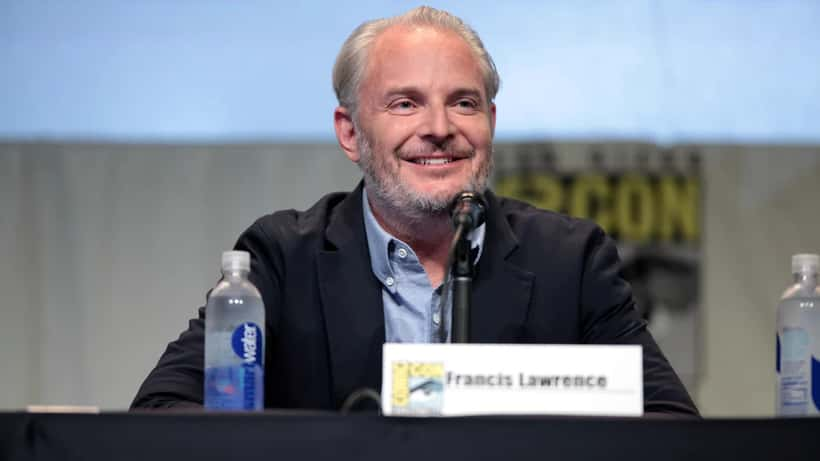
Paramount has acquired the film rights to Pierce Brown's Red Rising novels, with Francis Lawrence attached to direct and Justin Rhodes writing the script, according to ComicBook.com on October 16, 2026. The deal ends years of false starts, and it raises a question many Canadian authors and creators ask: how do you get your own story back once a studio has tied it up?
What actually happened to Red Rising?
Red Rising debuted in 2014 and now spans six books: the original trilogy and three Iron Gold novels set ten years later. Universal first took a film option around 2014, with Marc Forster attached. The film never reached production, and Brown later reclaimed the rights.
A television version followed, but Brown said in a March 2026 interview with book creator Maude Garrett that the project never moved past the option and development stages. In summer 2026 he called the online version "a corpse," as ComicBook.com reported. The Paramount announcement of October 16, 2026 is the first firm sign of a new deal. No release date and no cast have been announced.
What is an option agreement, and why does it matter here?
Studios rarely buy a book outright on day one. They usually pay for an option: the exclusive right, for a fixed period, to develop the project and decide whether to buy the rights for a larger sum.
While the option runs, the author cannot sell the same rights to anyone else. That is why a property can sit frozen for years, which is exactly what fans describe happening to Red Rising between 2014 and 2026.
Three terms decide how stuck a creator becomes:
- The option period. Often 12 to 24 months, sometimes renewable for an extra fee.
- The extension payments. Each renewal costs the studio money, but the cost can be small compared with the value of the lock-up.
- The reversion clause. This says what happens to the rights if the studio never starts production.
Without a clear reversion clause, a creator can wait a long time. Brown's experience shows that rights do come back, but only when the contract and the creator's negotiating position allow it.
Who owns the rights in Canada?
In Canada, copyright arises automatically when a work is created, and the author is generally the first owner. The Copyright Act lets an owner assign rights or grant a licence, but an assignment must be in writing and signed by the owner to be valid. The full text is available from the Canadian Copyright Act on the Justice Laws website.
The Act also addresses reversion. Where an author assigns a copyright and is the first owner, the rights can revert to the author's estate 25 years after death, regardless of what the contract says. That is a long horizon, so negotiated reversion terms matter far more in practice.
Adaptation rights are separate from the book itself. Film, television, audio and merchandising rights can each be split, licensed to different parties and limited by territory and duration. A single sloppy clause can quietly tie up several of them at once.
What should a creator ask for before signing an option?
A lawyer reviewing an adaptation deal typically looks at the same short list:
- A hard deadline to start production. If principal photography has not begun by a set date, the rights return automatically.
- Limited extensions. One or two paid renewals, not an open-ended right to keep renewing.
- Reserved rights. Audio, stage, games and merchandise stay with the creator unless specifically sold.
- Credit and consultation. Brown is reportedly involved as an executive producer on the new film, which shows how this kind of involvement is a negotiated term, not a default.
- Clear termination wording. What counts as a breach, and how quickly the rights come back.
None of these is unusual. They are the difference between a deal that works for the creator and one that sits on a shelf.
Why can a property switch studios and formats?
The Red Rising history shows a common pattern. A film option lapses, the rights return, and the creator reshapes the project as a series. When that stalls too, the rights can be offered again, this time to a different studio with a different director.
Each hand-off only works if the previous grant has ended cleanly. A studio that buys rights wants proof that nobody else holds an option, a lien or a leftover claim on the work. Lawyers call this the chain of title, and gaps in it can delay or kill a deal.
For creators, that means keeping the termination paperwork as carefully as the original contract. A lapsed option with no written confirmation can still cloud a later sale, even when everyone agrees the earlier deal is over.
Moral rights add another layer in Canada. Authors keep the right to be associated with their work and to object to distortions that harm their reputation, and these rights cannot be assigned, though they can be waived in writing. Studios commonly ask for a waiver, so read that clause closely.
A concrete case: an Alberta novelist and a studio option
Picture a novelist in Calgary who signs a 12-month option on her self-published thriller for $5,000 in January 2026. The contract allows two 6-month extensions at $2,500 each. It says nothing about reversion.
If the studio pays both extensions, it controls the rights for 24 months, until January 2028, and has spent $10,000 in total. Meanwhile she cannot take the book to another producer, even if no script exists.
Now change one clause. Suppose the contract states that if production has not started within 30 months of signing, all rights return to her and she keeps every payment made. If the studio has not shot anything by July 2028, the rights come back automatically, and she can pitch the project elsewhere the next day.
The difference between those two outcomes is one sentence in the contract. If the studio is willing to pay $10,000 to hold the rights, a reasonable reversion date is a fair request, not an aggressive one.
What does this mean for you?
The Paramount news is a reminder that a hit property can take more than a decade to reach the screen, and that the paperwork written on day one shapes what happens to it. If you write, podcast, film, design or build anything someone might want to adapt, the same principles apply:
- Keep copies of every signed agreement and every amendment.
- Check which rights you actually assigned, and for how long.
- Do not treat an option as a sale. It is a time-limited hold.
- Get the reversion language reviewed before you sign, not after the option runs out.
Disputes in this area often turn on a single paragraph written years earlier. Fixing a problem after signing is much harder than negotiating it beforehand.
Talk to a specialist before you sign
This article is general information, not legal advice. Option terms, tax treatment and Canadian copyright rules vary with the facts of each deal, and a contract you sign cannot easily be undone.
If you are negotiating an adaptation option, trying to recover rights you licensed years ago, or unsure what your existing contract allows, a lawyer experienced in copyright and entertainment law can review the document and explain your options. On Expert Zoom you can consult a vetted legal expert before you commit your work to a studio.
