 Aria Nguyen
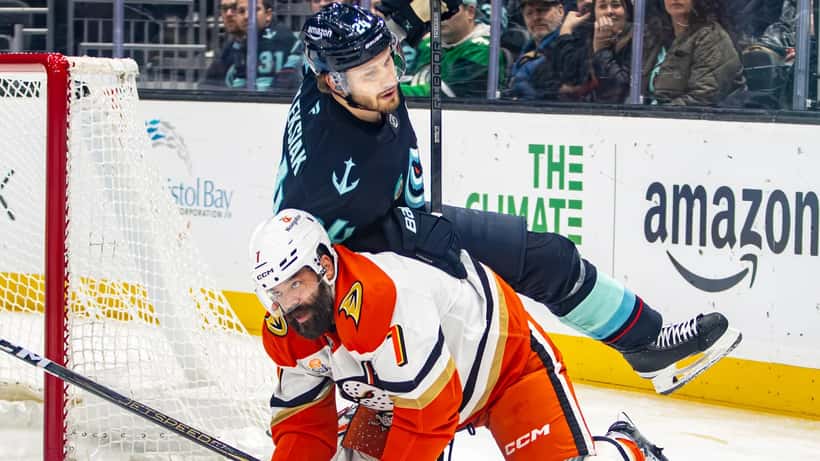
Anaheim Ducks captain Radko Gudas is missing the 2026 NHL playoffs due to a lower-body injury — a development that has taken on painful irony given that just six weeks earlier, it was his dangerous hit that ended another player's season entirely.
The Hit That Changed the Season
On March 12, 2026, Gudas delivered a knee-on-knee hit on Toronto Maple Leafs captain Auston Matthews during a regular-season game. The collision caused a Grade 3 MCL tear that ended Matthews' season immediately. The injury rippled through the Maple Leafs' playoff hopes and triggered immediate calls for stronger NHL discipline against high-risk plays.
The NHL Department of Player Safety suspended Gudas for five games — the maximum allowable under a standard phone hearing — and he forfeited approximately $104,166 in salary. Critics argued the punishment was inadequate for an injury of this severity. A Grade 3 MCL tear involves complete ligament rupture, requiring weeks of rehabilitation and carrying long-term implications for joint stability and performance.
Gudas acknowledged the hit was a mistake. But the incident reignited a long-running debate in Canadian hockey circles: are the current penalties for dangerous plays sufficient to deter conduct that causes season-ending harm to other professionals?
Now the Injured Captain Is Sitting Out
The situation became acutely ironic in the weeks that followed. Gudas himself sustained a lower-body injury on March 26, 2026, in a game against the Calgary Flames, and missed nine of the Ducks' final ten regular-season games. When Anaheim opened its first-round playoff series against the Edmonton Oilers — the team's first postseason appearance since 2018 — Gudas appeared briefly in Game 1, logging just 9:40 of ice time before the injury sidelined him again.
He has not appeared in Games 2, 3, or 4 of the series. The Ducks were leading the series 2-1 through Game 3, with a Game 4 result on April 26, 2026, that the team will need its captain healthy to sustain.
The parallel is uncomfortable: a player who caused another athlete's season-ending injury by targeting the knee is now watching his own playoffs from the bench with a knee injury. Whatever the karmic interpretation, the practical reality is that both athletes are bearing the physical cost of a collision that lasted a fraction of a second.
Is a Five-Game Suspension Enough? What Sports Law Says
In Canada, sports lawyers and employment law specialists who work with athletes and sports organizations frequently encounter cases involving league discipline — and the recurring question is whether existing frameworks adequately protect players from foreseeable harm.
The NHL's Department of Player Safety operates under the collective bargaining agreement between the league and the NHL Players' Association, which establishes the parameters for suspension length and salary forfeiture. For incidents that trigger a "phone hearing" — the standard for most plays — suspensions are capped at five games. Longer suspensions require in-person hearings with more formal evidentiary processes.
According to the NHL Department of Player Safety, disciplinary decisions consider factors including the player's history, the severity of the injury, and whether the conduct was intentional. Critics of the Matthews case argue that a five-game forfeiture represents a modest financial deterrent relative to the career earnings of top-line defensemen, and a disproportionately light consequence for a Grade 3 ligament injury.
Sports attorneys emphasize that liability in professional sport operates in a distinct legal landscape from civilian personal injury law. Players implicitly consent to a degree of physical risk as a condition of participation. However, that consent does not extend to deliberate or reckless conduct that exceeds the normal risk inherent in the sport — a line that remains actively debated in the context of knee-on-knee hits, blindside blows to the head, and boarding incidents.
Why Canadian Athletes and Professionals Should Pay Attention
The Gudas case illustrates a broader principle that extends well beyond hockey rinks: when a professional causes significant harm to a colleague through conduct that violates their organization's rules, the consequences — financial, reputational, and physical — fall on both parties, often in unpredictable ways.
For Canadian workers in physically demanding professions, the Workers Compensation Board (WCB) systems across provinces provide structured protection when workplace injuries occur. But for professional athletes operating under collective agreements, the landscape is different. Compensation for sports-related injuries is governed by individual contract terms, the CBA, and insurance arrangements that may or may not adequately address career-disrupting harm.
Our earlier coverage of NHL Long-Term Injured Reserve provisions examined how the league's disability mechanisms work for players sidelined for extended periods — a framework directly relevant to any athlete navigating the aftermath of a serious on-ice incident.
When Athletes and Professionals Need Legal Guidance
If you or someone you know has been injured in a sports context — whether as a recreational athlete, a competitive amateur, or a professional — a sports law specialist or personal injury lawyer can help clarify what protections apply, what claims may be available, and how to navigate the intersection of league discipline, insurance, and civil liability.
The threshold for seeking legal guidance is lower than most people assume. Sports injury law covers not just professional leagues but also recreational hockey, organized amateur competitions, and youth sport environments where duty-of-care standards apply to coaches, referees, and facilities.
Radko Gudas and Auston Matthews will both move forward from the 2026 season. The deeper question — whether the systems governing dangerous conduct in professional sport are calibrated appropriately — will continue to be argued in hockey boardrooms, law offices, and CBA negotiations long after this playoffs ends.
This article is for informational purposes only and does not constitute legal advice. Consult a qualified sports law professional for guidance specific to your situation.
