 Victoria Stewart
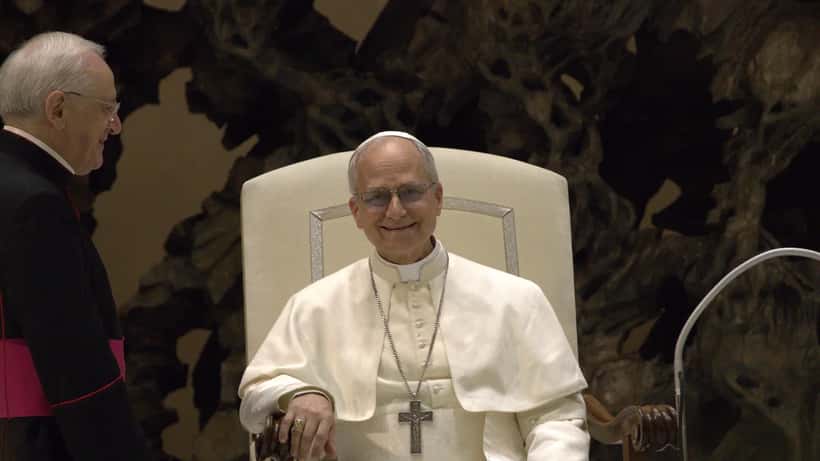
Pope Leo XIV departed Rome on April 13, 2026, for a 10-day apostolic tour across Algeria, Cameroon, Angola, and Equatorial Guinea — his third major journey since his historic election in May 2025. As the first American pope in history, Robert Francis Prevost's travels have prompted renewed global interest in how large institutions manage assets and leadership succession across borders.
For Canadian nonprofit leaders, religious organizations, and estate planners, the moment raises a practical and urgent question: when institutional leadership changes — whether in a global church, a family foundation, or a community organization — who controls the assets, and is there a plan in place?
When the Seat Changes Hands: The Mechanics of Institutional Succession
The Catholic Church's model of succession is centuries old and precisely codified. Upon the death of a pope, canon law governs every step: administrative authority reverts to the College of Cardinals, financial accounts are frozen, and a conclave is convened within 15 to 20 days. The Vatican Bank (formally the Institute for the Works of Religion) continues operating under separate oversight.
What makes this model instructive for Canadians is not its religious dimension, but its structural clarity. The Vatican has what estate planners call a succession charter: a documented framework that defines who holds authority, under what conditions, and for how long during a leadership gap.
According to Canada's Charities Registration (Security Information) Act and the Canada Revenue Agency's guidelines for registered charities, no equivalent automatic framework exists for most Canadian nonprofits. Unless an organization's bylaws or a formally drafted succession plan specifies otherwise, a leadership vacancy can paralyze financial decisions for months.
Canada's Organizational Estate Gap
The gap is real and costly. A 2024 survey by Imagine Canada found that fewer than 40% of registered charities had a formal succession or emergency leadership plan in place. For faith communities, family foundations, and mid-sized nonprofits managing portfolios worth millions of dollars, this is a significant exposure.
"The moment a founder dies or a key executive departs unexpectedly, organizations without a plan discover they cannot access accounts, sign contracts, or make payroll," noted a financial governance advisor cited in a 2025 Ontario Nonprofit Network briefing. The parallel with the papal transition is imperfect but illuminating: the Church's institutional memory and legal framework allowed it to function uninterrupted for the weeks of the conclave. Many Canadian organizations cannot say the same.
The CRA requires that registered charities maintain detailed books of account and that signing authority be clearly documented — but it does not mandate succession plans. That gap falls to boards of directors, estate lawyers, and wealth advisors.
What a Proper Succession Plan Covers
A robust organizational succession and estate plan for Canadian nonprofits, religious bodies, or family offices typically addresses four areas:
1. Signing authority continuity. Who is authorized to transact on behalf of the organization during a leadership vacancy? This should be documented in the bylaws and updated at every board meeting where officer changes occur.
2. Asset inventory and access. Every organization holding real property, investment accounts, or restricted funds should maintain a live register of assets and the accounts/institutions where they are held. This register should be accessible to at least two board members at all times.
3. Emergency fiduciary authority. Some organizations designate an "emergency executor" — a role analogous to a corporate officer — who can exercise limited authority during the period between a leader's departure and a formal replacement. This must be codified in advance.
4. Succession timeline. How long can the organization function without a permanent leader? The Vatican's answer is 15 to 20 days — tight and enforced. Most Canadian organizations have no answer at all.
The Nonprofit Trustee's Blind Spot
Estate lawyers who work with faith communities and nonprofits in Canada frequently encounter a specific blind spot: organizations conflate charitable registration with legal protection. Being registered with the CRA as a charity does not insulate an organization from disputes over signing authority, asset distribution, or governance during transitions.
In 2025, a high-profile dispute at a British Columbia faith community resulted in a court-ordered freeze on organizational assets after competing factions disagreed about who held authority following the departure of a long-serving leader. The case cost the organization nearly $200,000 in legal fees — and the crisis was entirely preventable with a clear, pre-agreed succession framework.
Under Canada's Wills, Estates and Succession Act (in BC) and provincial equivalents across the country, courts can and do intervene when governance documents are ambiguous. The stronger the internal documentation, the less likely external intervention becomes.
Practical Steps Canadian Organizations Can Take Now
The papal transition model is instructive precisely because it is boring: no drama, no legal ambiguity, no frozen accounts. The process worked because every role was defined in advance.
For Canadian organizations — religious or secular — a wealth management consultant or estate lawyer can help structure the following:
- A board-ratified succession policy naming interim officers and their scope of authority
- A documented asset register updated annually and stored in a secure, board-accessible location
- A financial continuity protocol tested at least once during a tabletop governance exercise
- A legal review of bylaws to ensure signing authority provisions survive leadership transitions
The CRA's guidance document Governing Documents for Registered Charities provides a useful framework — but it is a starting point, not a substitute for tailored legal and financial advice.
The Expert Angle: Why Now Is the Right Moment
Pope Leo XIV's African tour, launched today from Rome, brings renewed media attention to institutional governance on a global scale. For Canadian leaders of nonprofits, faith communities, foundations, and family offices, this is a rare moment when a global news event makes the abstract urgency of succession planning concrete and visible.
A qualified wealth management advisor or estate lawyer can assess your organization's current exposure in a single consultation — and in many cases, the remediation is straightforward. The cost of prevention is a fraction of the cost of a governance crisis.
This article contains general information only and does not constitute legal, financial, or tax advice. Consult a qualified professional for guidance specific to your organization's situation.
