 Willow Bergeron
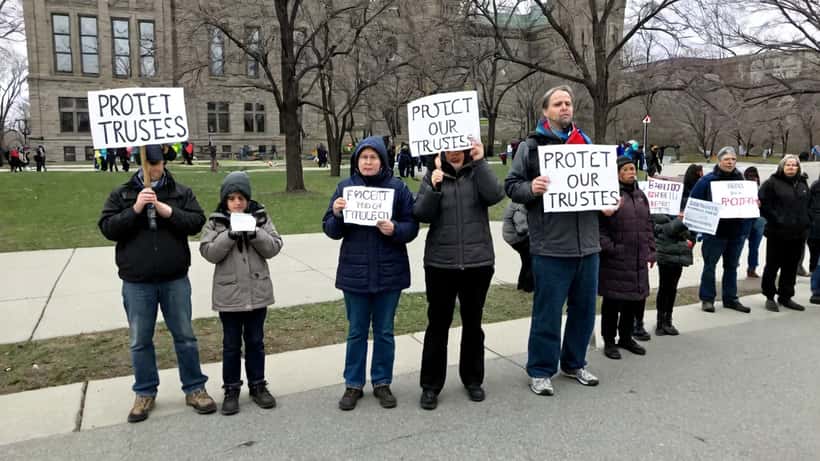
Ontario Education Minister Paul Calandra introduced sweeping school board governance legislation on April 13, 2026, potentially eliminating elected school trustees across the province. With 8 school boards already under provincial supervision and October 2026 municipal elections approaching, parents and community groups are urgently asking: what legal protections do we have?
What's Actually Being Proposed — and Why It Matters Now
On April 10, 2026, Calandra announced that "significant" governance legislation would arrive on April 13 — today — with the express goal of "bringing responsibility and leadership through the Ministry of Education." The practical effect: elected school trustees, who are accountable directly to voters, could be replaced by provincially-appointed administrators.
Currently, 8 Ontario school boards are under provincial supervision, including the Toronto District School Board (TDSB), Toronto Catholic District School Board (TCDSB), York Catholic District School Board (YCDSB), and the Peel District School Board (PDSB). That list covers millions of Ontario families.
Nominations for school trustee positions were scheduled to open in May 2026, ahead of October's municipal elections. Whether those elections will proceed — and whether trustee roles will still exist — is now an open question Premier Doug Ford refuses to answer directly.
Three Legal Frameworks at Stake
This legislation does not exist in a vacuum. Three areas of Canadian constitutional and statutory law are directly implicated.
1. Catholic and French-Language Education Rights
Section 93 of the Constitution Act, 1867 guarantees rights for denominational schools — including the right for Catholic communities to manage their own schools. This protection cannot simply be overridden by provincial legislation. Legal experts reviewing Calandra's announcement have flagged that replacing elected Catholic trustees with appointed administrators may directly violate these constitutional guarantees.
Similarly, Section 23 of the Canadian Charter of Rights and Freedoms protects French-language minority education rights across Canada. Any reform that removes French-language community control over their school boards would face serious constitutional challenge.
2. Democratic Accountability and Administrative Law
Ontario's Education Act currently sets out the framework for elected trustees and their responsibilities. Replacing elected officials with appointed supervisors raises fundamental questions under administrative law: who are these appointees accountable to? What recourse do parents have if decisions harm their children's education?
Provincial supervisors in Ontario school boards currently earn salaries exceeding $350,000 annually — far more than elected trustees — while being appointed rather than chosen by the community.
3. Procedural Consultation Rights
Before making fundamental changes to education governance, provinces have obligations under the Canadian Charter of Rights and Freedoms and administrative law principles to meaningfully consult affected communities. Parent councils, school board associations, and community organizations may have standing to challenge legislation that bypassed adequate consultation.
What This Means for You — Practically
If you have children in Ontario's school system, these changes are not abstract. Here is what's at stake:
- Special needs accommodation: Elected trustees have historically been more responsive to parent pressure for IEP compliance and special education funding than provincial administrators
- Budget transparency: Boards under provincial supervision operate under different accountability structures — parents report it is harder to access budget documents and attend effective hearings
- School safety policies: With the TDSB already having faced controversies over police in schools and mental health resources, governance structure directly affects these outcomes
According to the Ontario Ministry of Education, parents retain certain rights regardless of governance structure — including the right to participate in school council activities and access to the Ontario Student Record.
When to Consult a Legal Expert
If you believe the proposed legislation violates your constitutional rights as a Catholic or French-language minority community member, or if you are a trustee whose elected position is being eliminated, consulting a lawyer who specializes in constitutional or education law is not just advisable — it may be urgent.
Specifically, a lawyer can help you:
- Assess whether the legislation as drafted is constitutionally vulnerable under Section 93 or Section 23 of the Charter
- File a complaint with the Ontario Ombudsman if procedural rights have been violated
- Organize collective legal action with other affected parents or community members
- Understand your rights as a member of a Catholic school board community
An education or constitutional lawyer at ExpertZoom can review your specific situation and explain what remedies are available — from formal challenge to intervention in public consultations.
YMYL Notice: This article provides general legal information, not legal advice. Consult a qualified lawyer for advice specific to your situation.
The Bigger Picture
Ontario's move follows a broader Canadian trend of provincial governments asserting greater control over municipal and educational governance. While provinces have jurisdiction over education under the Constitution Act, 1867, that jurisdiction is not unlimited — the Charter and Section 93 guarantees create real constraints.
Ontario is not the only province facing education governance debates. Earlier in 2026, Ontario parents challenged the Ford government's cuts to teacher training — a sign that legal and community pushback on education policy is growing. What happens in the next 30 days will determine whether October's school board elections proceed, whether constitutional challenges are filed, and whether millions of Ontario families retain meaningful democratic input into their children's education.
If you are a parent, a trustee, or a member of a Catholic or French-language community — and you want to understand your legal options — speaking with an experienced constitutional or education lawyer is the clearest first step you can take.
