 Chloé Dubois
This article provides general legal information for educational purposes only. It does not constitute legal advice. Families facing aviation accident claims should consult a qualified aviation lawyer for guidance specific to their situation.
An Ontario-based air ambulance carrying six people — including four Canadian nationals — vanished over the Atlantic Ocean on October 4, 2026, after departing Bermuda en route to Boston. The U.S. Coast Guard confirmed debris from the missing Gulfstream G100, operated by Latitude Air Ambulance of Hamilton, Ontario, was located off the coast of Nantucket, Massachusetts, following more than 53 hours of continuous searching across over 2,840 square miles (approximately 7,355 km²) of open ocean.
What Happened: A Medical Flight That Never Arrived
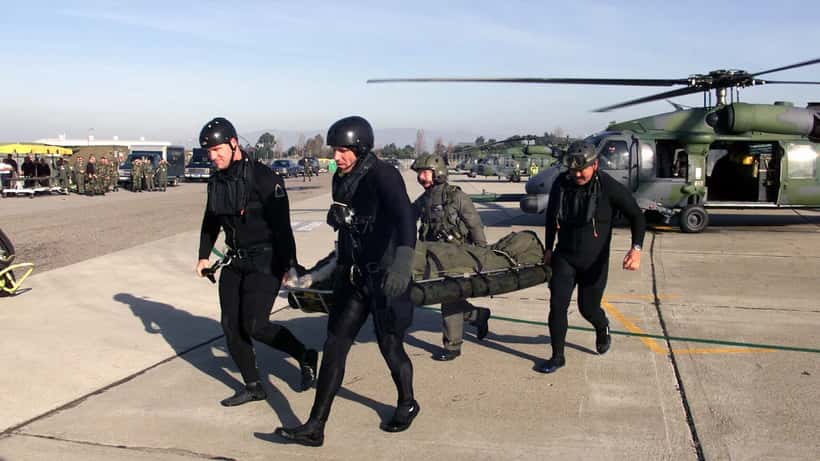
The Latitude Air Ambulance Gulfstream G100 departed Bermuda on a medical transport mission carrying a patient and crew. Among the six aboard were four Canadian nationals and two Bermuda nationals. The flight's disappearance triggered an immediate and massive response: the U.S. Coast Guard deployed fixed-wing aircraft, helicopters, boats, and cutters, working alongside the New York National Guard's Air Rescue Wing and Massachusetts state authorities.
By October 4, 2026, the Coast Guard confirmed that the debris field located off Nantucket was associated with the missing aircraft. The search for survivors continued as this story was published.
For the families of those aboard, the tragedy raises an urgent question beyond the search itself: when an air ambulance goes missing over international waters, what legal rights do Canadian families actually have?
What Aviation Lawyers Are Saying
Air ambulance operations sit at a complex intersection of Canadian federal aviation law, international treaties, and private medical transport contracts. Unlike commercial passenger airlines, air ambulance services often operate under specialized regulatory frameworks — and the liability landscape can look very different depending on how a claim is structured.
Aviation legal specialists point to three overlapping frameworks that typically govern an international air ambulance accident involving Canadian nationals:
The Montreal Convention (1999): Canada has ratified this international treaty, which establishes the liability framework for passengers on international flights. For a flight departing Bermuda bound for the United States, the Convention applies. Under Article 17, the air carrier is automatically liable for death or bodily injury of a passenger caused by an accident on board. Critically, the carrier cannot use an "act of God" defence without first demonstrating the accident was not caused by its own negligence — the burden is reversed.
Transport Canada's Canadian Aviation Regulations (CARs): All Canadian air ambulance operators must hold an Air Operator Certificate issued under the Canadian Aviation Regulations (SOR/96-433). These regulations govern airworthiness, crew qualifications, maintenance cycles, and route planning. If an investigation reveals a regulatory violation, it strengthens a negligence claim considerably.
Contractual obligations: Many air ambulance transports are arranged through travel insurance companies or hospital networks. The contract between the operator, insurer, and patient may contain liability caps. A qualified aviation lawyer can assess whether such clauses are enforceable under Canadian consumer protection statutes.
The Expert Angle: Liability Doesn't Disappear With the Aircraft
One of the most important things families need to understand is that uncertainty about the cause of the accident does not extinguish liability. Under the Montreal Convention's "two-tier" liability system:
- Tier 1 (automatic, up to ~151,880 SDR): The airline is automatically liable, regardless of fault, for death or injury up to approximately 151,880 Special Drawing Rights — roughly $270,000 CAD at October 2026 exchange rates. The family does not need to prove negligence to collect this minimum.
- Tier 2 (uncapped, negligence-based): If the family can show the carrier was negligent — through maintenance failures, crew error, inadequate weather assessment, or regulatory non-compliance — compensation has no ceiling. The carrier can only escape Tier 2 liability by proving it took all reasonable measures to avoid the damage.
Aviation accident lawyers also flag a lesser-known protection: under Canadian conflict-of-laws principles, families can often choose the jurisdiction most favorable to their claim, including Canadian courts, U.S. courts (given the debris was found in U.S. waters), or Bermudian courts where the flight originated.
A Concrete Case: What the Numbers Mean for a Canadian Family
Consider a typical scenario mirroring the circumstances of October 4, 2026: a 58-year-old Canadian resident suffered a serious cardiac event while vacationing in Bermuda and was placed aboard an air ambulance for emergency transport to a Boston-area hospital for specialized intervention. The transport was arranged through a comprehensive travel insurance policy with a $750,000 air ambulance benefit.
If the aircraft is lost and the cause is undetermined: The Montreal Convention's automatic Tier 1 payment of approximately $270,000 CAD applies immediately, without any requirement to prove the operator was at fault. The insurance policy's $750,000 benefit would also trigger separately, subject to its terms.
If the Transportation Safety Board of Canada (TSB) investigation finds crew or maintenance error: The claim escalates to Tier 2 — uncapped. In comparable Canadian and international aviation accident cases, total damages for the wrongful death of a 58-year-old have ranged from $900,000 to over $2.5 million CAD, accounting for lost income, loss of guidance for dependants, pain and suffering, and bereavement damages for family members.
If/then logic: If the TSB's investigation identifies an airworthiness violation — for example, a maintenance deficiency in the aircraft's pressurization system or navigation equipment — then the family's Tier 2 claim becomes highly actionable, and the 2-year statute of limitations under the Montreal Convention (filing deadline: October 4, 2028) means early legal engagement is critical.
One additional factor: travel insurance subrogation clauses. Many policies allow the insurer to "step into the shoes" of the family once a payout is made and pursue the air ambulance operator directly. Understanding whether this subrogation right affects your family's independent claim requires legal review before signing any settlement documents with the insurer.
What Families Should Do in the First 90 Days
Aviation accident claims across multiple jurisdictions are not cases where families should wait to see what happens. Legal experts advise taking these concrete steps immediately:
1. Preserve every document. The transport contract signed with Latitude Air Ambulance (or the insurer who arranged the flight), the travel insurance policy, hospital discharge paperwork from Bermuda, and any written or electronic communications with the operator form the evidentiary backbone of a claim.
2. Register with the TSB investigation. The Transportation Safety Board of Canada opens a formal investigation into accidents involving Canadian-registered or Canadian-operated aircraft. Families have the right to receive investigation updates and to have legal representation during the process. Registering early ensures you are notified of findings before they become public.
3. Engage an aviation lawyer with international experience. This incident involves Bermudian departure, U.S. airspace, a Canadian-registered operator, and Canadian nationals. The legal proceedings may unfold across three jurisdictions. A lawyer experienced in cross-border aviation claims — not just general personal injury — is essential for maximizing recovery and navigating treaty frameworks.
4. Do not sign insurance releases without legal review. Insurance companies may move quickly to offer settlements in the weeks after an accident. Any release signed before the TSB's findings are known may permanently waive Tier 2 negligence claims worth multiples of the initial offer.
5. Act before October 4, 2028. The Montreal Convention imposes a hard 2-year statute of limitations from the date of the accident. There are very few exceptions, and Canadian courts have strictly enforced this deadline. Missing it extinguishes the claim entirely, regardless of how strong the negligence evidence may be.
Understanding Air Ambulance Liability as a Canadian
The disappearance of Latitude Air Ambulance's Gulfstream G100 over the Atlantic on October 4, 2026, is a rare and devastating event — but it highlights a gap in public awareness about air ambulance regulation and passenger rights in Canada. Unlike commercial airlines, air ambulance operators receive less public scrutiny, yet they carry some of the most vulnerable passengers: patients mid-treatment, in critical condition, far from home.
For any Canadian family whose loved one travels on an air ambulance — whether for emergency repatriation, medical tourism, or specialized treatment abroad — understanding the basics of aviation liability can mean the difference between a $270,000 claim and a $2.5 million one.
If your family has been affected by this incident or a similar air ambulance accident, Expert Zoom connects Canadians with qualified aviation law and legal specialists who offer confidential consultations on liability claims, insurance disputes, and cross-border aviation cases. Early consultation is free — and given the October 2028 filing deadline, early action is essential.
