 Aria Nguyen
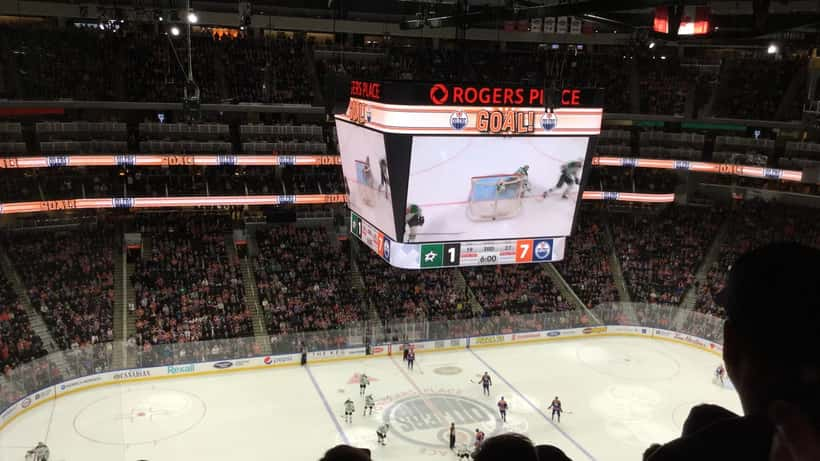
The 2026-27 NHL season is officially underway, and on October 10 the Edmonton Oilers travel to SAP Center to face the San Jose Sharks in a marquee early-season matchup — Connor McDavid (138 points last season) squaring off against Macklin Celebrini (115 points), the 19-year-old prodigy who has already made the Sharks a must-watch franchise. Back home in Edmonton, tens of thousands of Oilers fans will be watching from Rogers Place over the coming months. What fewer of those fans know is that the moment they walk through the arena doors, a specific piece of Alberta law defines exactly who is responsible if something goes wrong.
The NHL Season Opener and a Question That Doesn't Wait
The Oilers entered October 2026 as favourites in most Western Conference projections. Rogers Place is set for another full season of packed lower bowls and standing-room-only crowds. But arena incidents — collapsed seats, wet concourse ramps, escalator falls — have been documented at Rogers Place in past seasons. In one reported case, a Leduc woman's chair collapsed during a game, sending her backwards into the cement and striking her ribs. She was taken to hospital, and her family said they were considering involving a lawyer. The matter was settled quietly.
That quiet resolution is, according to Alberta personal injury lawyers, part of a predictable pattern. Oilers Entertainment Group and their insurers are experienced at handling these claims quickly and inexpensively — often before an injured fan realizes they have rights worth asserting.
What the Alberta Occupiers' Liability Act Actually Says
Under Alberta's Occupiers' Liability Act, RSA 2000, c O-4, every occupier of premises owes visitors a duty of care. The Act defines an occupier as a person who has physical possession of premises or responsibility for and control over those premises. For Oilers home games, that means Oilers Entertainment Group — as the entity operating Rogers Place — bears statutory responsibility for the safety of the entire venue, from ice-level seats to upper-deck concourses.
The standard the Act imposes is reasonableness: an occupier must take the care that a reasonable occupier would take to prevent injury from dangers on their premises. That covers:
- Structural elements — seats, railings, protective netting, glass panels
- Environmental hazards — wet floors after ice-cleaning, concession spills, ice-melt pooling on ramps
- Equipment and fixtures — escalators, elevators, handrails, concession counters
Crucially, Alberta law does allow arenas to restrict or modify their duty of care through contract terms — the small-print waiver printed on every ticket or digital confirmation. But the courts have consistently held that this exclusion cannot protect an occupier from liability arising from their own negligence or from pre-existing, known defects. A ticket disclaimer covers ordinary sporting hazards; it does not cover maintenance failures.
The "Assumption of Risk" Defence and Its Real Limits
NHL teams and their legal teams frequently invoke the volens (voluntary assumption of risk) principle in fan injury cases: by entering a hockey arena, you accept the ordinary risks of the sport. A puck deflecting off the glass? An ordinary hazard. Being jostled by a celebrating crowd? Part of the experience.
But that defence has firm limits under Alberta law, and a careful reading of Canadian sports-venue case law makes those limits clear.
It does not apply to structural failures. A seat whose reclining mechanism snaps is not a sporting risk — it is a maintenance failure, and the arena's duty of care applies in full.
It does not apply to unaddressed slipping hazards. When ice melt or a drink spill creates a slipping surface on a concourse ramp and arena staff fail to respond within a reasonable time, that is a breach of duty. The fact that ice and beverages are present at a hockey game does not make every spill an "assumed risk."
It does not extend to escalator and elevator failures. Mechanical maintenance of passenger-carrying equipment is a core occupier responsibility. Courts in Canadian jurisdictions have treated escalator incidents as straightforward occupier liability cases, not sports-experience risks.
According to litigation analysis by McCague Borlack LLP, the key test is not whether the hazard was sport-related. It is whether the occupier failed to exercise the reasonable care the Act requires.
When a Rogers Place Night Out Becomes a Legal Claim: A Concrete Scenario
Consider this realistic scenario based on the Alberta legal framework:
Martine, 44, from St. Albert, holds season tickets in the lower bowl at Rogers Place. In January 2027, she attends an Oilers home game with her teenage daughter. At the end of the second intermission, she descends a concourse ramp and slips on a pooled puddle of ice melt. CCTV footage later reveals that the same spot had already caused two other fans to stumble in the prior 15 minutes. She fractures her wrist and bruises her hip. She is taken by arena first aid to a nearby hospital.
Martine is a registered dental hygienist earning $76,000 per year. The fracture costs her seven weeks off work.
Here is what that claim looks like under the Occupiers' Liability Act:
| Claim component | Estimated amount |
|---|---|
| Lost income (7 weeks, $76k/yr) | $10,269 |
| Medical and physiotherapy costs | $2,800 |
| General damages — pain and suffering | $15,000–$28,000 |
| Total potential range | $28,069–$41,069 |
Within 48 hours, an arena representative calls Martine. They express sympathy and offer a $3,500 "goodwill payment" in exchange for signing a full and final release. If Martine signs — without taking advice — she permanently extinguishes every claim she has, regardless of how her wrist heals or how her physiotherapy costs grow.
An Alberta personal injury lawyer operating on a 25–30% contingency fee would take $7,000–$10,000 of a $35,000 settlement — but Martine nets $25,000 to $28,000, versus $3,500 for the early "goodwill" signing. The legal consultation itself, for a case with these facts, would typically cost nothing upfront under a contingency arrangement. Some lawyers offer a free first consultation of 30–60 minutes regardless.
The if/then logic: If Martine accepts the first offer without legal advice → she receives ~$3,500 and waives all future claims. If she consults a lawyer before signing → her realistic recovery range is $25,000–$35,000 net of fees, with no out-of-pocket legal cost unless the case succeeds.
Four Steps to Take If You Are Injured at Rogers Place
Acting quickly and correctly in the hours after an incident at an NHL arena significantly affects your legal options:
1. Report the incident before leaving the building. Ask arena staff to complete a formal incident report and obtain a copy or the report number. This creates an official record the arena cannot later deny.
2. Document the hazard immediately. Photograph or video the hazard (wet surface, broken seat, damaged railing), your injuries, and any visible witnesses. If a bystander saw what happened, ask for their name and contact information.
3. Seek medical attention the same day. Even if the injury seems manageable in the moment, adrenaline can mask pain. A same-day medical record establishes the causal link between the incident and your injury — a link that defence lawyers will contest if there is any time gap.
4. Do not sign anything from the arena. Forms labelled "assistance acknowledgment" or "incident documentation" sometimes include release-of-liability language. Read every word. If you are uncertain what you are signing, do not sign it until you have spoken with a lawyer.
For more on the specific rights season-ticket holders retain at Rogers Place, including refund and cancellation protections that many holders are unaware of, see the Oilers season-ticket holder rights guide for Alberta fans. If you are curious how similar puck-in-the-stands incidents have been handled in junior hockey venues under Canadian law, this analysis of BCHL fan puck injury liability offers a useful comparison.
When a Legal Consultation Makes the Difference
Not every incident warrants litigation. Arenas do respond reasonably to some claims, and not every injury rises to the level where legal action is proportionate. But there are clear situations where professional advice is essential before making any decision:
- Your injuries required more than one medical visit, or you have ongoing physiotherapy
- You missed more than two days of work
- The arena or their insurer contacts you within 72 hours of the incident with an offer
- You were attending as a guest of a season-ticket holder and are uncertain about your standing
- You suffered any head impact — symptoms of concussion can worsen over days and significantly affect the value of a claim
Legal consultation with an expert in Alberta occupier liability costs nothing upfront in most injury cases, and provides something the arena's friendly phone call never will: advice from someone whose professional interest is entirely aligned with yours.
This article provides general legal information only and is not legal advice. If you were injured at an Alberta sports venue, consult a qualified Alberta personal injury lawyer for guidance specific to your situation.
