 Olivia Dubois
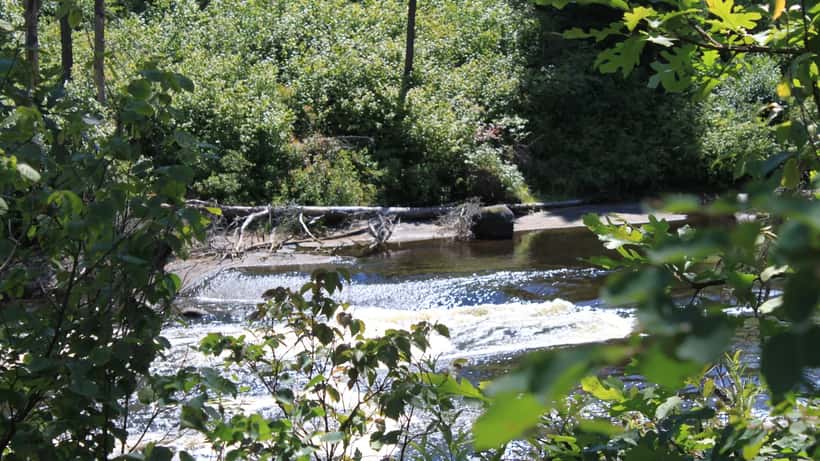
On July 18, 2026, Aaron Au Ramirez, 13, and his younger brother Maximo, 10, were swept into the fast-moving current near Sturgeon Falls at Nutimik Lake in Manitoba's Whiteshell Provincial Park. Maximo had slipped off rocks into the rapids; Aaron immediately jumped in to save him. By July 22, search crews recovered Maximo's body near the shoreline. The search for Aaron continued. The tragedy, unfolding during Canada's National Drowning Prevention Week (July 19–25, 2026), has gripped Manitoba and raised an urgent question for families planning summer park visits: do we genuinely understand how quickly swift water turns fatal — and what to do in the first 60 seconds when someone goes in?
Why Swift Water Kills Differently Than a Pool or Lake
Most Canadians develop their water instincts in pools or calm lakes, where the physics are forgiving. Rivers and rapids operate by entirely different rules — and those rules are invisible until it's too late. Swift water, defined by emergency response experts as any current moving faster than roughly 1.5 metres per second, creates hydraulic forces that overwhelm even strong, fit adults within seconds of immersion.
Cold water shock is the first mechanism. Many river channels and rocky waterways in Canada's provincial parks remain at temperatures between 10°C and 16°C even in peak July heat, regardless of air temperature. Sudden immersion at those temperatures triggers an involuntary gasping reflex — the body inhales before the mind can intervene. Hyperventilation follows within 30 to 60 seconds, and effective swimming capacity drops sharply within three to five minutes of cold exposure.
The second danger is hydraulic entrapment. Near waterfalls and drops, fast-moving water creates a recirculating current at the base — sometimes called a "drowning machine" by whitewater rescue professionals — that pulls objects and people downward and holds them there. Unlike an open lake where a struggling person stays visible, river currents drive victims against submerged rocks, ledges, or strainers (submerged debris), making swift water rescues fundamentally different from open-water emergencies.
According to drowning data published by the Public Health Agency of Canada, rivers and creeks account for approximately 20% of all drowning deaths in Canada, with most natural water fatalities involving children aged nine and under.
What Emergency Health Experts Say About the Bystander Reflex
The Nutimik Lake incident follows a heartbreaking pattern that water safety and emergency medicine professionals document repeatedly across Canada: a child slips, a family member or bystander dives in to help, and the rescuer becomes a second victim within moments. It is one of the most common — and most preventable — sequences in aquatic emergencies.
Emergency health experts emphasize that the reflex to enter the water is nearly universal and almost always the wrong response in swift water. Every lifeguard certification program in Canada teaches the same sequence: Reach, Throw, Don't Go. Extend a branch, throw a rope or lifejacket, call loudly for calm — all before entering the water. In a current exceeding one metre per second, an untrained bystander who enters the water will typically be swept alongside the original victim within 15 to 30 seconds.
Aaron Au Ramirez acted with extraordinary bravery. The tragedy is not one of character — it is one of information. Families arriving at provincial park trailheads adjacent to rushing water rarely receive any structured briefing on what the first 60 seconds of a water emergency should look like.
A Summer Tracking Dangerously Above Average
The Nutimik Lake tragedy is part of a broader and alarming national trend. Preliminary data from British Columbia shows 40 accidental drowning deaths between May 1 and July 16, 2026 — up from 26 deaths during the same period in 2025, an increase of more than 53%. Similar upticks have been observed across other provinces as hot weather draws more families to natural waterways.
The Lifesaving Society of Canada identifies drowning as a top-three cause of accidental death for Canadians between ages 1 and 44. For children under five, it is the single leading cause of accidental death in the country. During National Drowning Prevention Week, provincial parks across Saskatchewan deployed free lifejacket lending stations at key park entrances — a program that health advocates say demonstrably reduces risk, but that many visiting families don't know to look for.
The number most under-communicated by public health messaging: approximately 85% of drowning deaths in Canada involve victims who were not wearing a personal flotation device (PFD). A properly fitted PFD can maintain a face-up float position even for an unconscious person — a difference that regularly proves decisive in the time it takes for emergency responders to arrive.
When the Rockface Looks Safe: A Concrete Scenario
Picture a family of four arriving at a Whiteshell Provincial Park trail that runs alongside a river gorge. The day is 28°C, the water looks shallow and clear from the bank, and the trail description mentions scenic falls. The two children — ages 9 and 12 — move ahead of the adults toward a rock shelf above a small plunge pool.
Here is where the numbers change everything:
- If the current below a three-metre drop exceeds 2 metres per second (common after any rainfall event or residual snowmelt runoff, even in mid-July), then a child falling into the plunge pool will be held under by the recirculating hydraulic at the base — a force that increases with the volume of water, not just its speed. No swimming ability overcomes a hydraulic of this type.
- If water temperature in that pool is 13°C and the child is submerged for more than 2 to 3 minutes before being removed from the current, then cold water incapacitation sets in regardless of fitness or age, significantly reducing the child's ability to cooperate with rescuers.
- If an adult bystander enters the water without a throw rope or PFD, then RCMP and search-and-rescue incident reviews show a substantial probability of a second victim — doubling the emergency and delaying focused rescue of the original person.
The two-minute check that changes all three outcomes: before allowing children onto any rock feature adjacent to moving water, confirm PFDs are on, a throw line or buoyant object is within reach, and at least one adult present knows the reach-throw-don't-go sequence. Lifejacket lending stations exist at select provincial parks — they are free to use, but visitors need to actively seek them out at park entrance kiosks.
The Six Steps in the First 60 Seconds
Emergency medicine and water safety professionals outline the bystander sequence for a swift water incident. These steps take under a minute to begin executing:
- Call 911 immediately — delay for rescue attempts extends response times; call first
- Reach — extend anything available: a branch, paddle, towel, belt, or cooler lid
- Throw — toss a rope, PFD, or any buoyant object; aim past the victim so they can grab it
- Don't go — entering moving water without swift water rescue training and a rope system creates two victims
- Talk — keep the victim calm; instruct them to float on their back, feet downstream, and grab the thrown object
- Track — if the current carries the person downstream, maintain visual contact and direct emergency responders
Practicing these steps takes less time than most families spend reading trail maps.
When to See a Health Professional After a Water Incident
Not all water emergencies end in confirmed drowning — and not all that end without death are without consequences. Freshwater aspiration, even in small volumes, can cause delayed respiratory distress in the hours after an incident, a condition sometimes called secondary drowning or delayed submersion injury. Any person who was submerged — even briefly — should be assessed by a health professional if they develop coughing, chest tightness, laboured breathing, or unusual fatigue within 24 hours.
Witnesses and surviving family members are also at significant psychological risk. Acute stress disorder and post-traumatic stress responses are documented outcomes of witnessed drowning emergencies, particularly when the victim is a child or close family member.
ExpertZoom connects Canadians with licensed health professionals who can advise on cold water exposure assessment, delayed respiratory symptoms, post-incident mental health support, and pre-trip emergency preparedness planning for outdoor activities — without requiring an appointment or a waiting room.
Disclaimer: This article is for informational and educational purposes only and does not constitute medical advice. In any water emergency, call 911 immediately. Always consult a licensed healthcare professional for guidance specific to your situation.
