 Amelia Chen
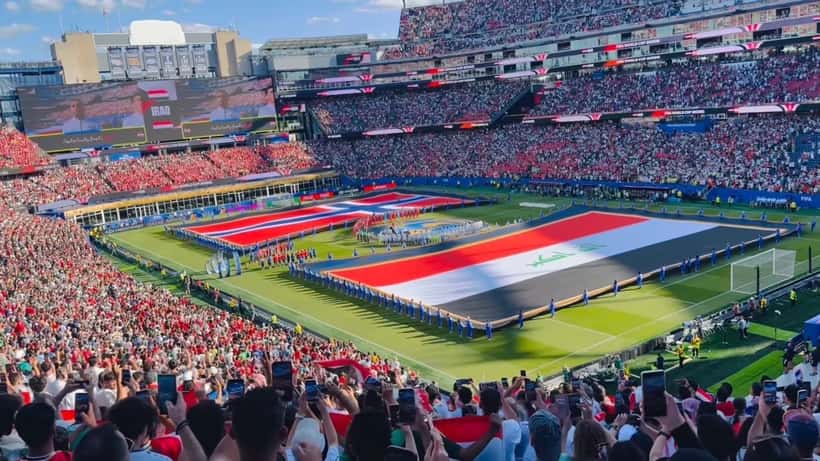
Norway faces Senegal at MetLife Stadium in East Rutherford, New Jersey on June 22, 2026, in a Group I clash that has already become one of the most-searched matchups of the FIFA World Cup. After beating Iraq 4-1 on opening day — with Erling Haaland scoring twice — Norway sits at the top of Group I alongside France on 3 points. Senegal, by contrast, lost 3-1 to France in its opener and must win today to survive. For Canadian families watching, this is more than a football match. It is a live atlas lesson spanning two of the most geographically interesting nations on Earth.
Why This Match Is a Must-Win for the Lions of Teranga
Group I standings after Matchday 1 tell a stark story:
| Team | Points | Goal Diff |
|---|---|---|
| Norway | 3 | +3 |
| France | 3 | +2 |
| Senegal | 0 | -2 |
| Iraq | 0 | -3 |
A second defeat would mathematically eliminate Senegal if France defeats Iraq simultaneously. The Lions of Teranga are carrying the hopes of 18 million people back in Dakar into MetLife Stadium — the same venue that hosted two other high-stakes Group I games this week. Norway, on the other hand, can begin rotating players heading into Matchday 3 if they secure another three points today.
For Canadian parents and students watching: this table is also a real-time mathematics lesson in conditional probability and tournament progression, the kind that never appears in a textbook quite like this.
Norway: Vikings, Fjords, and the World's Largest Sovereign Wealth Fund
Norway extends approximately 2,500 kilometres along the Scandinavian Peninsula in Northern Europe, bordering Sweden, Finland, and Russia. With a population of just 5.5 million — roughly the size of British Columbia — it consistently ranks among the world's most prosperous and happiest countries.
Norway's economy rests on oil revenues, shipping, aquaculture, and the Government Pension Fund Global, worth over 1.7 trillion USD and the largest sovereign wealth fund on Earth. The fund holds stakes in more than 9,000 companies across 70 countries, meaning Norway quietly owns a small piece of virtually every major corporation in Canada.
Geography students will find Norway endlessly fascinating. Its coastline — including its iconic fjords, which are glacier-carved valleys flooded by the sea — is the fifth longest in the world. The Sognefjord stretches 205 kilometres inland and reaches depths of 1,308 metres. Above the Arctic Circle, Norwegians experience the "midnight sun" from late May to late July, during which the sun never fully sets.
Norway's connection to Canada runs deeper than football. Around 1000 AD, Norse explorer Leif Eriksson reached Newfoundland, establishing a settlement at L'Anse aux Meadows — now a UNESCO World Heritage Site and the only confirmed Viking settlement in North America. Norway reached Canada more than 400 years before Columbus.
Senegal: Teranga, Dakar, and West Africa's Football Pride
Senegal sits on the westernmost tip of Africa, making Dakar one of the continent's most strategically positioned capitals — an Atlantic gateway once described as the crossroads between Europe, Africa, and the Americas. A French-speaking democracy with over 18 million inhabitants, Senegal is one of Africa's most politically stable nations and a cultural anchor for the region.
The word "teranga" — from the Wolof language spoken by the majority of Senegalese — translates roughly to warmth and hospitality. It became the national football team's identity: Les Lions de la Teranga. Senegal gained independence from France on August 20, 1960, which made facing France in the 2026 opener a match loaded with historical weight beyond the sporting stakes. France won 3-1.
For Canadian students, particularly those from West and Central African backgrounds — Canada's African-origin population grew by more than 40 per cent between 2016 and 2021, according to Statistics Canada — Senegal's presence at the World Cup carries meaning that goes well beyond the group standings. Senegal previously appeared at the 2002 World Cup (reaching the quarter-finals), 2018 (eliminated on fair play rules), and 2022 in Qatar (eliminated in the Round of 16).
The Group I Math: A Live Probability Lesson
This is where tutors and homework help specialists find gold. The conditional probability question facing every Senegalese fan today: if Senegal beats Norway and France beats Iraq, what happens on Matchday 3? The answer requires students to understand tiebreaker rules, goal differential, and the logic of how points interact — concepts that appear in Ontario's Grade 10 Data Management curriculum and Alberta's Mathematics 10C outcomes.
Beyond the standings, the match itself involves real-world geometry: pitch dimensions, player tracking zones, the angles of set-piece deliveries that Haaland exploits against deep-lying defences. For a student struggling to see why geometry matters, watching a centre-forward calculate space in real time is often more instructive than any worksheet.
According to Parks Canada's L'Anse aux Meadows National Historic Site, Norse exploration of North America is one of the most remarkable documented chapters in transatlantic history — and one most Canadian students study in elementary school. Connecting Haaland's Norway to that story is exactly the kind of lateral learning that sticks.
Using World Cup Moments to Close Learning Gaps
Private tutors and homework help specialists increasingly use high-engagement current events to bridge the gaps that standard classroom instruction cannot always fill. The Norway-Senegal match covers:
- Geography: Locating both countries on a world map, comparing capital cities (Oslo and Dakar), understanding why Senegal is called the Gateway to the Atlantic
- History: Viking exploration and Canada's Norse heritage, Senegalese independence from France in 1960, African colonialism and its modern legacy in sport
- Mathematics: Group stage probability, goal differential tiebreakers, compound conditional outcomes across simultaneous matches
- Political science: How FIFA's expanded 48-team format gives smaller football nations global visibility — and what that means for African and Nordic football development
- Language arts and media literacy: Comparing how Canadian, Norwegian, and Senegalese media frame the same fixture — narrative differences across cultures and broadcast rights
A skilled homework help specialist can frame this World Cup match as a 90-minute seminar that touches every subject on a Canadian school timetable. Previous World Cup articles on ExpertZoom have explored how player contracts and bonus structures work at this level — for example, the financial stakes France's Senegal victory created for both squads is itself a wealth management lesson worth exploring.
When to Consult a Homework Help Expert
Not every student engages through standard classroom instruction. Some need a different entry point — a story that feels alive, a map that means something today, a probability problem with stakes they care about. Signs a student may benefit from targeted one-on-one tutoring include:
- Consistently avoiding geography or world history homework
- Struggling to apply math concepts (percentages, probability, ratios) to everyday situations
- Losing focus during standard lessons but engaging immediately when a topic feels current
- Falling below grade-level expectations in humanities or applied mathematics
The World Cup arrives once every four years. ExpertZoom connects Canadian families with certified homework help specialists who meet students where their curiosity already lives — including today, on a pitch in New Jersey.
